After recent failures in Moldova and Hungary, the Kremlin has redirected its resources towards Armenia, where parliamentary elections are scheduled for June 7. The Kremlin hopes to prevent incumbent Prime Minister Nikol Pashinyan’s Civil Contract party from winning after he pursued closer ties with the European Union and the United States. The Insider has identified who oversees the Armenia portfolio in the Russian presidential administration, which officers from the Foreign Intelligence Service (SVR), the GRU, and the FSB were sent to Yerevan, and how Armenian opposition candidates are linked to Russia’s intelligence agencies.
Moscow’s handlers for Armenia
The information campaign against Pashinyan is being coordinated by the recently created Presidential Directorate for Strategic Partnership and Cooperation, which replaced the cultural ties directorate headed by Dmitry Kozak, who was removed after a failed attempt to influence last year’s elections in Moldova. The new directorate is led by Vadim Titov, a former nuclear industry official at the state atomic energy corporation Rosatom and an ally of Sergei Kiriyenko, the first deputy chief of Russia’s presidential administration (whom The Insider covered in its previous investigation). Titov’s start in the post was not especially successful: ahead of elections in Hungary, he flew to Budapest with his aide, Yegor Kvyatkovsky, also a Rosatom official, but the campaign ended in a crushing defeat for Viktor Orban. Now, however, Titov has a new chance to prove himself.
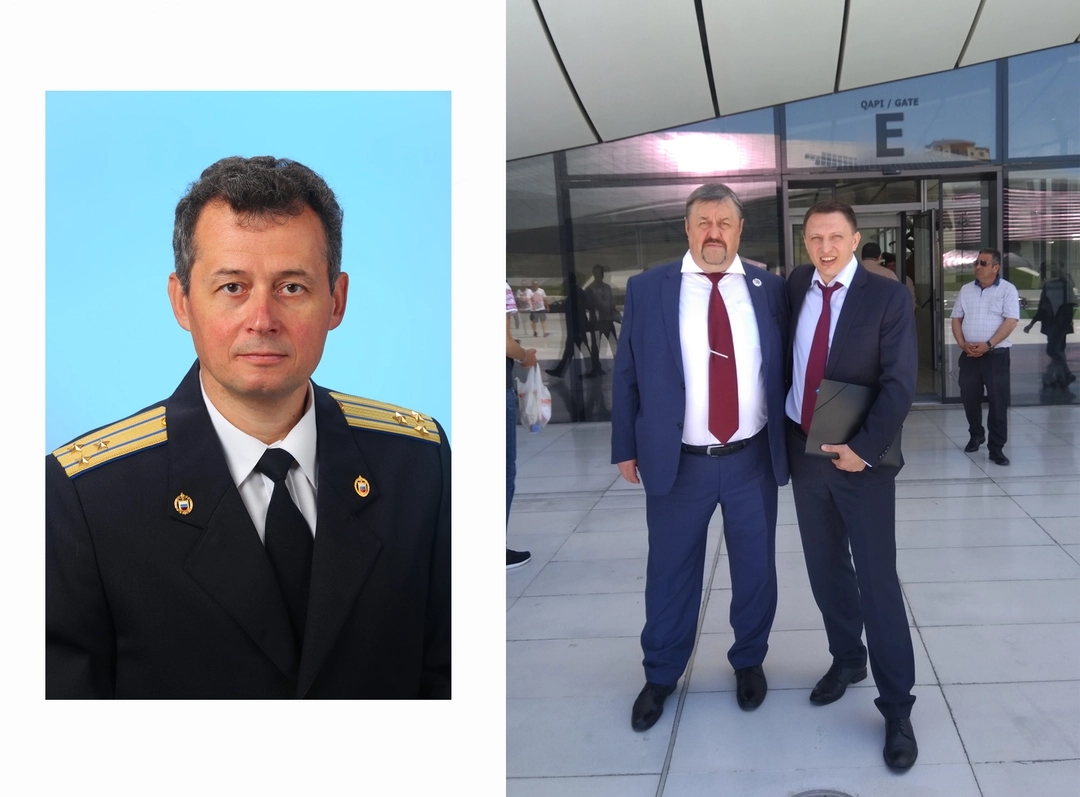
The direct handlers for Armenia from the Russian presidential administration are Valery Chernyshov, head of the USSP department for developing interregional and sociocultural ties, and his deputy, Dmitry Avanesov. Both come from the security services. After serving at a Russian military base in Abkhazia, in 2013 Chernyshov was invited to join military intelligence. He taught the basics of sabotage work at advanced training courses for GRU officers in the village of Zagoryansky in the Shchyolkovo District, at Military Unit 36360. In the presidential administration, he first oversaw Georgia before being reassigned to Armenia.
His deputy, Avanesov, graduated from the Peter the Great Military Academy of the Strategic Missile Forces and holds the rank of colonel. In 2012, he completed advanced training at the FSB’s Moscow Institute of New Information Technologies in a program focused on “systems for assessing, analyzing, and forecasting the state of national security.” Both men have repeatedly visited Yerevan, where they met with local Kremlin allies. In the Russian government, the Armenia portfolio is handled by Deputy Prime Minister Alexei Overchuk, who on a near weekly basis warns Yerevan of major economic problems if it continues moving closer to the EU and the U.S.
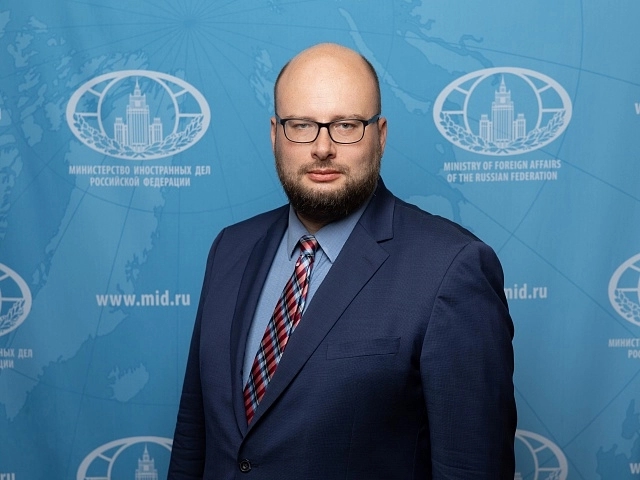
At the Foreign Ministry, the Armenian elections are handled by Mikhail Kalugin, head of the Fourth Department for CIS Countries. He began his diplomatic career as a press attache in Lithuania when the mission was headed by Yury Zubakov, a former deputy director of Russia’s Foreign Intelligence Service. In 2006, Lithuanian intelligence services suspected Kalugin of working for Russian intelligence, and he was recalled to Moscow.
In 2016, Kalugin worked as an economic counselor at the Russian Embassy in Washington, and his name appeared in media reports related to Moscow’s interference in the U.S. election. After those reports, he left the United States and was appointed head of a division in the Foreign Ministry’s foreign policy planning department. In July last year, he became head of the Fourth Department for CIS Countries.
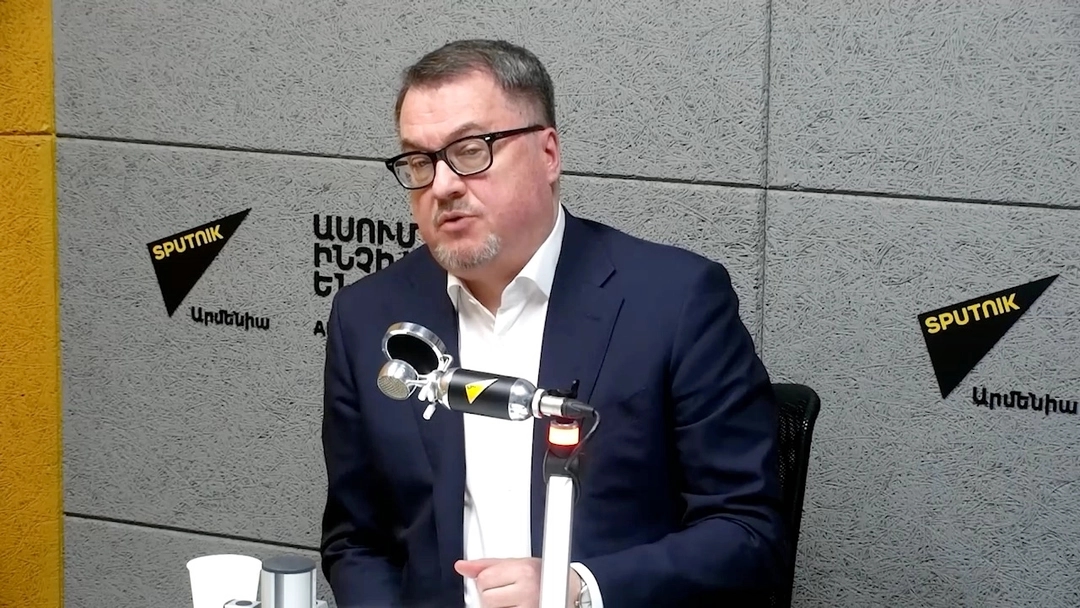
The most active groups in Armenia include the Gorchakov Fund, which promotes pro-Kremlin narratives; the National Research Institute for the Development of Communications, headed by Vladislav Gasumyanov, a career officer of Russia’s Foreign Intelligence Service; the Russian Institute for Strategic Studies, a think tank linked to foreign intelligence; and a large number of pseudo-political analysts, experts, councils, and organizations that receive funding from the Kremlin.
Long-familiar figures, including senators Konstantin Kosachev and Konstantin Zatulin, are in the front ranks of the propaganda campaign against Pashinyan. Zatulin heads the international Russian-Armenian Lazarev Club, which boasts among its members the billionaire Samvel Karapetyan, owner of the commercial real estate giant Tashir Group.
Rossotrudnichestvo, the federal agency responsible for Russian cultural outreach, is leading Moscow’s “soft power” efforts from the Russian Embassy. Its Russian House in Yerevan organizes seminars, lectures, roundtables, and summer camps where participants are shown films about the “revival of Nazism in Ukraine.” The programs mainly target young people, promoting the message that Armenia’s future is with Russia.
The Russian House in Yerevan mainly target young people, promoting the message that Armenia’s future is with Russia
The Russian House in Yerevan is headed by Vadim Fefilov, a former war correspondent with NTV. After Putin’s takeover of the network in 2000, Fefilov moved with the main group of journalists to TVS, which at the time was financed by the oligarch Boris Berezovsky. He later returned to NTV and in 2018 became an adviser to the channel’s CEO.
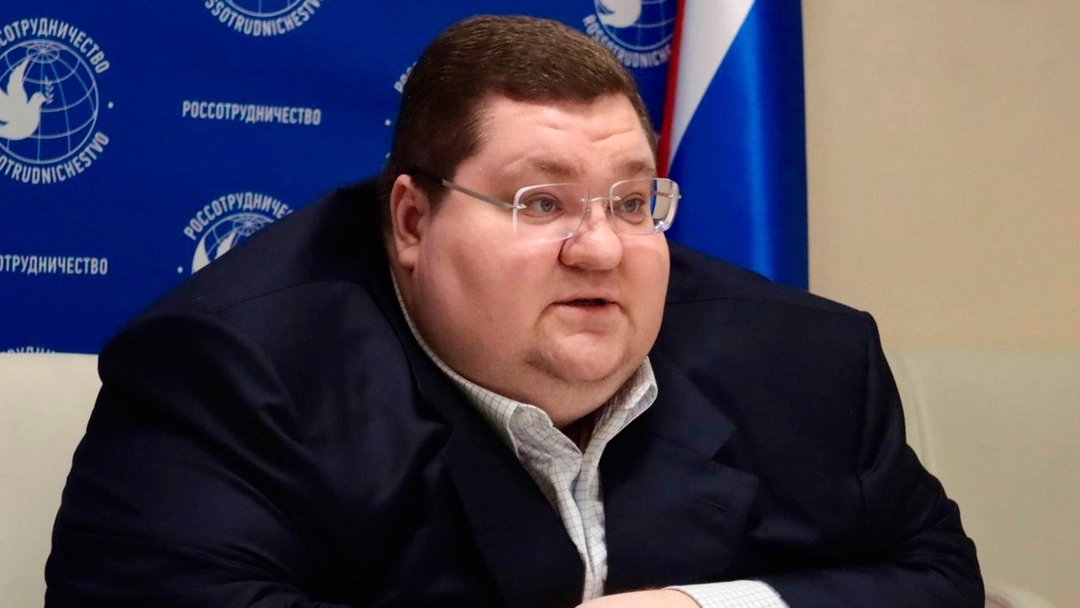
Igor Chaika, the son of former Prosecutor General Yury Chaika, was recently appointed head of Rossotrudnichestvo, a move that may also be linked to preparations for Russia’s direct interference in Armenia. The younger Chaika is widely known for his role in corruption scandals in the waste management business, but recently his profile has undergone a bit of a makeover.
Funding for the pro-Kremlin opposition during the Kremlin’s interference efforts in Moldova’s recent elections passed through Chaika. In 2022, the U.S. Treasury Department placed him under sanctions, and the European Union later followed suit. Rossotrudnichestvo’s previous head, Yevgeny Primakov Jr., also known as “Sandro,” repeatedly said it was time to end “balalaika diplomacy” and stop spending money on meaningless events abroad. However, the Kremlin apparently had a different view: Sandro was removed, and Chaika was appointed in his place.
The resident and his friends in Armenia
June 3 is expected to be a busy day at the Russian Embassy in Yerevan, where colleagues will congratulate trade representative Alexei Myshlyavkin on his 65th birthday before an evening banquet replete with the customary toasts to Russia, Putin, and Russian military success. Few diplomats, however, know that Myshlyavkin is not a trade representative, but the Russian Foreign Intelligence Service’s resident in Armenia. His name does not appear on the Russian Embassy’s website in Yerevan, but it is listed on the diplomatic roster.
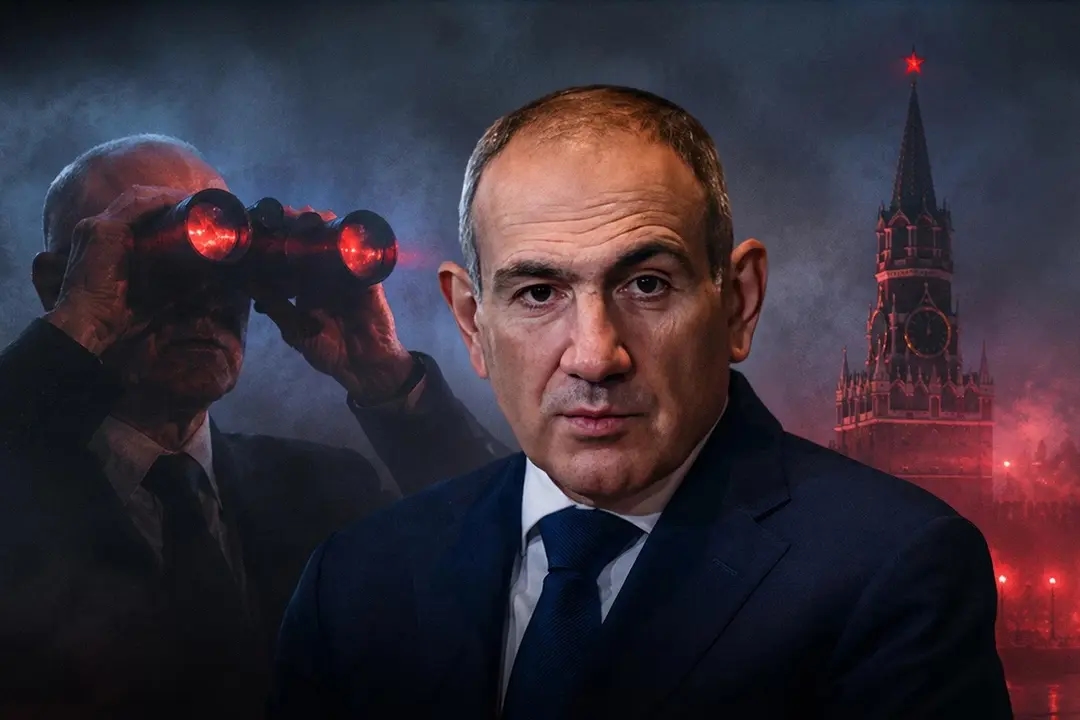
Through his extensive network of agents, Myshlyavkin knows about every move made by Armenian Prime Minister Nikol Pashinyan, a former opposition journalist who became prime minister after the 2018 “Velvet Revolution,” earning him special status as the main target of almost all Russian intelligence operations in the country. In Moscow, Pashinyan was given the operational codename “Boroda” (lit. “Beard”), and Russian intelligence began actively collecting material to compromise him.
Pashinyan, a former opposition journalist, became prime minister after the 2018 “Velvet Revolution” and has since served as the main target of Russia’s intelligence operations in Armenia
After graduating from the SVR Academy, the future resident Myshlyavkin was assigned to the foreign intelligence headquarters in the Moscow district of Yasenevo, where he served in the directorate that trained illegals for espionage in Armenia, Azerbaijan, and Georgia. The Myshlyavkin family lived in a building on Vilnius Street that was put up in 2002 by order of the SVR. The building’s “spy” connection became known due to the fact that an order by then-Moscow Mayor Yuri Luzhkov was posted in the public domain. In 2017, the Myshlyavkins moved to the village of Kommunarka — near SVR headquarters — and three years later they were allowed to privatize their departmental apartment. In November 2020, Myshlyavkin arrived in Yerevan and took charge of the field office.
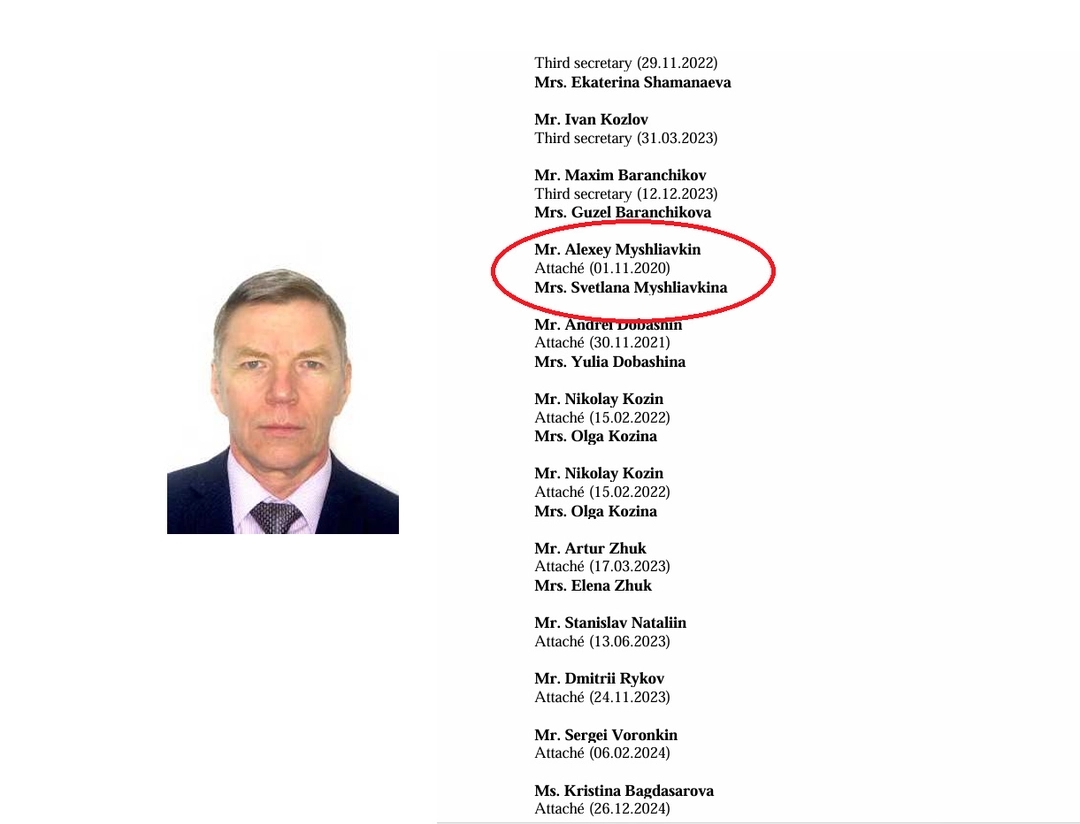
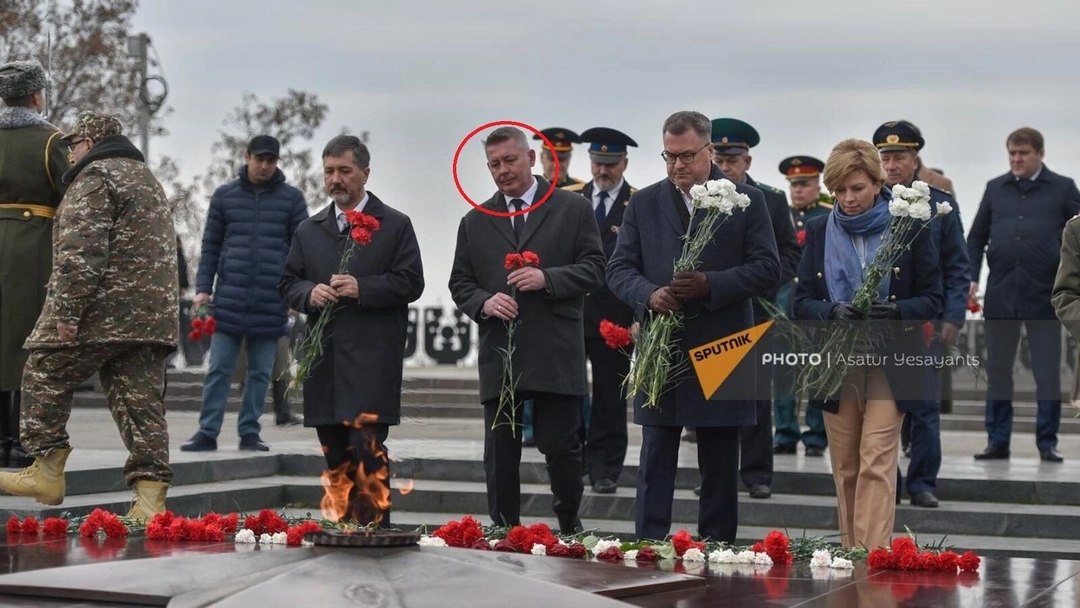
At the banquet, Myshlyavkin will be joined by his deputy, Sergei Katin, who began his military service as an engineer in the Federal Protective Service’s government communications directorate before entering the SVR Academy.
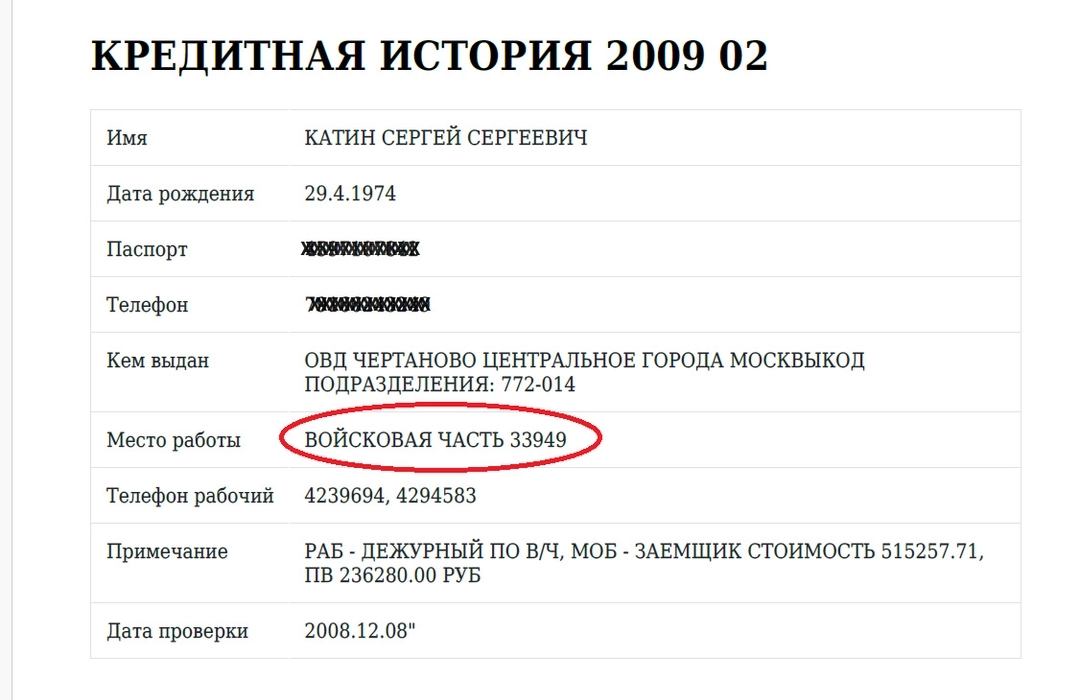
After graduation, Katin was assigned to the private company MVTs Znanie, which provides supplementary education services. There, he received a fictitious salary of 400 rubles a month [$5.50]. In 2007, Katin was officially listed in Foreign Intelligence Service Military Unit 33949, as shown by a leaked loan application. Since 2022 he has been spying on Armenia.
Katin’s new wife, Yevgenia, is chief financial officer at the U.S. company ChampionX, which works in chemical and drilling solutions. In 2024, ChampionX was acquired for $7.76 billion by Houston-based SLB (formerly known as Schlumberger), one of the world’s largest oilfield services companies.
In Russia, SLB works with Gazprom, Rosneft, and Lukoil. After Russia launched its full-scale invasion of Ukraine in 2022, the company did not wind down its business but instead expanded, hiring close to a 1,000 new employees. To bypass sanctions, SLB buys equipment in China and India.
Vyacheslav Proshkin, Rosatom’s representative in Armenia, will almost certainly attend Myshlyavkin’s banquet. Proshkin’s duties include overseeing the Soviet-era Metsamor Nuclear Power Plant, located 26 kilometers from Yerevan. In reality, that job is only cover, as Proshkin is a career GRU officer who closely monitors Armenia’s leadership.
Proshkin began his military service in the Defense Ministry’s Main Directorate for International Military Cooperation before being transferred to the “scandalous” Center for Financing Special Programs of the Defense Ministry, military unit 22280. The center controls huge sums of money and finances the Defense Ministry’s secret projects in the nuclear field, along with vaccine production. However, a separate part of its budget goes to military intelligence needs.
A major scandal broke out in 2020 when a former accountant from military unit 14118 told journalists about a secret scheme to siphon off budget funds. According to the accountant, the center’s commander, Col. Georgy Vasilyev, together with employees of the Defense Ministry’s 48th Central Research Institute and military unit 14118, “stole more than 355 million rubles through all kinds of payments, bonuses, and allowances to front persons.”
The FSB squad: Kivachuk, Kucheruk and Gladyshchuk
Representing the FSB at Myshlyavkin’s birthday celebration will be embassy adviser Sergei Kivachuk and First Secretary Vitaly Kucheruk. Before coming to Armenia, FSB General Kivachuk had never traveled abroad (at least not under his real name) serving in the Altai Krai, Krasnoyarsk Region, and Udmurtia. In 2017, he was appointed head of the FSB regional office in Mari El. In Altai Krai, court bailiffs pursued him over unpaid vehicle taxes. In Udmurtia, he arranged for his wife to work in classified records management at the Kalashnikov Concern. Soon after Sergei Shchukin, editor-in-chief of the newspaper Den, reported the appointment, his home was searched. In 2017, Shchukin was sentenced to 2.5 years in a maximum-security penal colony for allegedly extorting Kalashnikov CEO Konstantin Busygin.
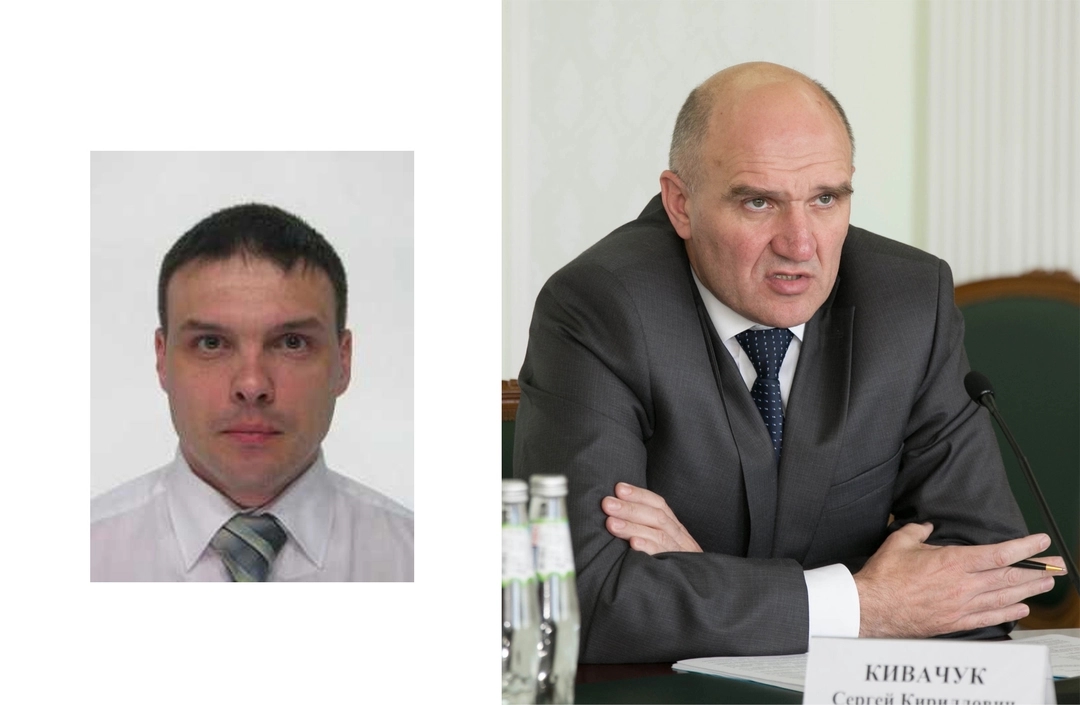
General Kivachuk is not only spying on Pashinyan, but also closely tracking Russians who left for Armenia after the start of the “partial” mobilization campaign in September 2022. Many Russian emigres became open critics of Putin after leaving the country and continue to oppose the war in Ukraine. All of them need to be entered into operational records, and agents need to be embedded among them, meaning General Kivachuk has plenty of work to do in Yerevan.
Another guest at the banquet will be embassy First Secretary Sergei Kucheruk, whose CV has nothing to do with diplomatic work. Before Armenia, Kucheruk served in the FSB Directorate for the Baltic Fleet and troops of the Kaliningrad Region, which is part of the FSB’s Military Counterintelligence Department. He is often seen at the Russian military base in Gyumri, where he meets with his agents.
A source in Russia’s security services told The Insider that Kucheruk was part of a group that carried out operational work targeting the head of Armenia’s Foreign Intelligence Service, Kristinne Grigoryan.
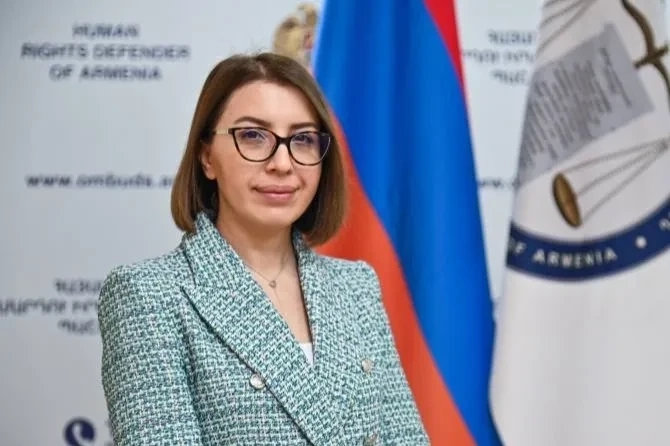
In 2023, Pashinyan created Armenia’s Foreign Intelligence Service and appointed Grigoryan, the country’s chief ombudswoman, to lead it.
“Kristinne was invited to Moscow for a short internship at the Foreign Intelligence Service Academy, for a conversation, but she went to learn the ropes at the CIA instead, and then the Americans helped her create the necessary structures in Yerevan. Of course, they dug into her personal life. They were especially interested in why she still lives without a husband. Well, they checked who she flew with through us to Beijing, but they did not obtain any operationally significant information,” the security service source told The Insider.
In March, Grigoryan’s service said foreign intelligence agencies were pressuring Armenian citizens living abroad ahead of the elections. Of course, that was primarily a reference to Russia, home to over 1 million people of Armenian origin.
Attaché Alexander Gladyshchuk will most likely come bearing gifts for resident Myshlyavkin. Before Yerevan, he served in the Defense Ministry’s 946th Main Center for Geospatial Information in Noginsk, near Moscow. The secret unit is tasked with “providing special geospatial information necessary for use in various types and systems of high-precision weapons.”
Gladyshchuk was previously sent to Belgium, where he drew up detailed maps showing NATO military sites and economically important facilities. In 2020, after fighting began in Nagorno-Karabakh, he was transferred to Yerevan, suggesting he has already marked several of Armenia’s critical sites on operational maps.
Russia’s candidates: One convicted of sexual assault, another had the FSB as a "place of work"
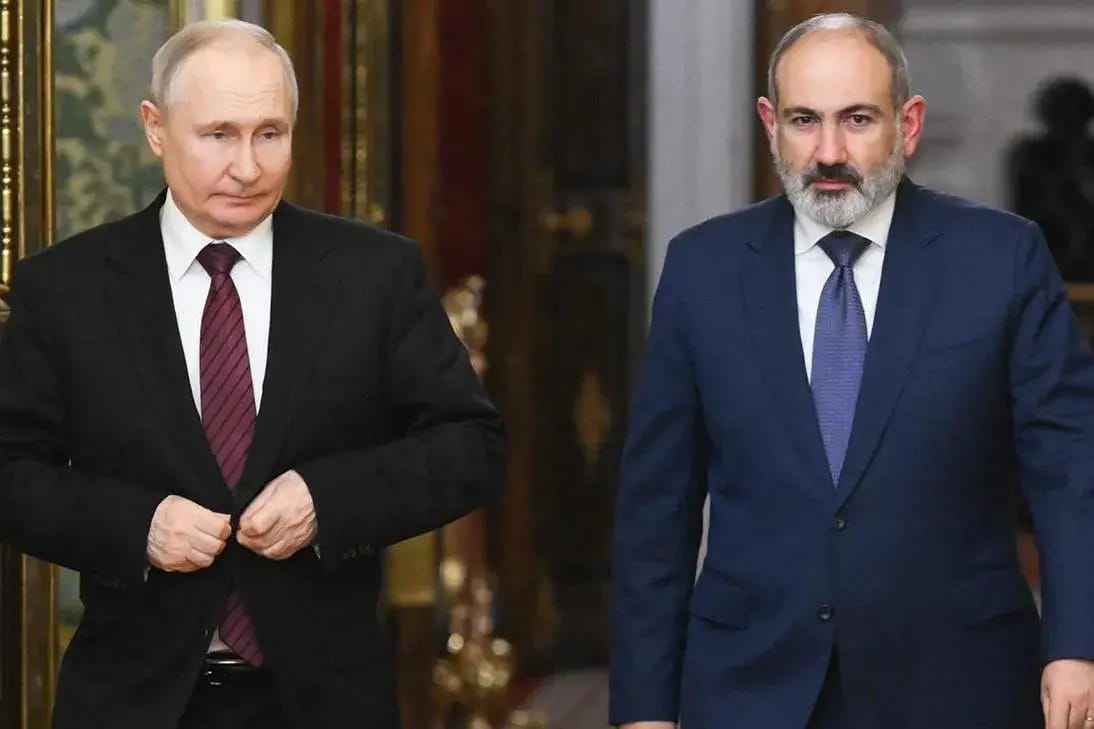
During Armenian Prime Minister Nikol Pashinyan’s visit to Moscow in April, he and Putin clashed verbally after the Russian dictator said pro-Russian forces should be allowed to take part in the upcoming Armenian elections. Pashinyan replied that Armenia’s Constitution bars citizens of other countries from running in parliamentary elections, let alone becoming prime minister. Putin did not name anyone explicitly, but it was understood that he had in mind billionaire Samvel Karapetyan, who founded the Strong Armenia electoral bloc and plans to assume the post of prime minister if it wins.
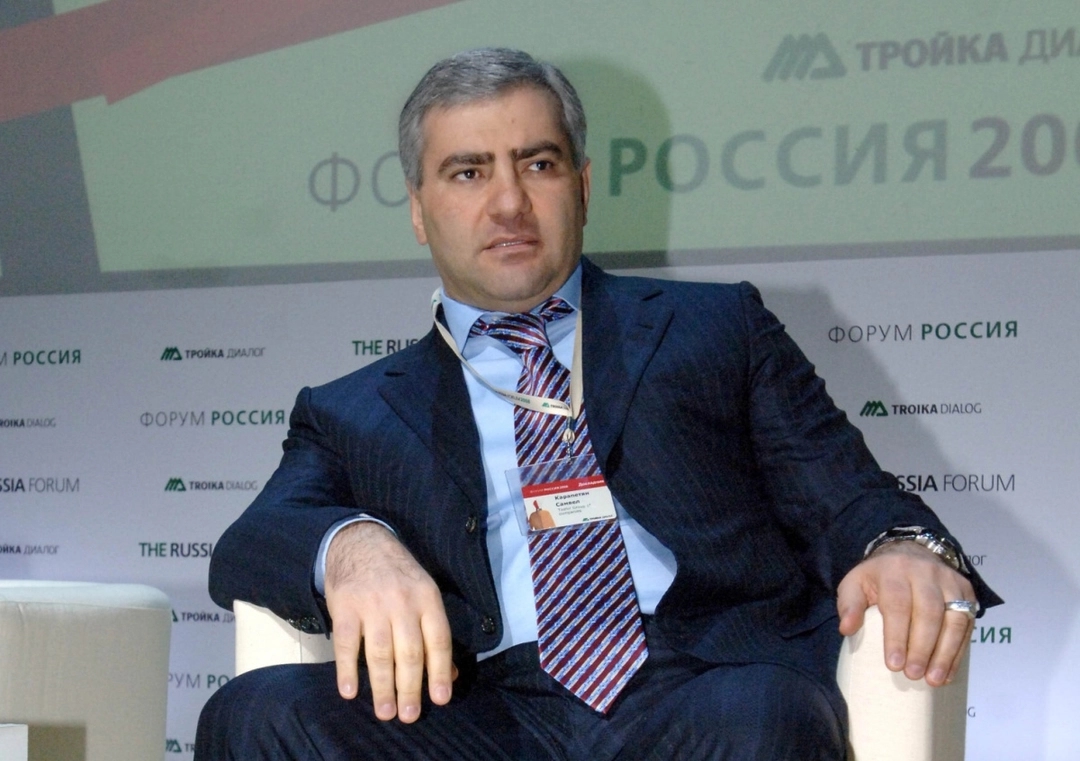
Karapetyan is currently under arrest on charges of money laundering and publicly calling for the seizure of power. Born in 1965 in the Armenian city of Tashir, Karapetyan began his business career selling enamelware. In the early 1990s, he moved to Kaluga and took Russian citizenship. Stores, restaurants, shopping centers, and a brick factory appeared in the city under the Tashir brand. He later moved to Moscow and eventually became one of the capital’s 10 largest builders and developers. Tashir is listed as a major contractor for Gazprom, while Karapetyan also owns 71.29% of Fora Bank. In November 2024, the U.S. Treasury Department placed the bank under sanctions. His personal fortune is currently estimated at $4.1 billion, and he promised to invest several million in promoting Strong Armenia.
In June of 2025, Prime Minister Pashinyan demanded the resignation of Karekin II, head of the Armenian Apostolic Church, after rumors intensified that the priest allegedly had a child, which would violate his vow of celibacy. Karapetyan came out strongly in defense of the catholicos and vowed to fight the “godless” authorities by every means.” Soon afterward, law enforcement raided the billionaire’s home, and Karapetyan himself was arrested.
“Samvel never got involved in politics. His business was building bridges with officials and security officers and making money — although he never refused the Kremlin’s sensitive financial requests. Apparently, he was put under serious pressure and was forced to create the Strong Armenia bloc as a counterweight to Pashinyan,” a source familiar with the billionaire’s inner circle told The Insider.
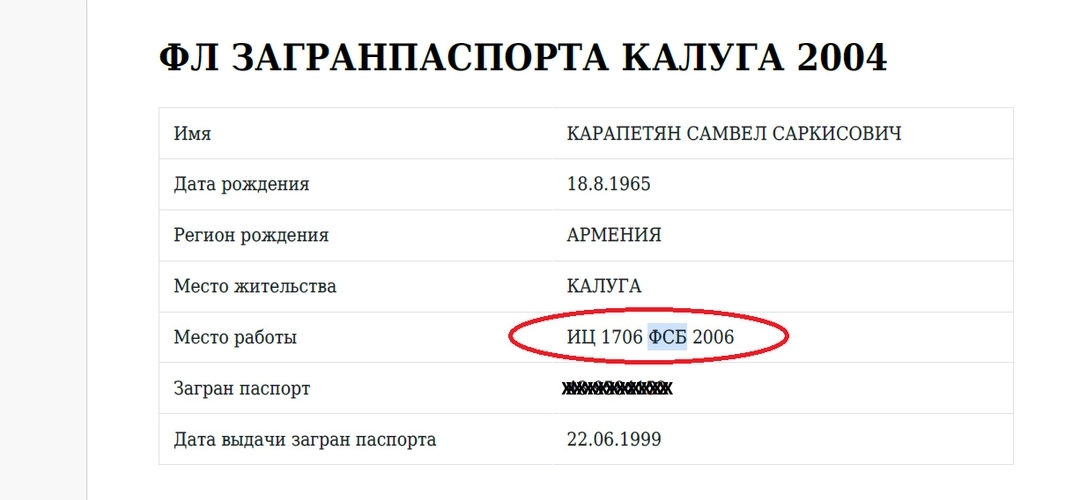
In 1999, Karapetyan applied for a foreign passport in Kaluga. According to leaked offline databases, his passport file listed an Interior Ministry notation under “place of work”: “IC FSB.” This note means that if a citizen is to be checked, the FSB must be contacted first. The Interior Ministry operative told The Insider that these markings are usually reserved for foreigners working under FSB supervision or for confidential informants.
When Karapetyan was issued an international passport in Kaluga, the “place of work” field listed “IC FSB”
Another Kremlin ally, Gagik Tsarukyan, leader of the Prosperous Armenia party, is also running in fierce opposition to Prime Minister Pashinyan. Tsarukyan served in the police but in 1979 was convicted of robbery and the gang rape of two female tourists from Russia. The police officer served his prison term at the “Krasnaya Utka” (lit. “Red Duck”) penal colony near the city of Nizhny Tagil.
After the collapse of the Soviet Union Tsarukyan entered the list of Armenia’s 100 richest people, and a court acquitted him. But his biography contains another blemish: in November 2004, a Niva vehicle belonging to Nikol Pashinyan, then the editor-in-chief of the newspaper Armenian Times, was blown up in central Yerevan. Pashinyan accused Tsarukyan of ordering the attack, allegedly because he was unhappy with one of Pashinyan’s articles. The criminal case, however, remains unsolved.

In Armenia, Tsarukyan made his fortune in dairy and brandy production. In Russia, he is among the founders of three companies: Tikhivz, Zh Invest, and Elit Stroy, which build luxury housing in the Moscow Region.
Tsarukyan is a frequent guest in high-level offices in Moscow. In February 2019, his Prosperous Armenia party signed a cooperation protocol with United Russia. Leaks from the now-disbanded Directorate for Interregional and Cultural Relations with Foreign Countries, whose espionage activities The Insider has reported on, included a copy of Tsarukyan’s passport and a financial estimate for his 2017 election campaign.
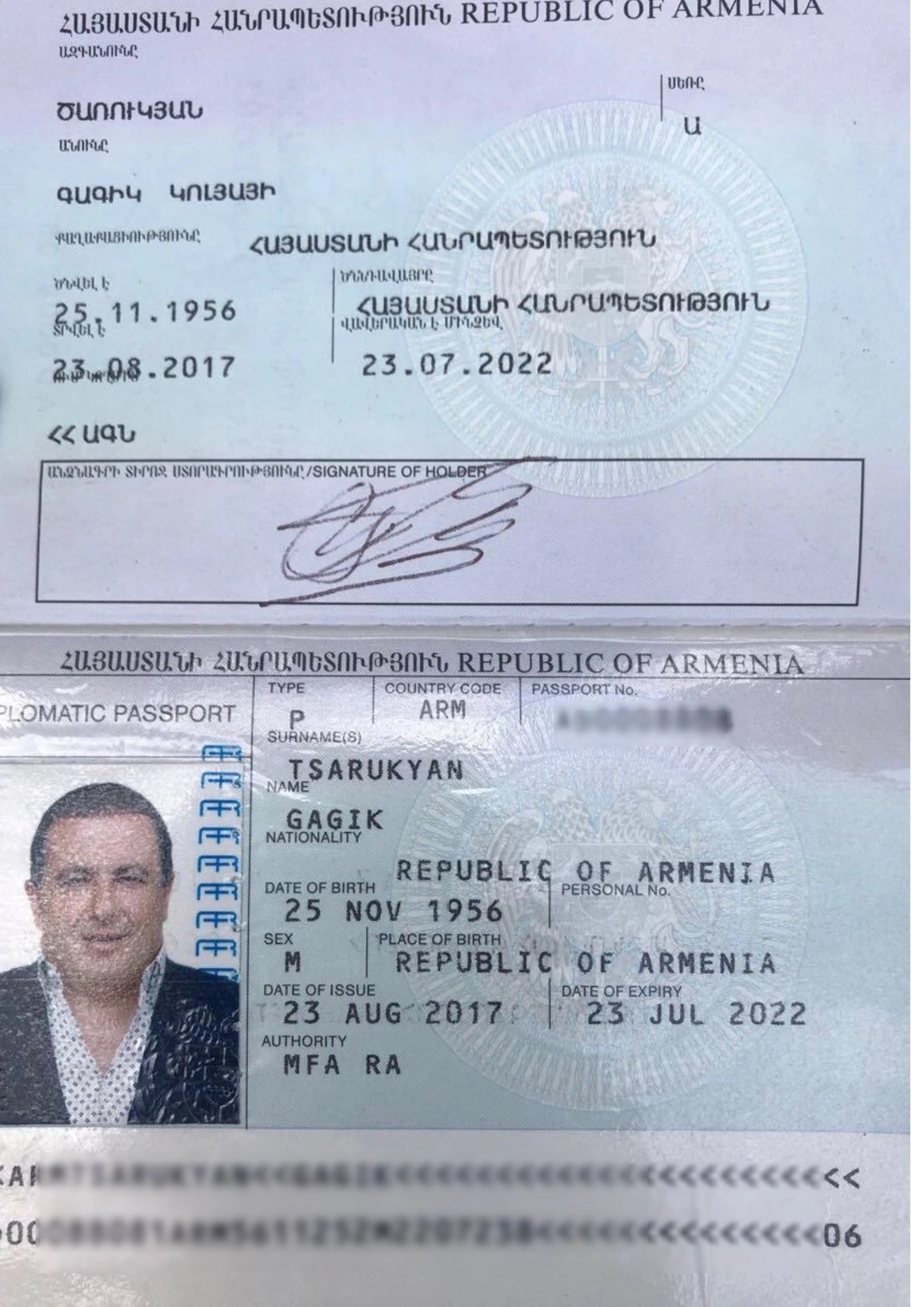
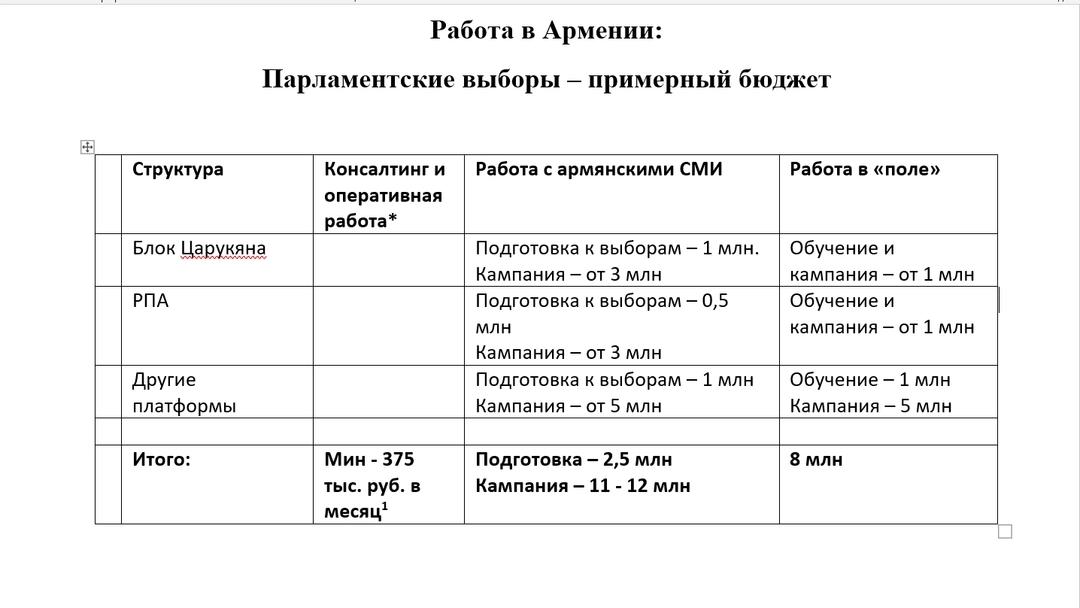
The money was sent to Yerevan from a special fund on Staraya Square, where the Russian presidential administration has its headquarters. Most likely, however, the funds allocated for the Tsarukyan bloc were skimmed off within the presidential administration itself given the fact that Tsarukyan was more than capable of paying for his own election campaign.