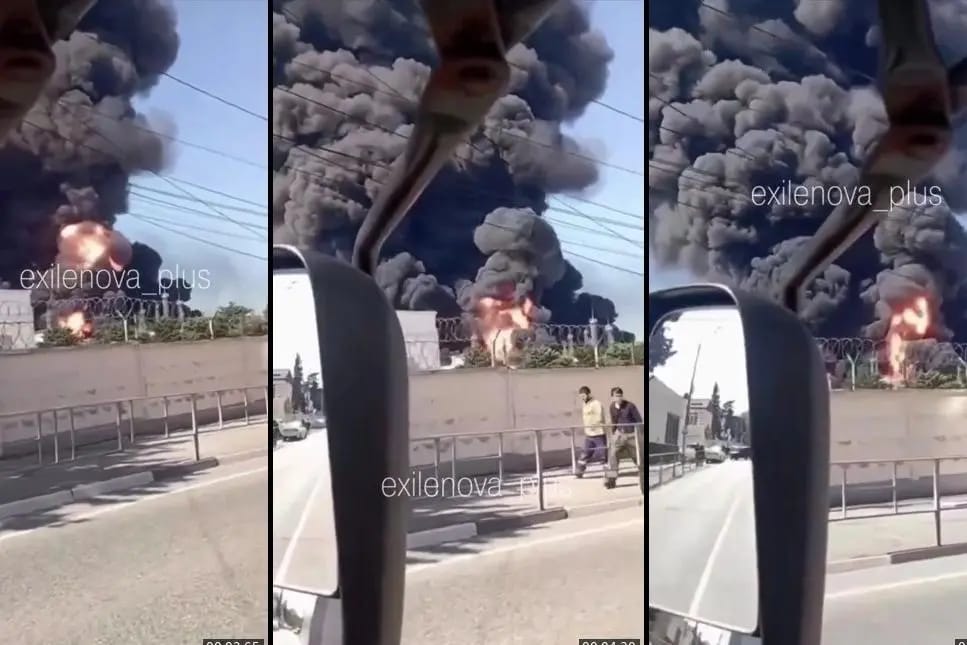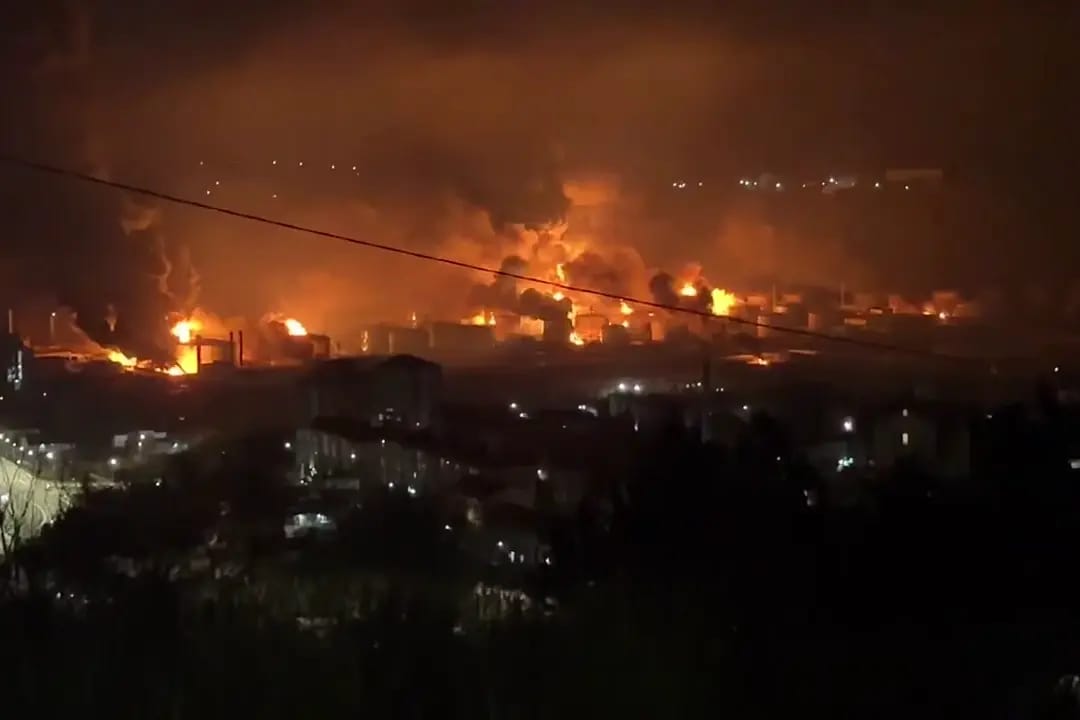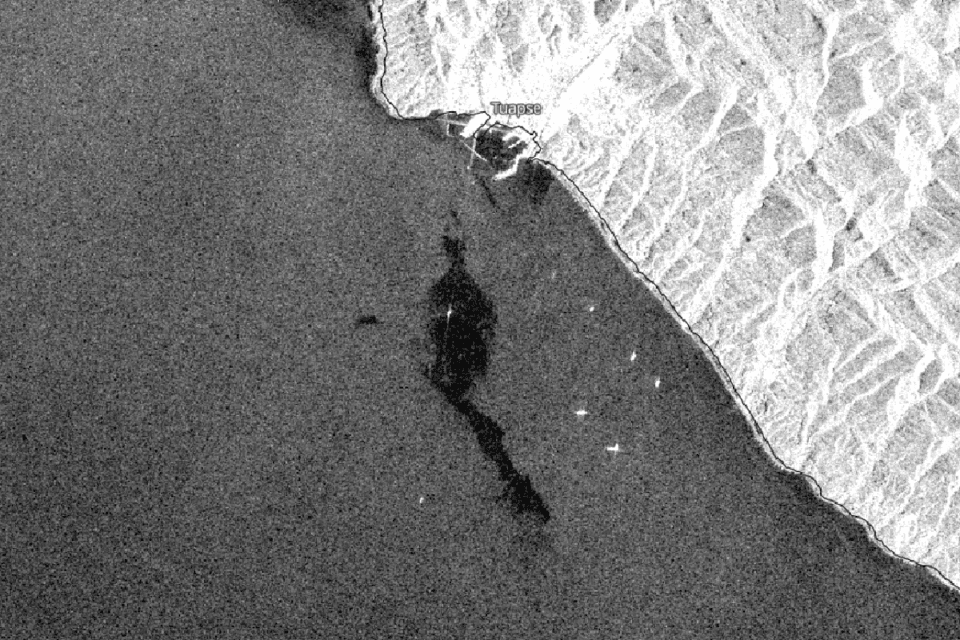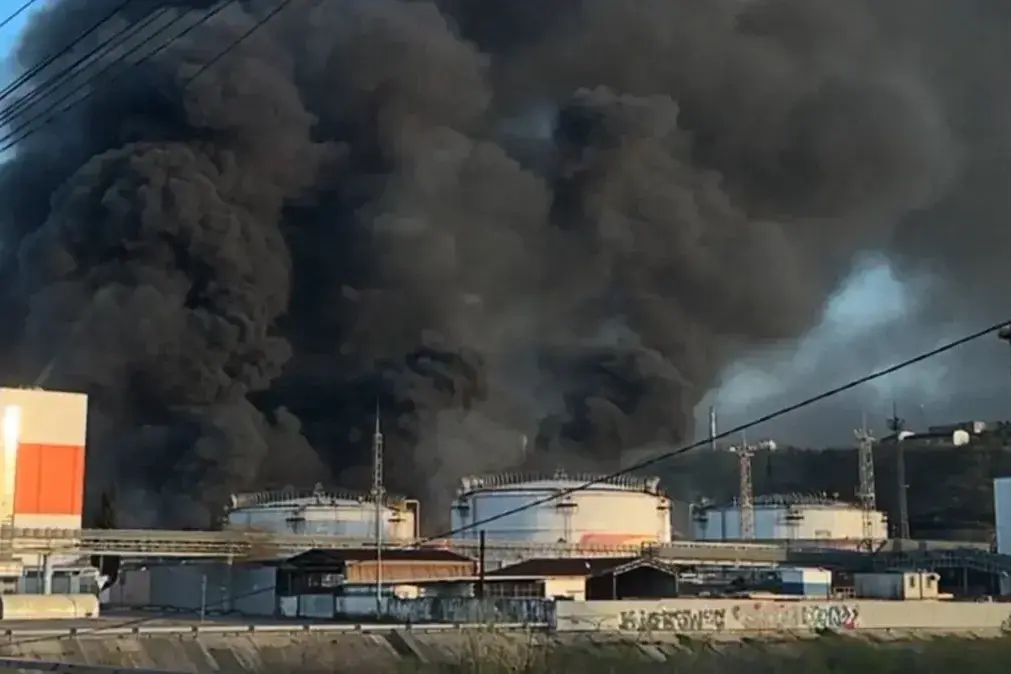
Residents of the Russian Black Sea port town of Tuapse have been exposed to toxic combustion products from a marine terminal that was attacked by Ukrainian drones four days ago. “Black rain,” or “oil rain,” has fallen in the city — precipitation mixed with residue from burning oil. Measurements taken by the Russian government’s consumer rights and public health agency Rospotrebnadzor on the evening of April 21 showed benzene, xylene, and soot levels in the air coming in at two to three times above permitted limits.
A total of 276 personnel and 77 pieces of equipment have been deployed to fight the new fire. The smoke is worst in the Grozneft, Sortirovka, and Zvyozdny neighborhoods, and in parts of Tuapse’s Central District.
Vladimir Slivyak, co-chair of the environmental group Ecodefense! (“Ekozashschita!”), told The Insider that compounds formed during combustion pose a direct health risk, and pointed specifically to the carcinogenic effects of benzene:
“In general, toxic and carcinogenic substances are formed during combustion. In this case, there are an extremely large number of such substances, and they are especially dangerous for people with respiratory illnesses, such as bronchitis or asthma. Benzene is a Class 1 carcinogen. It can cause cancer, for example leukemia.”
Due to rainy conditions, air quality was not measured on April 22. However, the effects became visible to the naked eye several days earlier, when black residue began settling on surfaces across the city. Residents said “everything around was covered with an oily film and black pellets,” a claim also reported by the local emergency response headquarters.
Environmentalists said smog from the fire reached the cities of Anapa, Sochi, and Stavropol. The independent outlet Important Stories reported that birds and stray dogs were caught in the “oil rain,” with toxic substances damaging feathers and entering animals’ bodies, potentially killing them.
A WHO study shows that inhaling benzene is toxic to humans and increases the long-term risk of cancer. Greenpeace says smoke from fires like the one in Tuapse poses a particular danger to people with respiratory and cardiovascular diseases, as well to as older people and children. Environmentalists advise residents of the hardest-hit areas to stay indoors with windows and doors closed when possible and to wear FFP3 or FFP2 respirators outside, changing them every one to two hours. The organization recommends keeping pets indoors and not allowing them to drink from puddles or bodies of water.
The fire at the marine terminal broke out on the night of April 20 after Ukrainian drones attacked the port in Tuapse. The strikes hit the tank farm of a refinery operated by state-owned company Rosneft, Russia’s largest oil producer. One person was killed and another was injured. A previous fire that broke out after a drone attack overnight on April 16 was extinguished only on the afternoon of April 19.