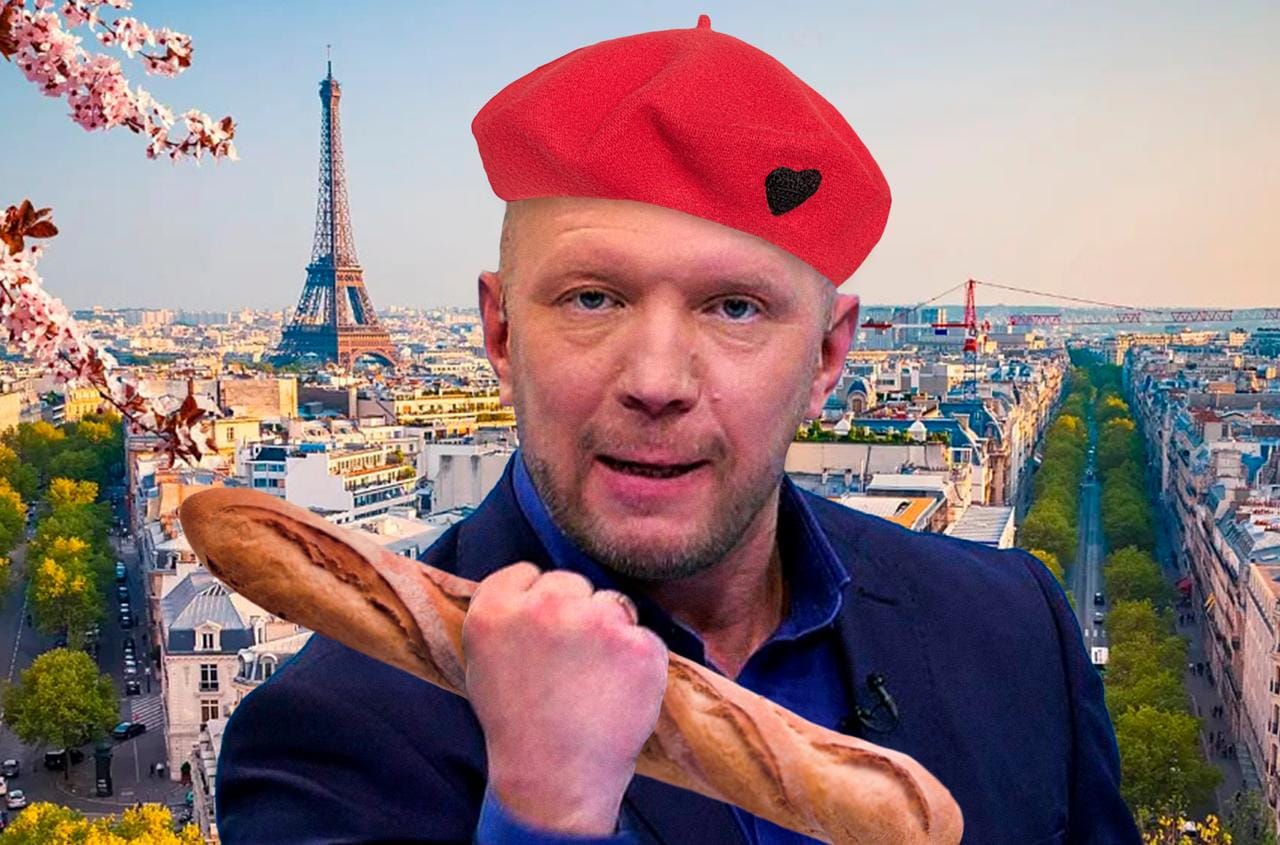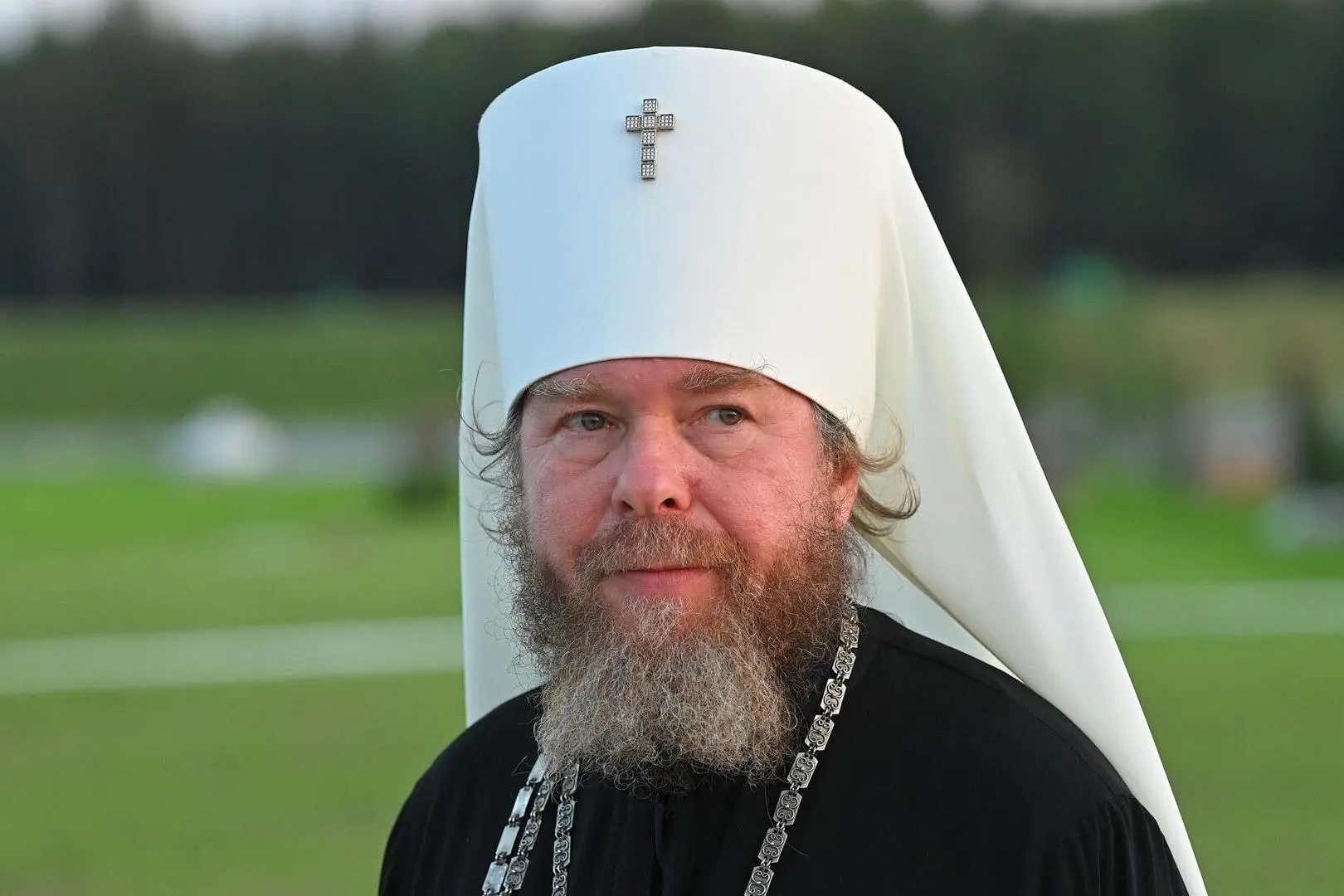
The Council of the European Union has added ten new names to its Russia sanctions list. The update includes Metropolitan Tikhon of Simferopol and Crimea, whose secular name is Georgy Shevkunov and who has been widely reported to be Vladimir Putin’s spiritual advisor. It also sanctioned Anatoly Kuzichev, a host of the talk show “Time Will Tell” (“Vremya Pokazhet”) on the state-controlled TV channel Perviy Kanal (lit. “Channel One”), a core vehicle for Kremlin-directed propaganda.
The Insider previously reported on Kuzichev’s frequent trips to Europe. The document was adopted under the EU sanctions regime against Russia’s “destabilizing activities.” The Council of the EU said those listed were involved in spreading Russian propaganda and disinformation, justifying the war against Ukraine, or helping promote Kremlin narratives abroad. The sanctions freeze any assets they hold in the European Union and bar European citizens and companies from providing them with funds or economic resources.
Shevkunov is listed in the document as a bishop of the Russian Orthodox Church, Metropolitan of Simferopol and Crimea, head of the Crimean Metropolia, and deputy chair of the Public Council under Russia’s Education Ministry. In its sanctions justification, the Council of the EU alleged that Shevkunov had spread Russian propaganda and disinformation about supposed “Nazism” in Ukraine, denied the fact of Ukrainian sovereignty, and justified Russia’s invasion as necessary, defensive, and “divinely sanctioned.” The EU also cited his sermons, media platforms, state cultural projects, and fundraising for Russian troops in occupied Crimea.
Kuzichev was listed as a television and radio host, columnist, and producer. His most notable role is as a host of the political talk show “Time Will Tell” on Channel One. The document described him as a “prominent Russian propagandist” who justifies the war against Ukraine, portrays Ukraine as an aggressive and repressive state, and supports Russia’s military actions, including strikes and targeted killings, as necessary and justified.
In 2025, The Insider reported that Kuzichev, despite his anti-Western rhetoric, regularly traveled to Europe. According to the investigation, which was based on a leaked Russian database of border crossing information, his most frequent European destination was Paris, though he also visited Amsterdam, Barcelona, and Venice. Kuzichev was not yet under EU sanctions at the time.
In addition to Shevkunov and Kuzichev, the sanctions list includes:
- Maria Dudko, director of the PR agency Bezgranichnye (lit. “Limitless”). The Council of the EU said the agency was financed through Russia’s Presidential Fund for Cultural Initiatives and worked with Western influencers who amplified Kremlin narratives and pro-war propaganda.
- Alexandra Jost, also known as Sasha Jost, a blogger and influencer who runs the accounts Sasha Meets Russia and Sasha and Russia. The EU said she used cultural content as cover to spread pro-war and pro-Kremlin propaganda to Western audiences, received money from RT, and obtained grants through structures linked to Limitless.
- Roman Antonovsky, a commentator, propagandist, and author of the Telegram channel “Sons of Monarchy.” Antonovsky is also linked to the pro-Kremlin Orthodox nationalist media outlet Tsargrad. The Council of the EU accused him of spreading anti-Ukrainian propaganda, denying Ukrainian statehood, and promoting the concepts of the “Russian world,” “Malorossiya” (lit. “Little Russia”), and “Novorossiya.” The “Russian world” is a Kremlin-backed ideological concept portraying Russian-speaking and Orthodox communities as part of Moscow’s sphere of influence, “Malorossiya” is an imperial-era term for Ukraine, and “Novorossiya” (lit. “New Russia”) is a historical term that Russian nationalists use to denote parts of southern and eastern Ukraine.
- Pavel Astakhov, a lawyer, television host and former Russian presidential children’s rights commissioner. The document said he supported the annexation of Crimea, traveled to occupied areas of Donbas without the consent of Ukrainian authorities, and promoted narratives through the media that justified violations of Ukraine’s sovereignty.
- Olga Kiriy, a journalist and producer at RT Documentary. The Council of the EU described her as the author and producer of propaganda films that justify the war against Ukraine and portray Ukraine as a “fascist” or “toxic” state. The document noted that her work has been distributed outside Russia as well as inside the country.
- Igor Maltsev, a columnist for RT, Life, and Kommersant, as well as a writer, commentator, and television host. The EU said he spreads propaganda and disinformation, justifies the occupation of Ukrainian territories, glorifies Russian troops, and promotes false narratives about Kyiv and the Ukrainian army.
- Maria Volkonskaya, editor-in-chief of Krymskaya Gazeta (lit. “Crimean Newspaper”), a newspaper controlled by the Russia-installed authorities in occupied Crimea. The Council of the EU said she spreads anti-Ukrainian propaganda, dehumanizes Ukrainians, presents Ukrainian authorities as illegitimate or extremist, and tries to undermine international support for Ukraine.
- Kirill Fedorov, a military blogger, author of the Telegram channel “War. History of Weapons” and a host on Solovyov Live, the YouTube channel run by well-known propagandist Vladimir Solovyov. The EU said Fedorov describes occupied Ukrainian territories as “liberated,” raises money for Russian military units, and uses those fundraisers to promote pro-war narratives.
The only organization sanctioned was the Presidential Fund for Cultural Initiatives. The Council of the EU said the fund, created by a decree fromVladimir Putin, awarded grants to projects supporting the war against Ukraine and financed the PR agency Limitless, which the EU said worked with Western influencers to spread Kremlin narratives.