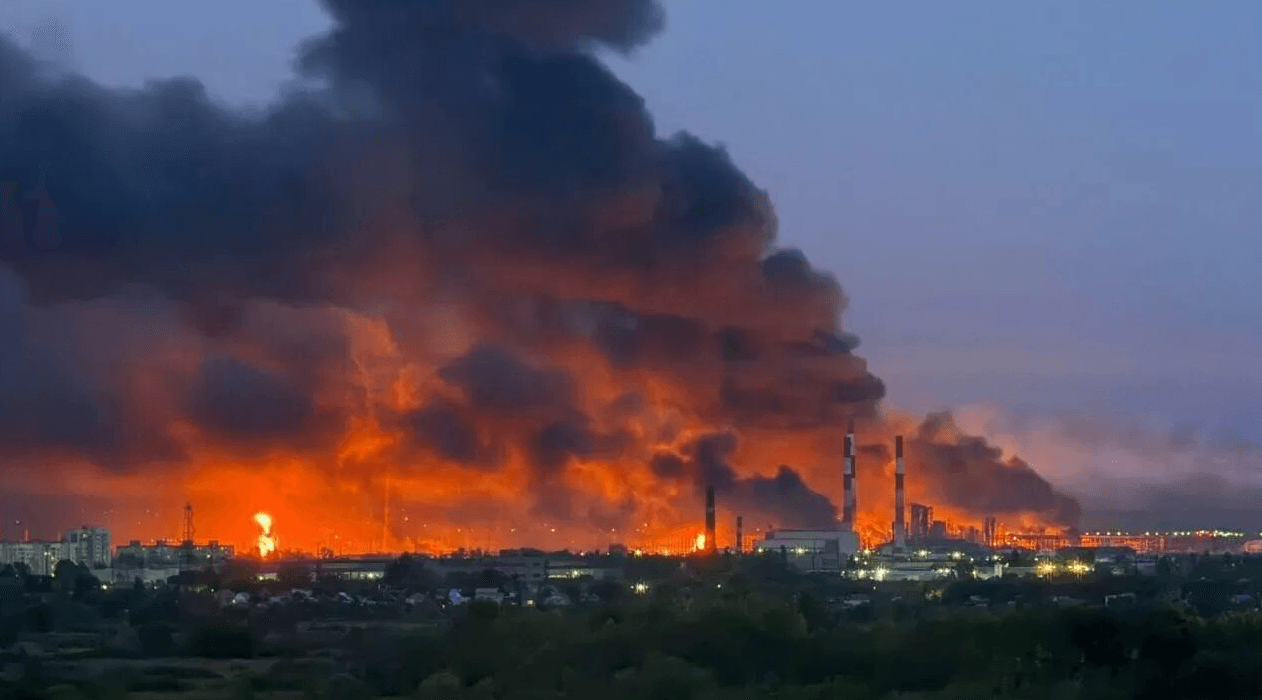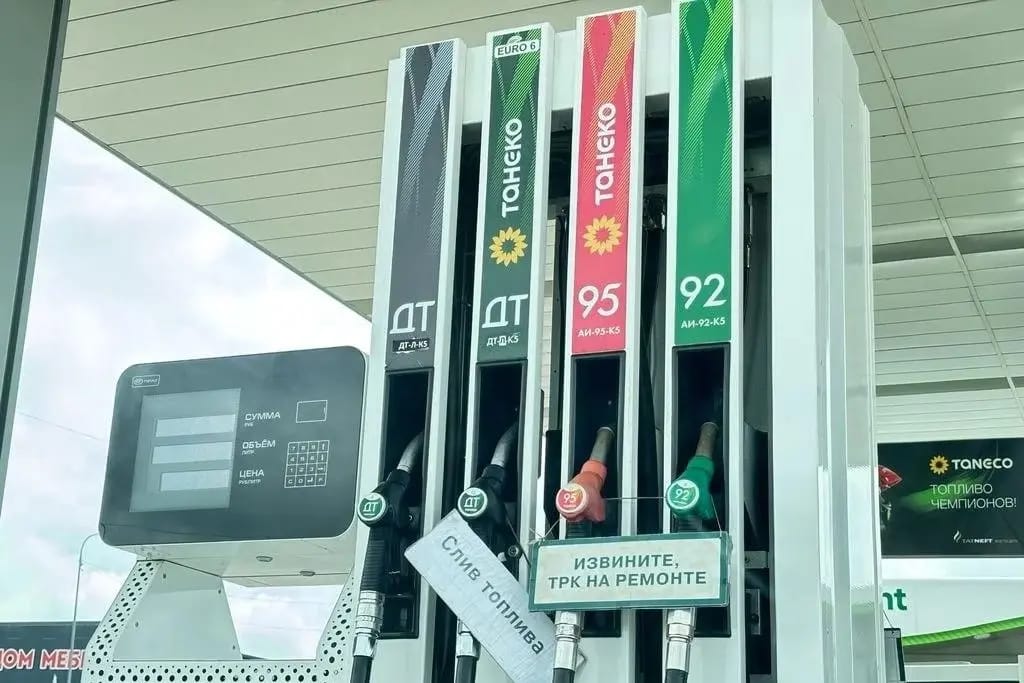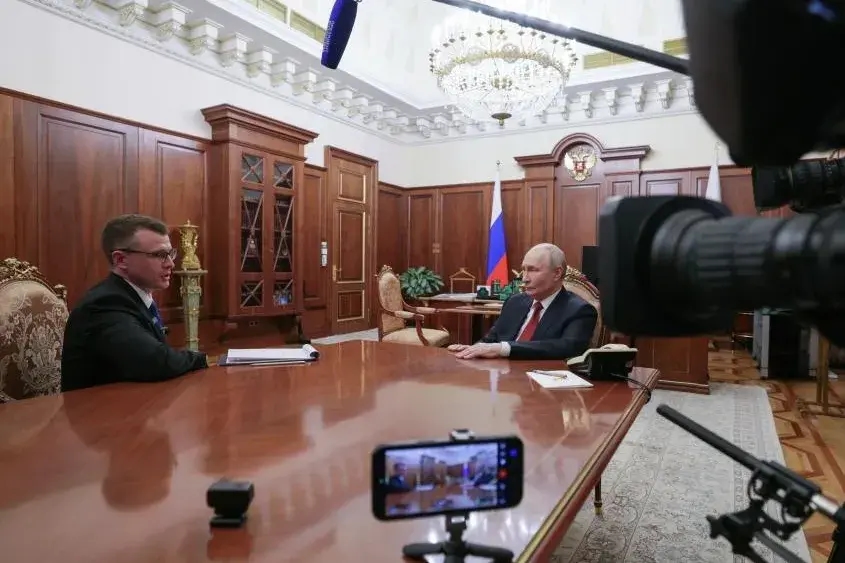
On June 28, Vladimir Putin acknowledged that Russia is seeing “a certain shortage” of fuel but said it was “not critical.” He made the remarks in an interview with Pavel Zarubin, a correspondent for the state television channel Rossiya, that was published on the Kremlin’s website.
“As for strikes on critical infrastructure in general and energy infrastructure in particular, of course these strikes on our infrastructure facilities create problems. That is obvious. We are now seeing a certain shortage, but it is not critical,” Putin said before adding that Crimea’s fuel reserves are sufficient for only a few more days. “As for supplies of energy resources to Crimea, the monthly need — the minister reported this to me — is 70,000 metric tons. Crimea now has reserves for several days, but the needs will be met. We will increase these supplies both overland and by sea. I am confident this task will be solved.”
Putin then claimed that Ukrainian strikes on Russian infrastructure are being carried out “to create self-doubt among us, doubt in our strength, and even better, to cause a split in Russian society and force Russia to suspend, at least for a short time, the advance of our troops along the line of contact and create conditions for the start of a negotiation process on terms favorable to themselves, that is, to our adversary… We will not give them that chance. This is all the more important because all these terrorist sorties do not affect the situation at the front in any way.”
Putin said the Russian authorities plan to take several steps to address the fuel shortage:
- “Quickly and significantly increase production of the most in-demand air defense systems.”
- “Bring facilities out of repairs faster, arrange the necessary volume of imports and reliably cover these [oil refining] facilities.”
- “Coordinate the work of all levels and structures involved in repelling attacks by unmanned aerial vehicles and missiles on our infrastructure.”
Putin claimed that Ukrainian authorities had proposed a deal whereby both sides would halt strikes deep inside enemy territory, saying:
“It is clear why this proposal is being made: because our retaliatory strikes deep inside Ukrainian territory are much more powerful, sensitive, and, frankly, destructive, and they lead to truly serious consequences for the Kyiv regime. Another proposal is to limit combat operations to only four territories — that is, to conduct combat operations only in the Kherson region, Zaporizhzhia region, the Donetsk People’s Republic, and the Luhansk People’s Republic, and to stop combat operations in all other territories.
It is also clear why: because if we agree to this, it would allow the Ukrainian armed forces to withdraw their troops from the Mykolaiv, Dnipropetrovsk, Kharkiv, and Sumy regions, as well as from some sections of the state border, and redeploy those units to the four regions named above.
In conditions of a catastrophic shortage of personnel in the Ukrainian armed forces, they apparently believe this could save them. But saving the Kyiv regime is not part of our plans, even if we treat every proposal coming from that side with attention — and I say this now without any irony.”
The “Donetsk People’s Republic” and “Luhansk People’s Republic” are Russian-backed entities in occupied eastern Ukraine. Moscow claims to have annexed them, along with the Kherson and Zaporizhzhia regions. However, the annexations are illegal and not internationally recognized, and Russia does not fully control all of the territory it claims.
When asked by the correspondent whether the United States had changed its position on the war in Ukraine under pressure from the European Union, Putin said he did not believe that was the case. Putin called Trump “a more than mature and experienced politician” and said Moscow was ready to “continue negotiations and discuss all the details.” He said the Kremlin was waiting for U.S. negotiators to arrive, adding that a delegation had not been to Russia since January.
In late March, Ukrainian President Volodymyr Zelensky said Kyiv was ready for an “energy ceasefire, saying: “I emphasize once again: If Russia is ready not to strike Ukrainian energy facilities, we will not strike their energy facilities. We are ready to discuss any ceasefire.”