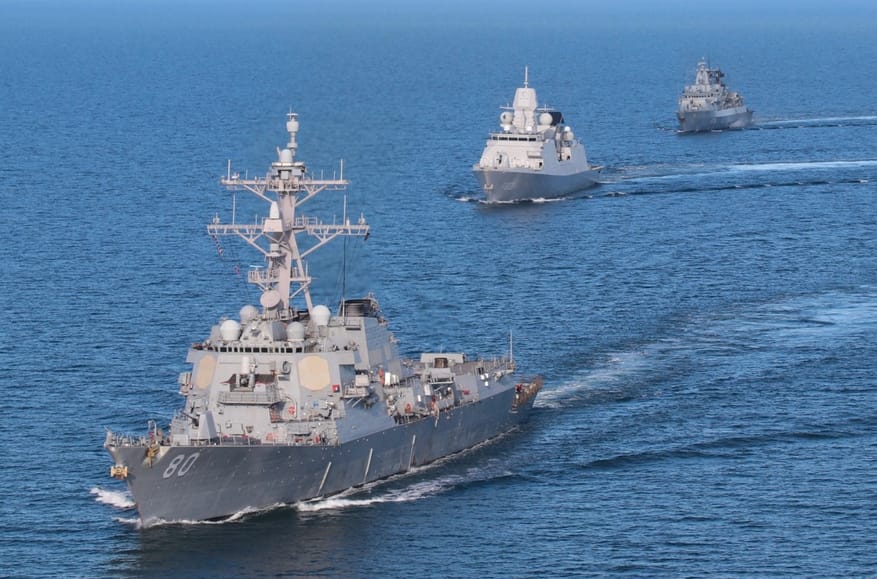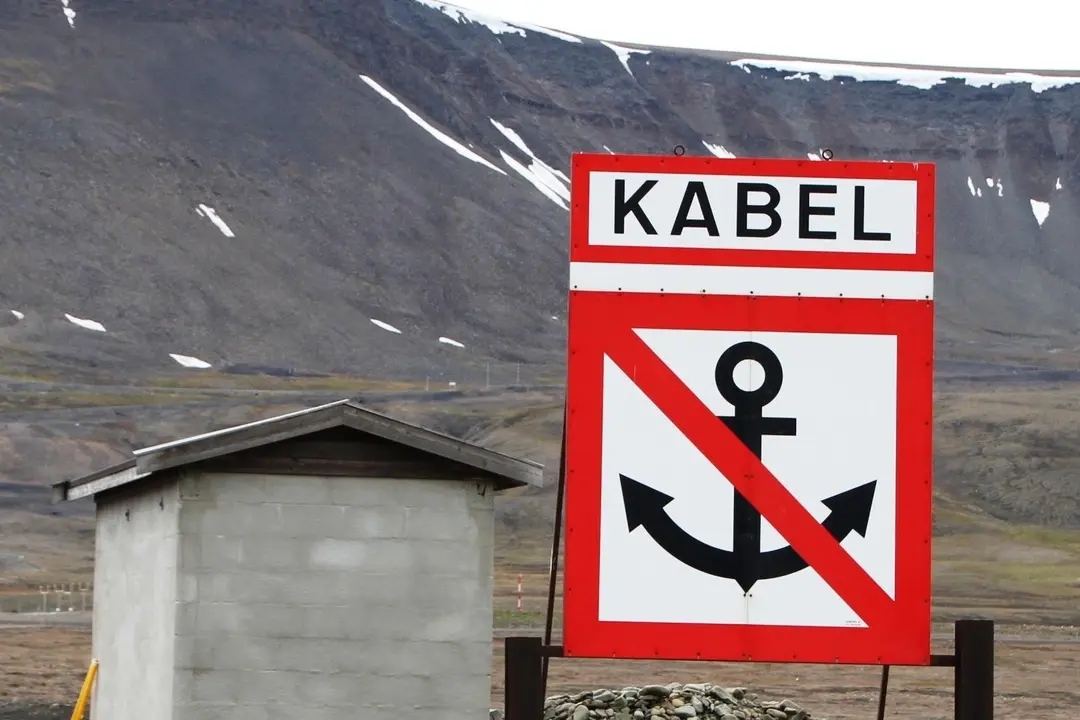
In the spring of 2026, the UK, Norway, and the U.S. disrupted a Russian operation near the Norwegian archipelago of Svalbard, where deep-sea vessels were practicing the use of new technology designed to covertly disable undersea cables, according to a Reuters report citing two Western officials.
According to the news agency, the operation was carried out by the Russian Defense Ministry’s Main Directorate of Deep-Sea Research, known by its Russian acronym GUGI. The highly secretive military unit operates specialized ships and deep-diving vessels and is associated with work on undersea infrastructure.
Russian deep-sea vessels simulated the use of technology that could be employed during a conflict to damage critical underwater infrastructure in a way that would make it difficult to determine who was responsible, Reuters reported.
The Russian ships were tracked by British, Norwegian and U.S. forces, and a confrontation at sea prevented the Russian side from completing the exercise. No cables were actually damaged. The UK and Norway said in April that they had detected covert GUGI activity in Arctic waters, but the alleged test of new technology, the operation’s location near Svalbard, and the fact of U.S. involvement had not previously been reported.
Reuters’ sources said British and Norwegian officials also informed Moscow that they were aware of the new technology. The aim of the Western countries was to demonstrate that such operations could be detected and to deter Russia from using it.
“We sent a clear message to Russia that they cannot operate covertly,” commented Norwegian Defense Minister Tore Sandvik. Moscow was told that attempts to attack critical infrastructure “will be detected and met with consequences,” he added.
Russia’s Defense Ministry did not respond to Reuters’ request for comment. The Kremlin has repeatedly denied carrying out sabotage operations in NATO countries or preparing for a conflict with the alliance.
Why the cables are strategically important
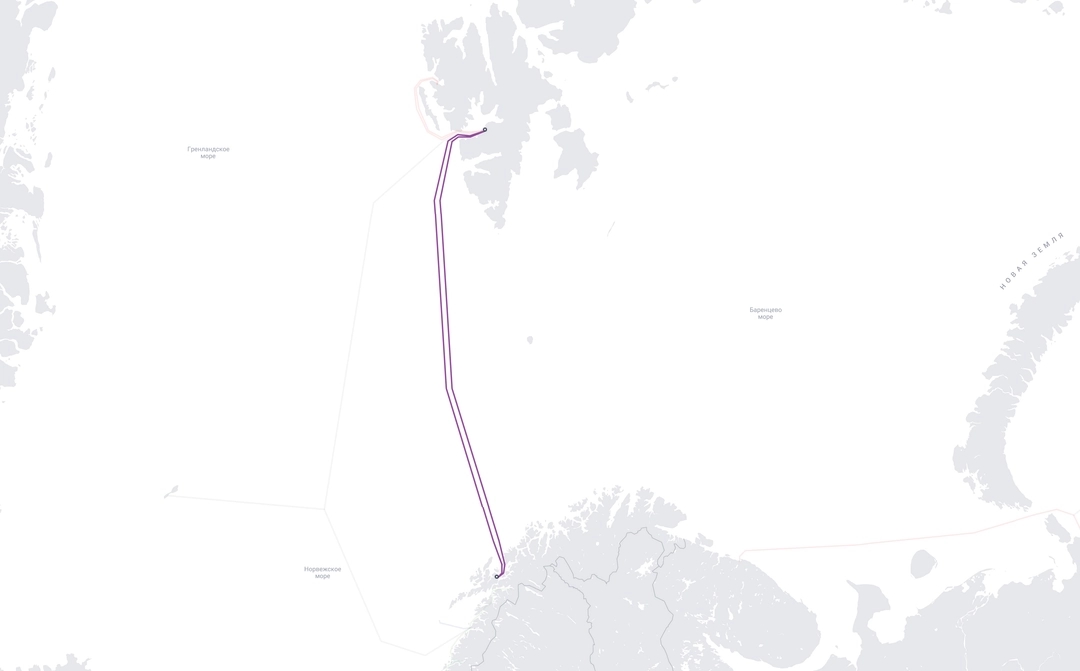
Two separate fiber-optic cables, each about 1,400 kilometers long, connect the Svalbard archipelago with mainland Norway. They lie at depths of up to 2,700 meters and make up the Svalbard Undersea Cable System, effectively the archipelago’s digital backbone.
Among other things, the cables carry large volumes of satellite data from SvalSat, the world’s largest commercial ground station for polar-orbiting satellites and part of NASA’s Near Space Network. The cable system is owned by state-controlled Space Norway and has operated since January 2004.
The two cables run along parallel routes to provide redundancy — if one is damaged, traffic can be rerouted through the other.
According to Space Norway, each steel-reinforced cable is only 2 to 3 centimeters thick, housing eight pairs of optical fibers under a protective sheath.
Along the most vulnerable stretches, where fishing trawlers or ship anchors pose a threat, the cables are buried around 2 meters beneath the seabed. West of Svalbard, the sea is about 1,670 meters deep. Elsewhere, the route descends as far as 2,700 meters.
The cables were originally constructed primarily to serve SvalSat. Svalbard is exceptionally well positioned for communicating with satellites in polar orbits, and the station receives enormous volumes of satellite data that must be transmitted quickly to the mainland.
Today, the cables carry much more than satellite data. Ordinary telephone and internet services for Svalbard residents depend on the connection, and government agencies, health services, research institutions, and aviation use them for communication. Norway’s airport operator Avinor, for example, uses the system for air traffic control at Svalbard Airport.
Norway officially classifies the system as critical infrastructure.
Because SvalSat is also part of NASA’s Near Space Network, an attack on the cables could do more than simply leave Longyearbyen without internet access. It could also disrupt the transmission of satellite data.
One of the cables has already been damaged
At 4:10 a.m. on Jan. 7, 2022, one of the two cable links stopped functioning properly. Svalbard did not lose connectivity because the second cable took over the traffic, but the system lost its redundancy.
The technical cause was a loss of power to repeaters after the cable was damaged. Eleven days later, Space Norway was able to temporarily restore redundancy by supplying power through an alternative route.
The circumstances appeared suspicious at the time. The Russian trawler Melkart 5 crossed the area above the cable more than 30 times in the two days before the failure, and Norwegian police questioned the captain. Investigators, however, were not able to link the trawler’s movements to the cable damage; they found no evidence of a crime and closed the case.
The damaged cable was not fully repaired until June 2023. Space Norway says the system’s security was significantly strengthened afterward, reinforcing broader upgrades that were carried out between 2018 and 2024.
The cables are aging, however, and the current system’s projected technical service life ends in late 2028. It could continue operating beyond that date, but Space Norway says there is no guarantee it will.
Why Moscow might prepare new sabotage operations
Reuters said the incident comes amid growing concern among Western intelligence agencies over possible Russian sabotage operations in Europe.
According to three U.S. officials cited by Reuters, some American intelligence analysts are concerned that Moscow could try to test the dependability of NATO’s Article 5, which holds that an armed attack on one NATO member is considered an attack on all. As the officials told Reuters, damage to undersea cables could form one element of such a Russian operation.
CIA Director John Ratcliffe traveled to Moscow in August for talks with representatives of Russia’s intelligence agencies. Reuters reported that one purpose of the trip was to warn Moscow against further escalation of alleged sabotage operations in Europe, though it was not clear whether GUGI’s activities were specifically discussed during the visit.
NATO stepped up surveillance of undersea infrastructure after the explosions that damaged the Nord Stream gas pipelines in 2022, which German prosecutors have linked to a Ukrainian citizen who was serving in the country’s special forces at the time of the incident. Kyiv denies involvement in the pipeline blasts.
According to maritime analytics company Windward, at least 11 undersea cables were damaged or severed in the Baltic Sea alone between October 2023 and the end of 2025.