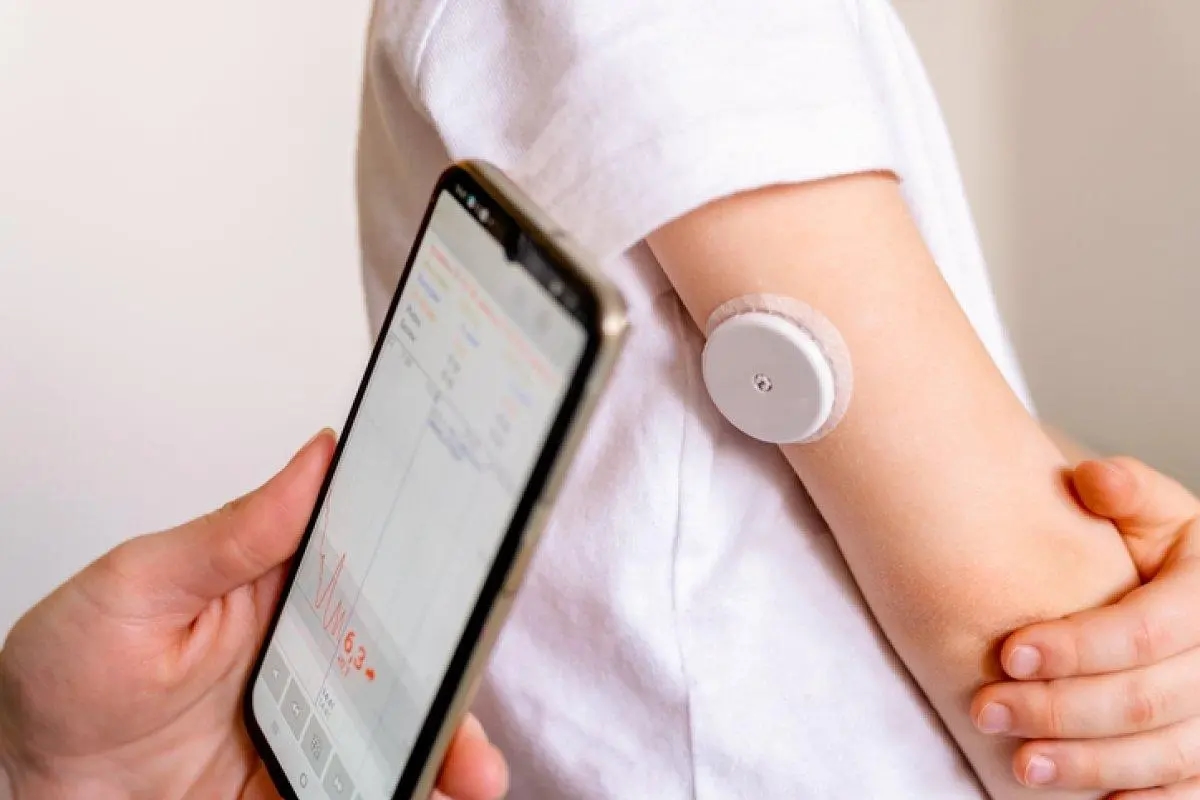
Sinocare, the maker of iCan sensors, said on Oct. 11 that its service provider was experiencing problems following a series of Ukrainian drone attacks on data centers run by the Russian tech giant Yandex. iCan said the disruptions could make it difficult to activate the company’s new continuous glucose monitoring (CGM) sensors and could also affect the iCan Health and iCan Reach apps. Continuous glucose monitors alert patients when blood sugar levels are too high or too low, helping prevent hypoglycemia — a dangerous drop in blood glucose that can lead to coma or death.
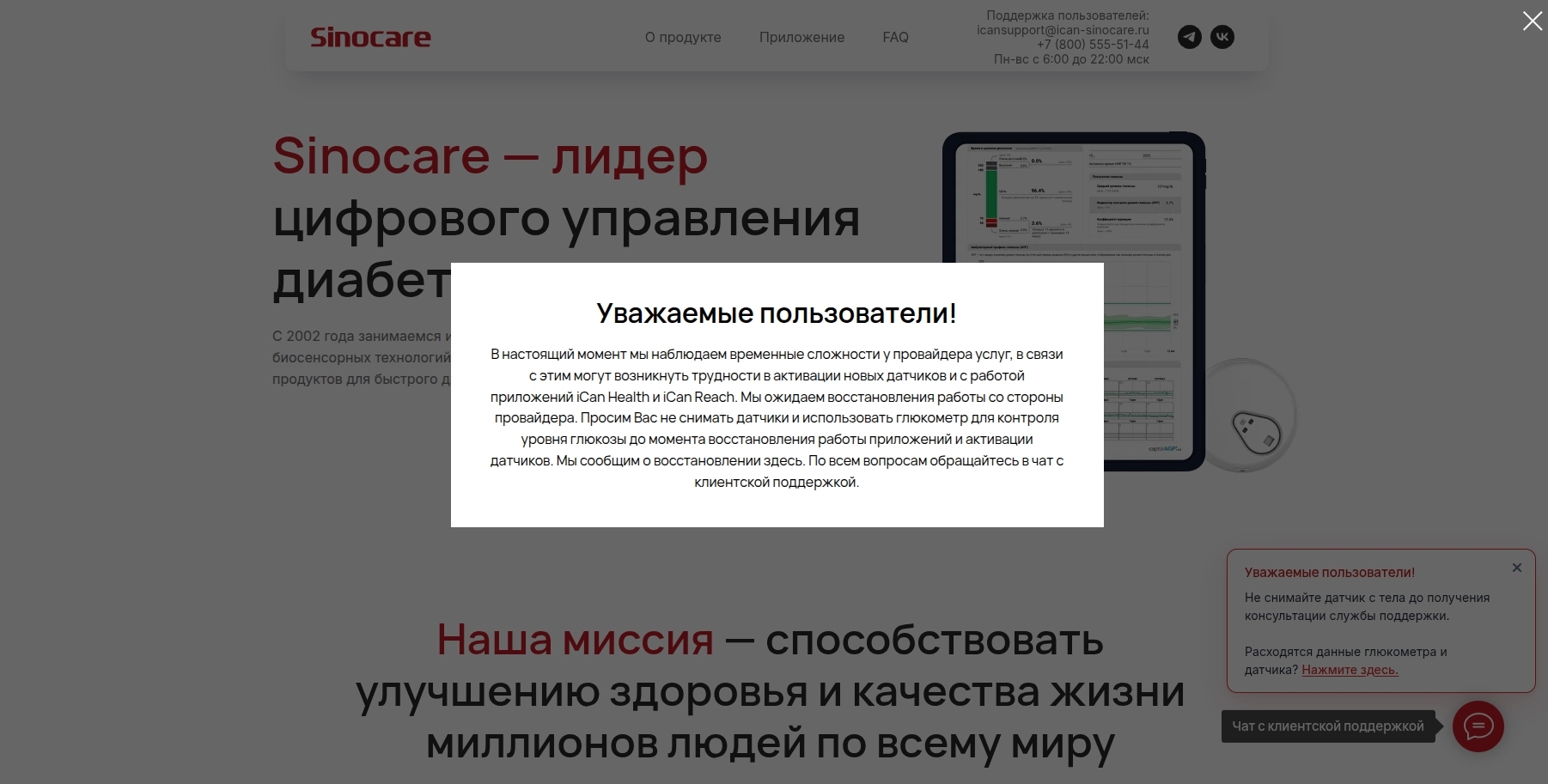
The company advised users not to remove sensors already in place and to use a blood glucose meter to monitor their levels until the apps and sensor activation services are restored.
Users have also reported problems in using the software. Complaints reviewed by The Insider included being unable to launch the iCan 3 app, even after deleting and reinstalling it, as well as failures in remote monitoring on a parent’s phone. Among the complaints were:
“Good afternoon, is the iCan app not working for everyone?”
“Hello, could you please tell me whether iCan monitoring has glitched? The parent app was deleted, I downloaded a new one and still can’t get it to start.”
“Hello. Is there anyone whose iCan 3 sensor app has stopped working?”
“Good afternoon, the parent app hasn’t been working since this morning. Is maintenance underway, or is it just me?”
In Sinocare’s official support chat for customers in Russia, representatives said the problems were linked to its provider, Yandex, and that service was expected to be restored.

The Insider found that this was far from the first report of problems accessing CGM data in Russia. Since Oct. 8, 2026, the Nightscout.online, Autotune Pro, and DiaMate bot services have been unavailable, with the operator saying that the outage was caused by an incident at a Yandex data center. Also on Oct. 8, Ukrainian drones attacked the company’s data center in Sasovo in Russia’s Ryazan Region.
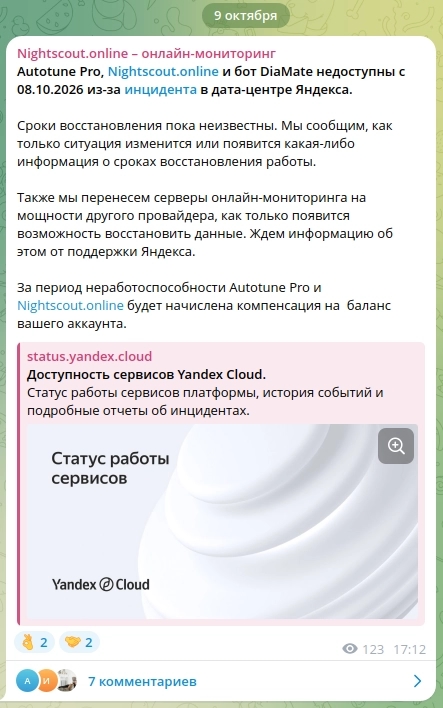
Nightscout.online allows users to view continuous glucose-monitoring data remotely — for example, letting parents track a child’s readings while the child is at school. Autotune Pro is used to analyze diabetes data and assess insulin-therapy settings. There is currently no timeline for restoring the service. The operator is waiting for information from Yandex technical support and plans to move the online-monitoring servers to another provider once the data can be recovered.
For parents of children with Type 1 diabetes, the outages mean losing one channel of remote monitoring. Without the availability of glucose monitoring data on a parent’s phone, it can be harder to decide in time whether to give insulin or, conversely, to protect a child from hypoglycemia. The lack of data can also prevent automated insulin-delivery systems, known as “closed-loop” systems, from working because they rely on readings from CGM sensors.
iCan sensors had previously been included on the Russian Digital Development Ministry’s so-called “white lists,” which were intended to keep essential services working during periods of mobile internet restriction imposed by Russian authorities. The ministry said at the time that all CGM systems on the list used computing resources and processed data exclusively inside Russia.
From Oct. 8 through Oct. 11, Ukrainian drones attacked three Yandex data centers — in Sasovo, Kaluga, and Vladimir. After the latest attack, the Vladimir data center shut down completely, and the Yandex Cloud platform switched to emergency mode after two server availability zones became unavailable at the same time. Yandex warned customers that the remaining infrastructure was unstable and advised them to use alternative sites to restore services.
The outage affected at least six countries. In Russia, disruptions hit Yandex services, retail chains, delivery services, as well as banking and transportation apps. Two federal information systems operated by Rosselkhoznadzor, Russia’s agricultural and veterinary watchdog, were placed in emergency mode. The systems are used for veterinary oversight and pesticide tracking. Amid the attacks, Yandex reached agreements with rival cloud providers to speed up the transfer of affected customers’ services. There is still no timeline for a full restoration of the infrastructure.