
During the NATO summit in Ankara in early July, U.S. President Donald Trump said a ceasefire agreement with Iran — reached less than a month earlier — was no longer in effect. The memorandum of understanding signed with Tehran on June 17 was one of the foreign policy “deals” Trump has repeatedly touted since returning to the presidency. Trump’s deal-driven approach reflects his most prominent foreign policy initiatives: the war in Iran, threats to annex Greenland, demands that Washington’s NATO allies increase defense spending, and efforts to broker an end to the war in Ukraine. The results have ranged from relative success to complete failure, showing that even the most aggressive negotiating tactics do not work without a carefully developed strategy — and Trump has serious problems on that front, writes Daniel Fried, a former U.S. Assistant Secretary of State for European and Eurasian Affairs and former State Department Sanctions Policy Coordinator.
“President Trump is the Dealmaker in Chief who means what he says and gets things done,” White House spokesman Kush Desai told journalists this past May.
The Insider asked me, a 40-year veteran of the Foreign Service, whether President Donald J. Trump’s dealmaking approach to international conflicts — trying to jam through quick, tangible results — can work. Short answer: it can. Trump’s signature tactics — pressure, bluster, unpredictability, insistence on tangible results, and tactical flexibility — can be used to good effect. Storied U.S. diplomat Richard Holbrooke famously used all of these tools and more to hammer warring parties into a deal to end the Bosnian War in 1995.
But to succeed, dealmaking must be informed by an accurate assessment of the problem, by a realistic sense of the other side’s (and our own) assets and liabilities, and by a sustainable strategy that the dealmaking effort in question is intended to advance. The Trump administration has struggled to meet these tests.
Success in policy making starts with understanding the issue at hand, knowing what it is about. The Insider also asked whether the Trump dealmaking approach risked oversimplifying complex problems. It can. But the best intelligence officer I ever worked with often remarked that for any given problem, they would ask what it is in its essence.
Simplification is not a lazy shortcut but a necessary exercise. The U.S. Civil War had complicated origins but, as Lincoln put it in his Second Inaugural Address, it was about slavery. The Cold War was about containing the Soviet Union before it could extend its empire further into Europe, and winning the Cold War required supporting democratic patriots chafing under the Soviet empire.
Boiling down a problem is easier said than done, of course. What becomes clear in hindsight is often obscured when we try to look ahead. Explaining to the President, Secretary of State, or National Security Advisor the boiled-down nature of whatever awful problem you are putting on their desk is a core task of any senior diplomat or specialist. The trick is to get it right.
The Trump administration’s dealmaking record has been uneven in four major foreign policy issues of its second term: Greenland, Iran, the Russia-Ukraine War, and transatlantic relations
In four major foreign policy issues of its second term — Greenland, Iran, the Russia-Ukraine War, and transatlantic relations — the Trump administration’s dealmaking record has been uneven. It has often (though not always) misjudged the problem at hand and failed to assess its or its adversaries’ strengths and weaknesses.
The administration has often failed to embed whatever deal it sought in a larger, sustainable strategy. The administration can, in its own fashion, land deals and course correct. I’ve sorted its dealmaking record on these four issues from the worst to better.
No deal on Greenland
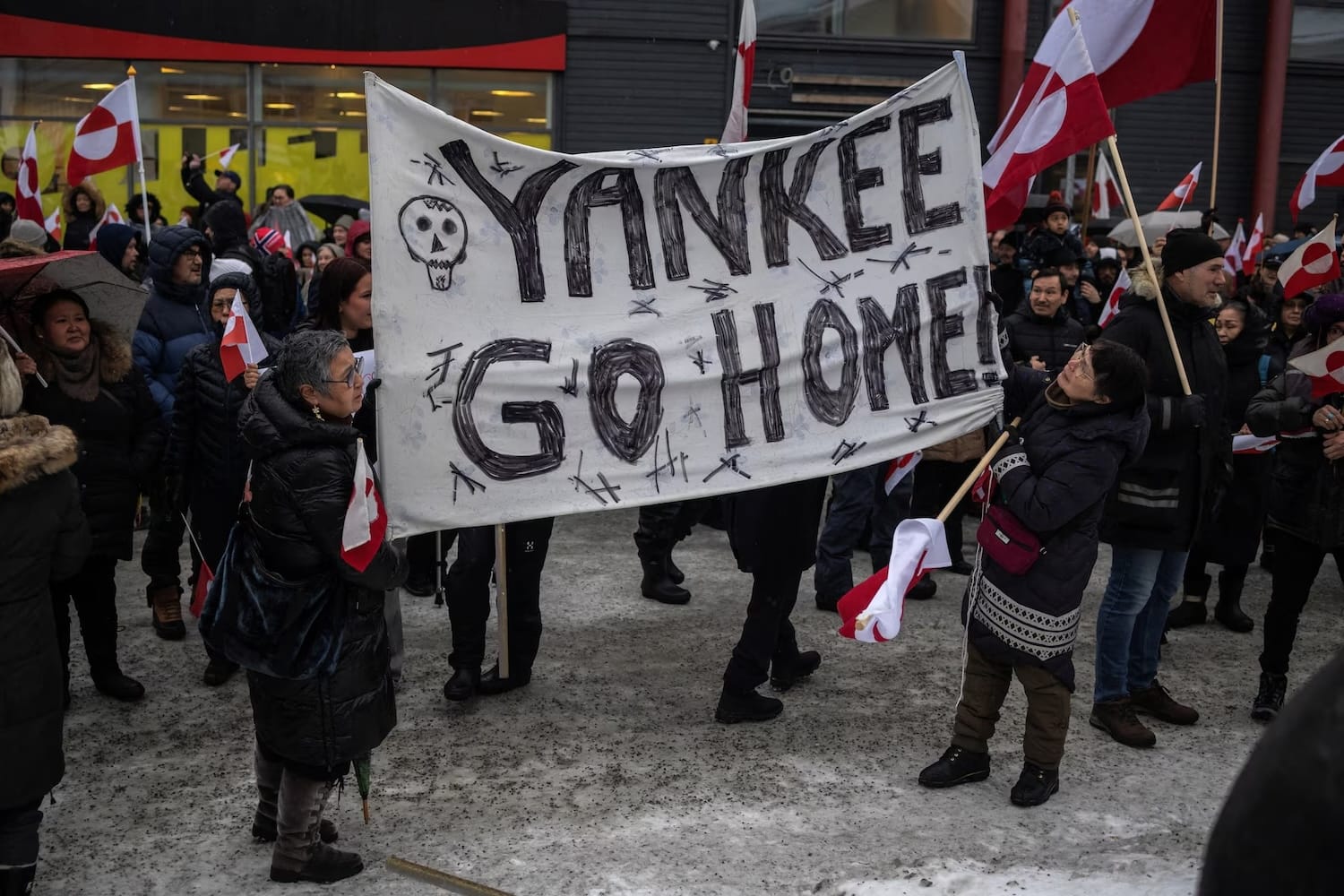
Trump’s ambition to annex Greenland, part of the Kingdom of Denmark, is perhaps his worst foreign policy idea and the one for which there is the least excuse. U.S. security interests in Greenland, the ostensible reason for Trump’s claim, can be addressed via the 1951 Defense of Greenland Agreement, a permissive document, and through the ongoing tripartite talks between the U.S., Denmark, and Greenland.
Trump made up the problem of a security gap in Greenland that could be filled only with U.S. annexation. He also misjudged Denmark’s and Greenland’s reaction to his pressure: rather than fold or bargain for a selling price, the Danish government, with support at home and from key European allies, resisted U.S. pressure and even prepared to defend itself should the U.S. attack.
Greenlanders showed little interest in accepting U.S. control. Trump re-raised his claims to Greenland just before the NATO summit in Ankara, triggering immediate and strong pushback from Danish Prime Minister Mette Frederiksen.
Trump made up the problem of a security gap in Greenland that could be filled only with U.S. annexation
Trump had few cards to play to achieve his questionable Greenland objective; no dealmaking skills could change this. And a good thing, because the underlying strategic rationale for his Greenland claim is awful: that annexation, not alliance, is necessary to advance U.S. interests.
The Greenland gambit, if successful, would have undermined the U.S. web of alliances around the world that have extended U.S. power through willing, sometimes eager, allies and friends. As it is, the U.S. threat of aggression against its Danish ally has damaged U.S. standing in a country that had sent its troops to fight in Afghanistan and Iraq, and in Europe generally. It’s been a sorry chapter but, possibly, one that has diminished from real threat to mere trolling.
Grasping for an Iran deal
Iran’s regime is violent and oppressive at home and an exporter of terror and violence abroad. Its nuclear ambitions are a threat to the region and the world. Outside of fellow tyrants, few would have regretted the regime’s fall under the pressure of a U.S. attack or by its own people.
The Trump administration overestimated its ability to crush the Iranian regime
The failure (so far) of the U.S. campaign against Iran is a product of underestimating the regime’s tenacity and its ability to close or complicate passage through the Strait of Hormuz. The Trump administration overestimated its ability to crush the Iranian regime or force it to accept U.S. terms through air and naval power alone.
The administration was not realistic in assessing its and its adversary’s respective assets and liabilities. Dealmaking skills — i.e. Trump’s alternating threats and offers directed at Iran — could not bridge that gap. Lacking broad public support for military operations against Iran and given concerns over oil prices, the administration appeared eager, even desperate, to reach a deal with Iran.
The 14-point U.S.-Iran Memorandum of Understanding concluded in June essentially reopened the Strait of Hormuz (in ways that gave Iran rights of rights that it did not have before) in exchange for an easing of Washington’s economic pressure. The MOU postponed discussions on nuclear issues, a core and longstanding U.S. objective, and was weaker overall than the U.S.-Iran nuclear deal of 2015 (the JCPOA) that Trump had denounced from the first. In short, this was dealmaking from a relatively weak position.
The 14-point Memorandum of Understanding concluded in June essentially reopened the Strait of Hormuz in ways that gave Iran rights of rights that it did not have before
Perhaps aware of the shortcomings of the deal he had accepted, Trump has denounced the “permanent” ceasefire that the June MOU set out, resuming air attacks on Iran. Trump may hope that one more military campaign could lead to a better deal for the U.S.. It’s not a wholly vain effort.
The Iranian regime has been hurt and its capacity diminished, particularly given its relatively thin basis of support in the country. Iran’s attacks on its neighbors rebound against it. But thus far, Trump’s pressure-and-dealmaking with Iran may continue without much achievement.
The crooked road to a decent deal on Ukraine?
At the start of his second term, Trump had just about everything wrong when it came to the Russia-Ukraine War. He seemed to regard it as a territorial dispute in which the U.S. could play (mostly) neutral mediator and, like many, he regarded Ukraine as an inevitable loser to the larger and on-paper more powerful Russia.
His strategic framing of the war seemed to be based on a spheres-of-influence view, meaning that Ukraine had to accept its fate under Moscow’s sway, and that the U.S. has no real stake in that fight.
Trump was hardly alone in this: he was reflecting his version of the “realist” school of thinking that animated the Nixon Administration, which tacitly accepted Soviet domination of Central and Eastern Europe, and even some in the Obama administration who questioned whether the U.S. had strategic interests in Ukraine (I was in government during the first Russian invasion of Ukraine and witnessed these discussions then and after.) Trump pulled back U.S. support for Ukraine, ending grants of weapons and ammunition though not ending sales or intelligence sharing.
Trump’s dealmaking efforts on Ukraine reflected these mistaken assumptions: a low point was the U.S.-Russian draft 28-point peace plan of November 2025 that reflected Russia’s demands. That deal would have reduced Ukraine to a Russian satellite state and advanced the Kremlin objective of relitigating the fall of the Iron Curtain. It was bad dealmaking.
Fortunately, the Ukrainians would have none of it. Backed by key European countries and many in the U.S. Congress (and some in the administration), they resisted U.S. pressure to take a bad deal. They fought on, slowing Russian advances on the ground, inflicting increased casualties on Russian forces, and, in recent months, launching effective strategic strikes against Russian oil industry targets and Crimea.
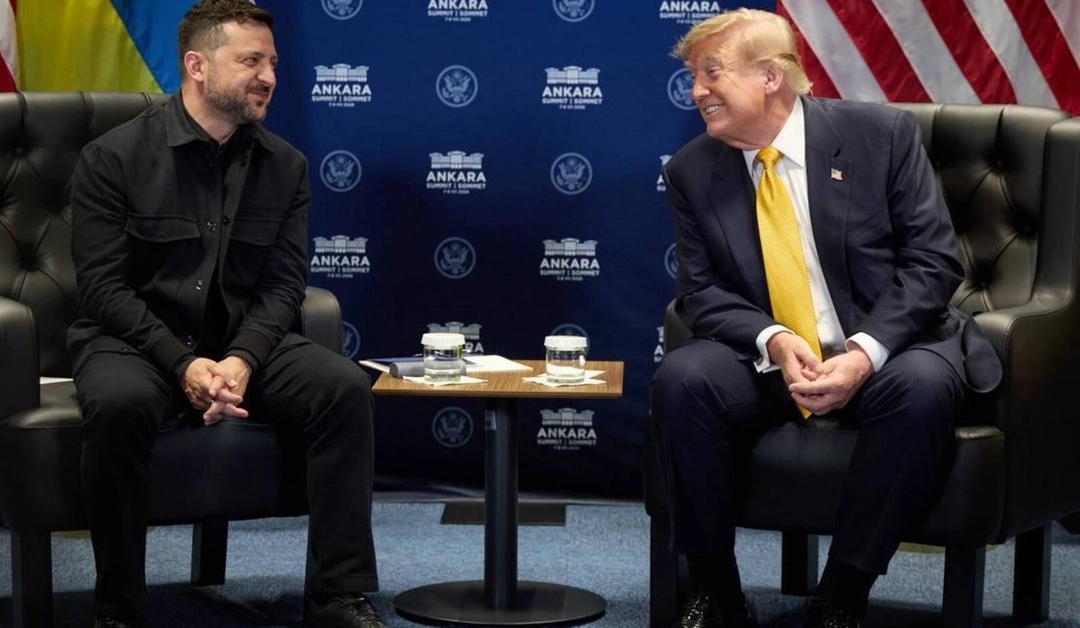
The Trump administration has responded reasonably well to this change of fortunes: Trump had a warm meeting with Ukrainian President Volodymyr Zelensky on the margins of the NATO Ankara Summit, during which he endorsed Ukraine’s deep strikes against Russian targets and shortly after offered to support Ukrainian production of Patriot missiles. This marks a big shift.
If sustained, it could result in a more productive deal: e.g., a ceasefire in place combined with security for Ukraine. Such a deal would mean the failure of Putin’s ambitions to reduce Ukraine to a puppet state or eliminate it altogether.
Putin will not accept the failure of his ambitions easily. Well-informed European governments believe he may escalate with aggression against Ukraine or European countries, seeking to frighten Ukraine’s chief European backers or the U.S. into backing away from Ukraine. To land a better deal on Ukraine, the Trump administration, and Trump himself, will have to show its dealmaking tough side to Putin.
Landing a deal on NATO’s future
Trump has long complained about NATO on two grounds. One was a lack of European military contributions, a frustration shared by previous U.S. Presidents since Eisenhower and one that has grown as key Western European allies allowed their militaries to weaken after the end of the Cold War. Trump’s second problem was NATO itself: he didn’t seem to value the alliance at all.
To complicate things, the Trump administration seemed divided between those who support NATO provided that Allies did their part to bolster the collective defense and those skeptical about NATO altogether. While attributing positions is an uncertain exercise, U.S. Ambassador to NATO Matthew Whitaker is probably in the first group and Under Secretary for Defense Elbridge Colby is probably in the second group.
For the Ankara NATO Summit to succeed, there needed to be a double deal: Allies had to agree to put up more on defense and Trump had to agree to back NATO on the basis of greater Allied military contributions. In other words, Trump had to take the win.
It worked. Allies agreed to increase their defense spending. Key large Allies — especially Poland and Germany — are building up their militaries fast, as are other capable smaller ones such as Finland. On that basis, and with a lot of work by NATO Secretary General Mark Rutte, Trump agreed to a positive NATO Summit statement that included confirmation of NATO’s determination to defend its members and language in support of Ukraine.
Trump’s pressure tactics were exasperating but played a role in landing the deal, a point some senior German officials made to me following the Summit. Putin’s war against Ukraine and aggression against Europe (and threats of more), however, played the bigger role in the rearmament of Germany, Poland, the Baltics, Finland, Sweden, and other NATO Allies.
Trump’s pressure tactics were exasperating but played a role in landing the deal with NATO
The deal reached at Ankara was a good one, but it will be tested by real world events. The administration is reviewing its force posture in Europe and the internal debate over the U.S. role in Europe’s defense will continue. The question will be whether the U.S. will maintain critical military capacity in Europe, plan the transition to greater European military contributions so there are no gaps in defense coverage, and be ready to fight if Russia attacks a NATO ally.
President Trump seems to love the dealmaking process: the pressure, sense of uncertainty, drama, suspense, and surprises. But his policy judgment is uneven. At worst (Denmark/Greenland) it is harmful for no good reason. With Iran, Trump seems to be kicking around, struggling for a better outcome than the one he landed in. With Ukraine and NATO, the U.S. could finally be pointed in the right direction, backing Ukraine and the Alliance as both do their part and more. But the adversaries — the Iranian and Kremlin regimes — will put Trump to the test. Dealmaking tactics will have to be guided by strategic soundness. Hang on for a bumpy ride.