
In March, Iran launched two ballistic missiles toward the island of Diego Garcia, the site of a key U.S.-British military base in the Indian Ocean. The island lies 4,000 kilometers from Iranian territory, making it the first known case in which the Islamic Republic has launched missiles to such a range (Paris, for example, is located at a similar distance). The strike is all the more notable given that, in 2017, Ayatollah Ali Khamenei promised to limit the range of Iranian missiles to 2,000 kilometers. According to Sam Lair, a researcher at the James Martin Center for Nonproliferation Studies, the episode should not be interpreted as a sign that arms control agreements are ineffective. However, instead of focusing on missile range, which actors like Iran and Russia can manipulate, a more realistic approach is to focus on safeguards to limit the number of missiles, launchers, and production volumes.
The ayatollahs strike the atoll
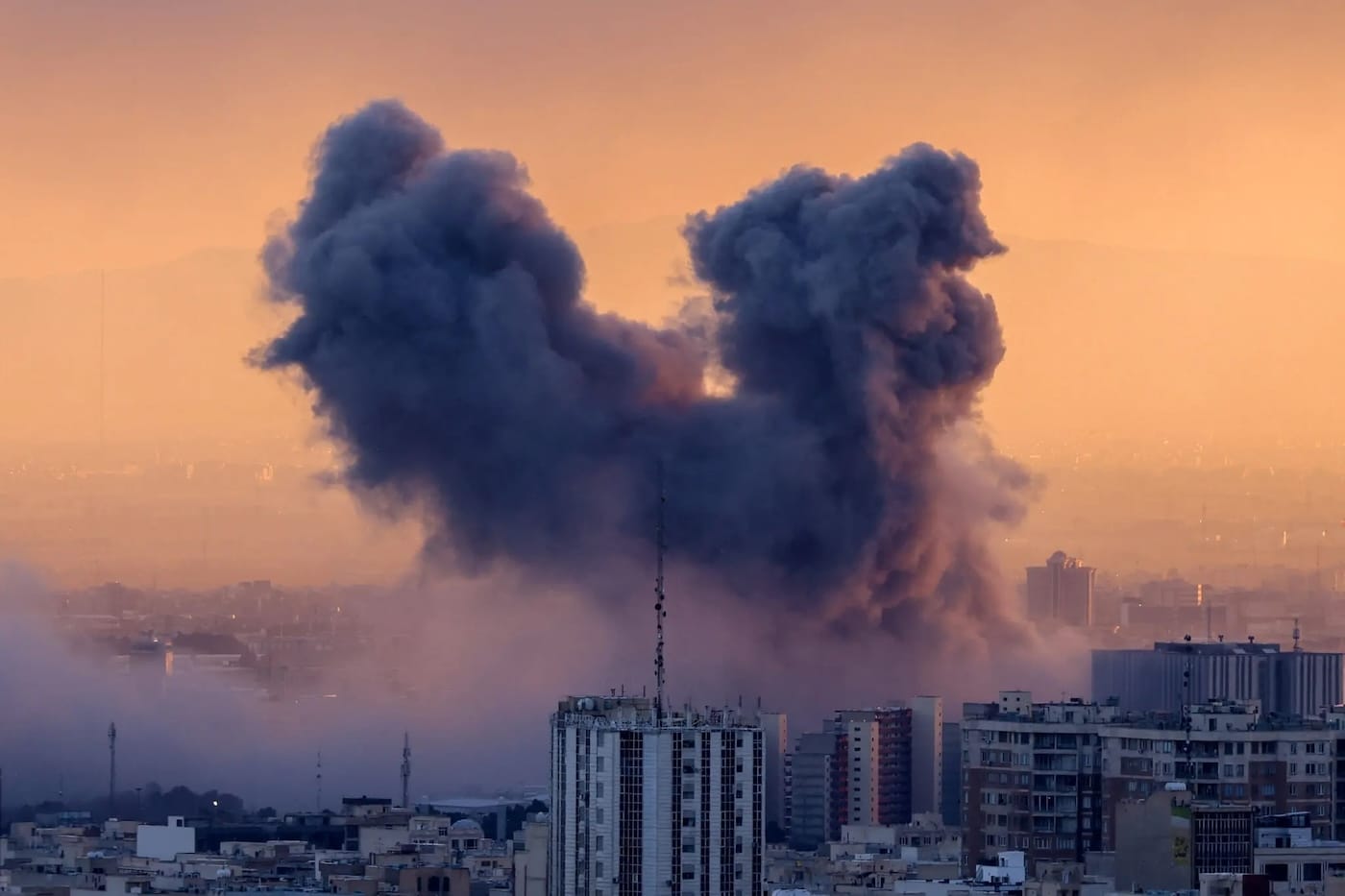
In the early hours of Friday, March 20, Iran launched two ballistic missiles toward the island of Diego Garcia. Located approximately 4,000 kilometers away from any Iranian missile launcher, the British territory houses a joint U.S.-UK military base. As the Iranian missiles accelerated into space and began coasting above the atmosphere towards their target, one failed. The remaining missile continued towards the Indian Ocean, where U.S. warships in the area began tracking it. An American guided missile destroyer fired a SM-3 interceptor, which flew out of the atmosphere and attempted to ram into the missile in space to destroy it using the interceptor’s own kinetic energy. Whether the interceptor succeeded is unclear from the reporting surrounding the event, but in the end neither missile hit the base.
This was the first use of intermediate-range ballistic missiles (IRBMs) in anger, another record claimed by the record-breaking rounds of missile conflict in the Middle East since October 7. If the missiles fired did indeed have the range to hit Diego Garcia, then most of Europe — including almost all of France and much of the UK — would be in range of Iranian missiles fired from bases near Tabriz. While Iranian launches to this range are novel, it would be incorrect to say they were unanticipated.
The attack on Diego Garcia was Iran’s first use of intermediate-range ballistic missiles (IRBMs)
The U.S. and its NATO allies had been preparing for such an eventuality for over 15 years. Reorienting a program inherited from the George W. Bush administration, the Obama White House launched the European Phased Adaptive Approach (EPAA) in 2009. Designed to defend against a future long-range missile threat from Iran, the EPAA deployed ground- and sea-based missile defense hardware to NATO countries. Starting with routine deployments of guided missile destroyers in the Mediterranean, and concluding with the construction of Aegis Ashore sites in Poland and Romania, the U.S. and European allies put the infrastructure in place to track and intercept an Iranian IRBM threat. AN/TPY-2 radars in Turkey would cue ground-based missile defense sites in Poland and Romania, all coordinated by a command post in Germany. Meanwhile, the Aegis Ashore sites would help bolster air and missile defense efforts on NATO’s eastern flank. (In short, despite claims that the program was oriented entirely towards Russia and were really a cover for NATO to surreptitiously smuggle ground-launched cruise missiles into central Europe, an enduring function of the program really is to defeat Iranian missiles.)
The EPAA missile defense sites in Europe, armed with the same SM-3 interceptors used against the Iranian missiles fired at Diego Garcia, means there should not be much need to dramatically reshape plans for the missile defense of NATO. This is particularly true given that these missiles are not likely to be available to the Iranians in large numbers, nor with sufficient accuracy and ability to deliver a militarily significant conventional payload. Moreover, ongoing development programs like the European Sky Shield Initiative can help check any future increase in the scale of an Iranian IRBM threat. Simply put, the poor performance of Iranian missiles at longer ranges suggest that these weapons should not pose much of a threat to NATO members in Europe.
Where did Iran get its long-range missiles?
Where did these Iranian IRBMs come from, and what explains the timing of their appearance on the battlefield?
In 2017 Iranian Supreme Leader Ayatollah Ali Khamenei instructed the Iranian Revolutionary Guard Corps, which runs Iran’s ballistic missile programs, to limit the range of their missiles to 2000 km. While this distance would have allowed Iran to cover the Middle East it was insufficient to hit targets in Europe.
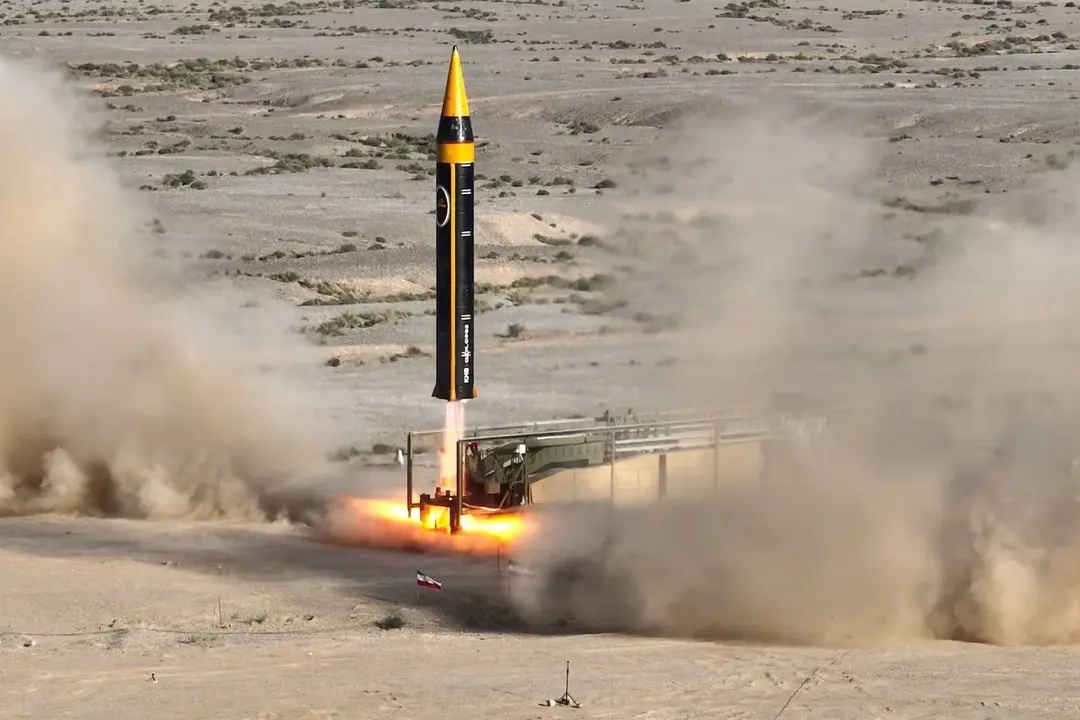
However, as many noted at the time of the announcement, this limitation could be circumvented in two ways. First was the Khorramshahr medium-range ballistic missile, based on the Soviet R-27 submarine-launched missile and likely acquired with North Korean assistance. At the time, experts assessed the Khorramshahr as being capable of reaching ranges longer than 2000 km because of its very heavy warhead. Missile range is slippery, and depends on factors like payload weight and trajectory. Experts thought that by cutting down the size of the missile’s payload, its range could be extended in excess of Khamenei's limit.
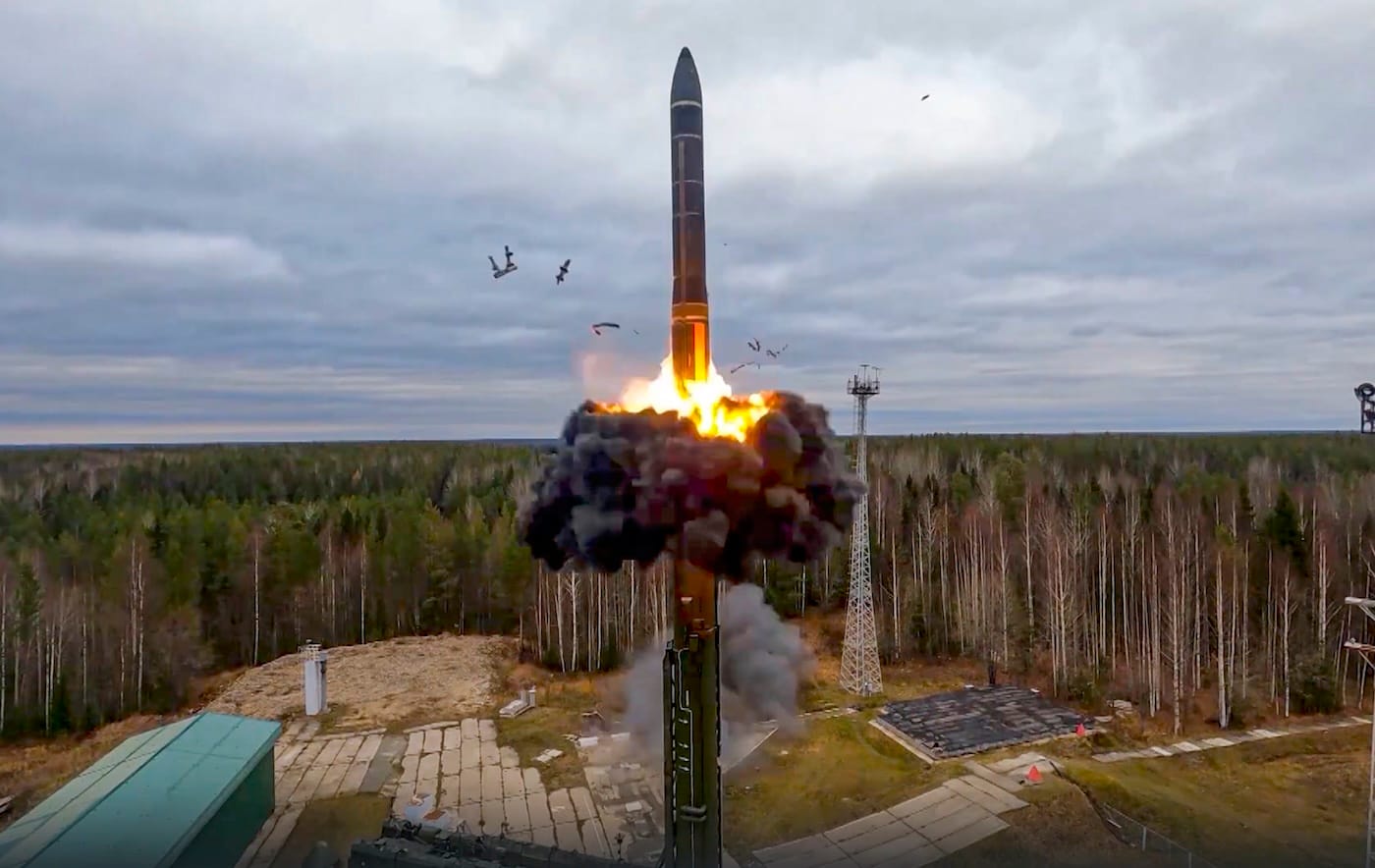
This would be akin to the Russian circumvention of the Intermediate-Range Nuclear Forces Treaty, but in the opposite direction. The Russian RS-26 ballistic missile was the first two stages of the three-stage Yars ICBM, tested to ICBM range (more than 5500 km, or in this case, 5800 km) with a very small payload. This classified the RS-26 as an ICBM according to the New START Treaty’s counting rules, so the RS-26 was counted against the Russian ICBM limit under that agreement. After that test, the Russians then placed several warheads on the missile, increasing its payload and reducing its range to around 2,000. By later adding this “new combat payload,” the Russians were able to back their way into an IRBM capability at the cost of one of their allocated ICBMs under New START, something the INF treaty prohibited. Conversely, the Iranians may have walked the Khorramshahr’s range forward by decreasing the payload, circumventing their self-imposed range restriction. However, to reach Diego Garcia at a range of 4,000 km, the payload would have to be reduced to such an extent that it probably would not be militarily significant even if it happened to hit anything, given the poor accuracy of Iran’s missiles at long ranges.
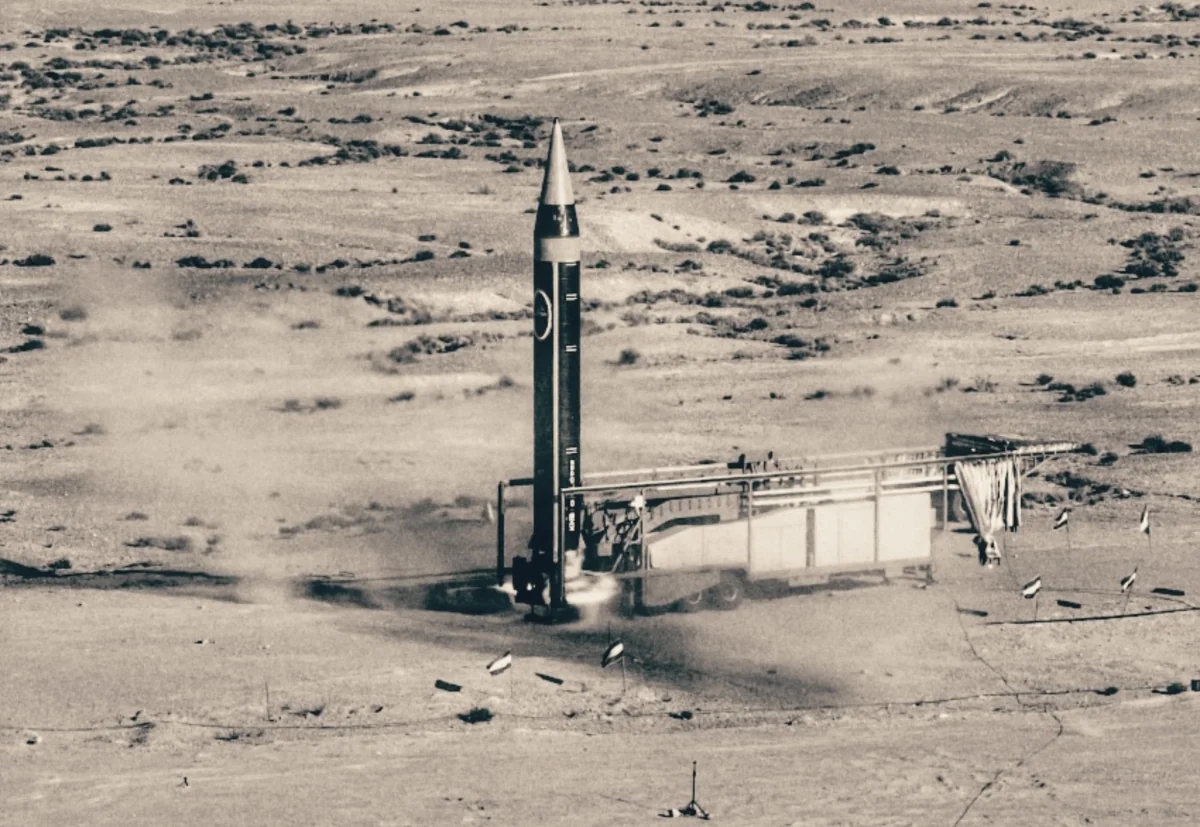
The other circumvention of Khamenei's limit could have come from the Iranian space program. In fact, Iran has two space programs: one under the auspices of the Iranian Space Agency, the other run by the Iranian Revolutionary Guard Corps. The IRGC-led program is the more likely culprit for an IRBM, having focused on developing road-mobile solid-propellant space launch vehicles with the goal of eventually placing payloads into geosynchronous orbits. Experts closely monitored these space programs — unsurprising, given that the fundamental technology behind space launch vehicles and ballistic missiles broadly overlap, and that modified ballistic missiles are often used to launch satellites. For example, many of China’s satellite launches in the early 1970s relied on the CZ-2 launch vehicle, which would be deployed as the DF-5 ICBM in the 1980s.
The fundamental technology behind space launch vehicles and ballistic missiles broadly overlap, and modified ballistic missiles are often used to launch satellites
Based on modeling by my colleagues Jeffrey Lewis and Michael Duitsman, if the IRGC’s most advanced space launch vehicle, the Ghaem-100, was converted for use as a ballistic missile by replacing its third stage with a 1000 kg warhead, it would have a range of about 4300 km.
Certainly, some serious modifications would have to be made to Iran’s SLVs to convert them for ballistic use. The guidance system would need to be dramatically changed, fairings replaced, payload separation mechanism reconfigured, heat shielding added, and new operational concepts developed. These are all soluble problems, but they are still significant.
For what its worth, a heavily down-loaded Khorramshahr-4 seems more likely to be the answer than a converted space launch vehicle after the ease of conversion and existing operational procedures for use are taken into account. That being said, I wouldn’t be surprised if it turned out to be a converted Ghaem-100. Indeed, the Israeli Defense Forces’ Chief of the General Staff Eyal Zamir did say it was a two-stage missile, which, if true, would rule out the single-stage Khorramshahr-4.
As for why this system, whatever its origin, appeared now, there are two complementary answers. The first is obvious: Iran is under tremendous pressure, and it is seeking any means available to coerce its opponents, including through the launch of long-range missile attacks using unproven systems.
The second is that it appears Khamenei lifted his range limitation in October 2025, in the wake of the 12-Day War and the U.S. strikes on Iranian nuclear facilities of Operation Midnight Hammer. Mohammad Jafar Asadi, an IRGC General, told Fars News that “Our missiles will reach the range that they need to” in response to U.S. demands that Tehran put its missile program on the negotiating table. This signaled that the Iranians were walking back from their range limitation in light of their changed security environment.
The problem of uncontrolled range
It is worth considering Khamenei's range limitation further. This self-restraint can easily be seen as an instance of arms control.
While we often imagine arms control to be the formal, legalistic agreements produced after years of dogged negotiation between experts and presented at high-profile summits between national leaders, the concept is much more flexible. Schelling and Halperin, in their landmark elucidation of the concept noted that arms control can range from “a formal treaty with detailed specifications, at one end of the scale, through executive agreements, explicit but informal understandings, tacit understandings, to self-restraint that is consciously contingent on each other’s behavior.” It seems Khamenei's limitation would fall under the “consciously contingent self-restraint” part of Schelling and Halperin’s description.
The Iranian range limit reinforces one of the major technical lessons for arms control agreements from the past 15 years: given that missiles don't have an “inherent range,” it is difficult to craft agreements which rely on those range limitations to create restrictions. Defining range limits has bedeviled arms control since at least the time of the SALT II controversy involving the range of the Backfire bomber.
Given that missiles don't have an “inherent range,” it is difficult to craft agreements which rely on those range limitations to create restrictions
Between the circumvention of Khamanei’s range limit by the IRGC and the Russian circumvention of the INF Treaty, recent history has shown that it is difficult to effectively capture range limitations in an arms control agreement, be it tacit and informal or explicit and legal.
However, just because missile ranges are slippery does not mean attempting to establish limits based on them is not worthwhile, merely that it is difficult. INF achieved several decades of improved security in Europe by eliminating some of the most threatening Soviet, later Russian, missiles — like the SS-20. It is worth doing hard things. But INF was able to do so for decades because overlapping treaties like START I and New START imposed costs on attempts to circumvent those range restrictions. Eventually, the Russians decided it was worth the cost to circumvent the limits.
This experience shows that accounting for the slipperiness of missile range in agreements will be key to making future agreements work. Having overlapping limits and forcing adversaries to make hard choices if they opt to take advantage of that slipperiness is one path, but that relies on extensive, formal, legally-binding arms control agreements.
Since there was no penalty on the Iranians for that type of circumvention, it's not surprising they chose to break their own rule. It was cheap for them to circumvent the agreement, largely because the agreement itself was only a pledge. Yet despite its cheapness, I would certainly prefer to have an Iranian missile program that was constrained for a time by this range limit, forcing them to configure their first IRBM on the fly during a conflict, rather than to have had an unconstrained Iranian missile program conducting robust IRBM tests in the years leading up to the present war. Even this cheap measure has some value, even if it isn’t anywhere close to being on par with the INF treaty.
This is also not to say that Iran’s missile program is unconstrainable through agreement, or that all formal treaty limits are easily circumvented. That is not the case. While it is highly unclear whether the tenuous ceasefire that has emerged between the U.S., Israel, and Iran will last, and also given that it is highly unlikely Iran’s missile program will be constrained as part of any deal, there are certainly effective measures that could be used to control Iran’s missile forces under whatever agreement does emerge. This could include restrictions on numbers of missiles, missile launchers, and their production, rather than on missile range. Of course, these agreements depend on verification that, itself, is dependent on having the political will to make that kind of a deal. That level of political will is not present on either side of the conflict at the moment, but that is not to say such a deal would not work in theory — and this deal would not rely on limits to missile range.
Even as traditional arms control is fraying, it is worth thinking about other measures that can account for the flexibility in missile range — some solution falling between Khamenei’s cheap talk and the expensive investment of time, political will, and effort required to get the INF treaty and its supporting agreements into force. Coming up with new ideas will be hard, and it will require some out of the box thinking (and perhaps even conclude that the overlap of INF and START was the best way to do it), but if we want to craft durable agreements to provide security in the future, it will be worth doing.