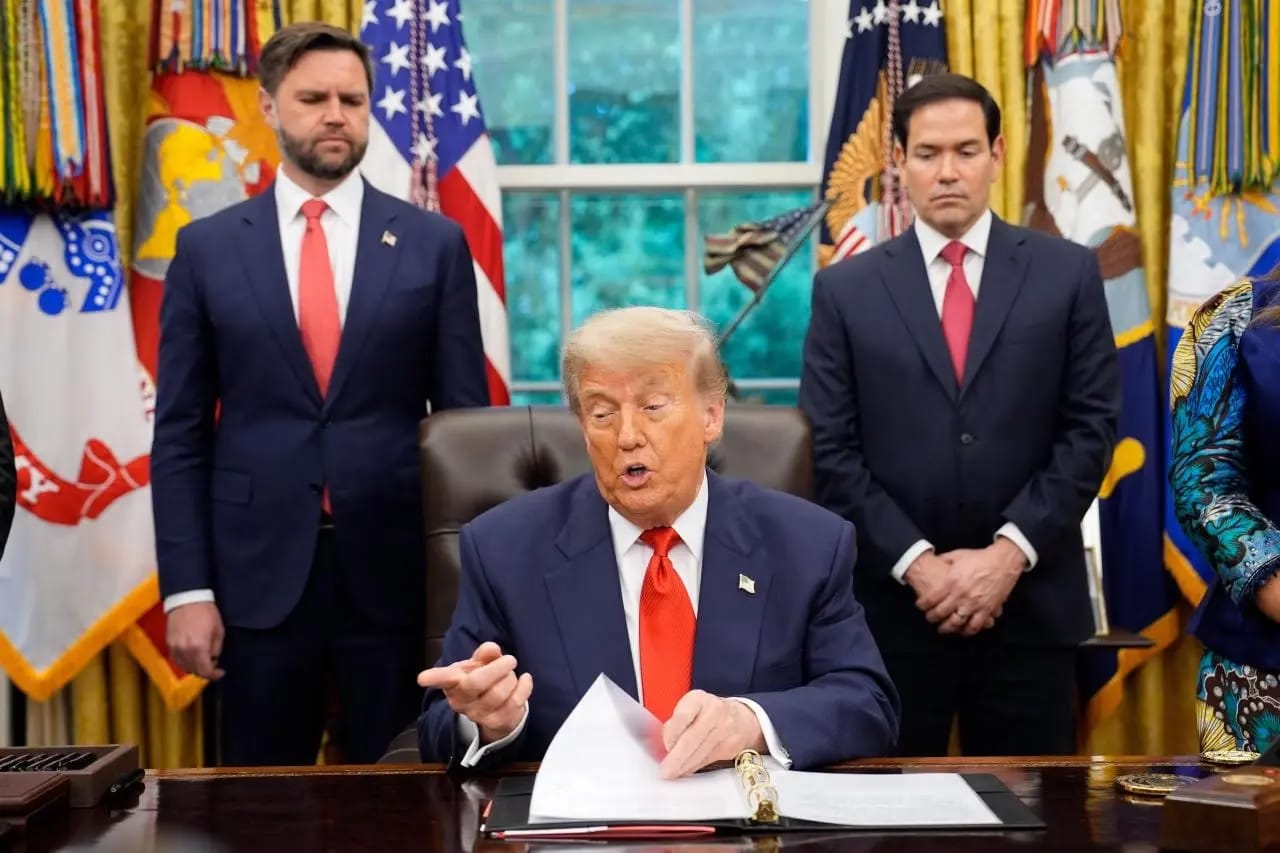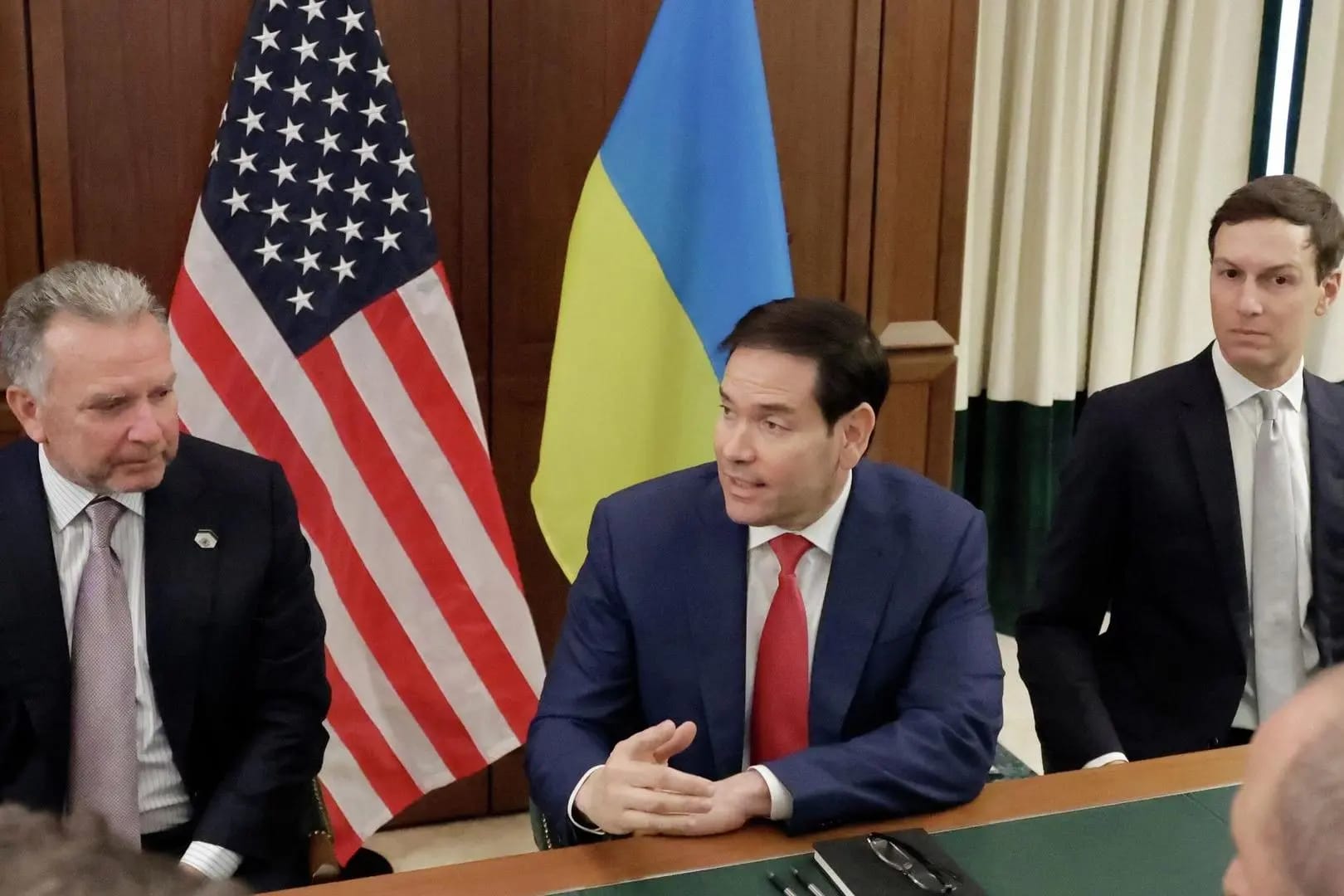
In January, Trump will officially become a “lame duck” — a president serving out the second half of his term without the possibility of seeking reelection. Normally, that means a president’s influence begins to wane — butTrump’s case is different. He has already demonstrated a willingness to bypass Congress, test the limits of judicial constraints, and largely disregard public opinion, relying instead on an exceptionally loyal inner circle and running the federal government through executive orders. After the midterms — particularly if Republicans lose control of the House — Trump may feel even less compelled to heed the word of Congress or abide by established norms, potentially leading to further chaos both at home and abroad.
Thanks to America's system of term limits, the end of Donald Trump's political career is already coming into sight. However, the paradox is that this reality could make him more dangerous as the next two years develop. The less of a political future Trump has, the less incentive he has to safeguard his approval ratings or worry about the consequences of his decisions. In other words, the weaker he is as a politician, the freer he is as president.
A “diluted” Trump vs. the “pure” version
There is a striking contrast between Donald Trump’s first and second presidencies.
His inner circle during his first term consisted largely of technocrats pursuing an institutional approach to government. They saw Trump as a big child and themselves as the wise "adults in the room" who could keep the president under control. Inexperienced as he was, Trump listened to advisers even when they repeatedly blocked or sabotaged his initiatives. However, that did not save him from two impeachments — one over his abuse of power in his dealings with Volodymyr Zelensk, and the other after the events of January 6 (by which point most of his remaining political allies had abandoned him).
After miraculously surviving an assassination attempt in July 2024, Trump came to feel his own mortality while simultaneously claiming to be convinced that he had been spared for a revolutionary mission. “God saved me to make America great again,” he later declared.
During his second term, Trump stopped listening to anyone but himself and assembled his team primarily on the basis of personal political loyalty. In doing so, he sought to eliminate the managerial chaos, leaks, and inefficiency that had plagued his first term.
Today, almost no one can tell Donald Trump “no.” The traditional independence of the intelligence agencies has been eroded almost beyond recognition, and Trump openly demands that the Justice Department investigate his political opponents. Meanwhile, investigations into Trump himself — a regular feature of his first term in the White House — have become virtually unthinkable.
The Republican majority in Congress effectively withdrew from governing the country during the first year of “Trump 2.0.” Congress made permanent the tax cuts that will leave the country with trillions of dollars in additional debt and raised no objections when Trump launched a war with Iran despite his failure to consult the legislative branch. Finally, Trump blocked $400 billion in spending that had been approved by Congress, a clear violation of the Constitutional principle that places the government’s purse entirely in the hands of Congress.
The U.S. Supreme Court, despite its 6-3 majority of Republican appointees, has not always sided with Trump. For example, the court declined to abolish birthright citizenship and struck down most of the tariffs Trump imposed on imports from around the world. Still, even before his second term, the court recognized broad criminal immunity for presidents, sharply reducing the risk that Trump could later face prosecution over decisions and actions taken while in office.
Perhaps most importantly, under Trump 2.0 presidential power has been so openly transformed into personal enrichment that it borders on corruption — from the aircraft gifted to Trump by the Qatari government to the billions earned by his family through opaque deals during just the first year of his second term. There has also been unprecedented interference in private business, as when Trump demanded the resignation of Intel CEO Lip-Bu Tan over his alleged ties to Chinese companies (even if, after Tan met with Trump at the White House and explained himself, the threat disappeared). In the end, the administration reached a deal under which the government would acquire nearly 10% of Intel in exchange for financial support.
Presidential power has, for the first time, been so openly transformed into personal enrichment that it borders on corruption
The New York Times editorial board has distilled these developments into a 12-point “autocracy index,” that covers everything from Trump's circumvention of the legislature and pursuit of political opponents to suppression of dissent and the use of power for personal gain. Still, elections have not been abolished, and independent centers of power have survived — precisely where Trump’s vulnerability begins.
The patriarch’s autumn
However weak Congress may appear, Republicans’ once-total submission to Trump has begun to weaken. They fear losing control of one or even both chambers in the midterm elections if they continue to back the president unquestioningly, and they have even dared to vote for a resolution calling for an end to the war with Iran.
As during Trump’s first term, the courts remain the most effective check on executive overreach. In addition to the Supreme Court rulings mentioned above, a series of decisions by lower courts has blocked key elements of Trump’s immigration and tariff policies from being adopted. The judiciary has also prevented Trump from firing a member of the Federal Reserve Board and restricted a number of political appointments at the Justice Department that were made in violation of proper procedures. As a result, Trump has discovered that, although the system of checks and balances has been significantly weakened, the president still cannot act with complete disregard for the will of the other branches of government.
Finally, public opinion has turned sharply against Trump. His already low approval rating continues to slide, with two-thirds of Americans saying they disapproved of his job performance as of mid-August. Democrats, despite being consumed by their own internal problems, have begun to recover in the polls.
The economy has traditionally been a Republican stronghold, with the party positioning itself as the champion of low taxes. But in an August Reuters/Ipsos poll, voters gave Democrats a narrow edge over Republicans on economic issues: 38% to 35%. At the same time, a majority said they trusted neither party to handle the economy.
Under the circumstances, Trump's endorsement is no longer a guarantee of victory in GOP primaries. Even if most of Trump's preferences prevail at the polls, as of August roughly a dozen Trump-backed candidates had lost their races to represent the party in Congressional and gubernatorial elections this November.
Endorsement no longer guarantees victory in Republican primaries
“Trump will naturally begin to lose influence, especially after the midterm elections,” an unnamed White House adviser acknowledged in an interview with Reuters. Meanwhile, presidential historian Douglas Brinkley told the agency that Trump’s leadership style is a “mess” that will not produce results, regardless of which party controls Congress following the mid-terms.
As summer draws to a close, current forecasts fairly confidently predict that Republicans will lose the House of Representatives, while it remains unclear which party will control the Senate. On Aug. 25, the prediction market Kalshi put the odds of Democrats taking the House at 86% while giving Republicans a 53% chance of retaining control of the Senate.
The outcome will play a key role in Trump’s ability to govern going forward. If the Republicans retain control of both chambers, the president will have another two years to pass legislation and confirm judges. Trump is already being called the de facto speaker of the House, and a Republican victory would only strengthen the president’s influence over Congress.
However, if Democrats take the House, they will be able to block most of Trump’s legislative agenda, and the budget will become the subject of constant bargaining. Democrats will also gain the power to investigate the administration, subpoena officials to testify at hearings, and demand documents. A Republican-controlled Senate, however, would allow Trump to continue pushing through appointments and blocking initiatives originating in the House.
If the Republicans lose control of both chambers, legislative gridlock will be compounded by serious difficulties in confirming administration officials and federal judges. Trump’s main tools will be executive orders, the power to veto legislation passed by Congress, and direct control of the federal bureaucracy. At the same time, a Democratic Congress will be able to use the budget, investigations, and legislation to constrain the White House. This is the scenario with the greatest potential for an open confrontation between the branches of government — and for Trump to test the limits of his own powers even further.
No holds barred
A weakening of Trump’s political position will not necessarily constrain him — quite the opposite. There are sound theoretical grounds for that conclusion.
In 2018, political scientist Marc Shehker published a study arguing that term limits create accountability problems for U.S. governors. This followed the 2016 examination by political scientist Philip Potter of the behavior of U.S. presidents in their final terms; he concluded that they were more ambitious than during their first terms, particularly in foreign policy. As Trump becomes a “lame duck,” his support is weakening and Republicans are becoming less afraid of him. Yet he still retains enormous power that he can exercise more or less unilaterally.
With no need to campaign for reelection, Trump may even feel free to ignore public opinion. At the height of his trade war with the wider world, he argued that American children would now have “two dolls instead of 30,” implying that voters had become accustomed to living far beyond their means. Trump was even more explicit when the war with Iran sent gasoline prices soaring and accelerated inflation: he called it “a small price” to pay for security.
With no need to campaign for reelection, Trump may ignore public opinion
A second presidential term creates an inherent imbalance: a president’s incentive to negotiate with Congress and remain responsive to voters can disappear before his ability to act unilaterally does. Trump appears to sense this. In their recently published book, Regime Change, journalists Maggie Haberman and Jonathan Swan write that the president has grown less interested in the backlash to his policies. According to Swan, Trump “doesn’t care at all” about the outcome of the mid-term elections. Instead, he is focused on his legacy as a historical figure.
Whatever the outcome of the November elections, Trump will enter 2027 at the peak of his presidential power, with little incentive to seek compromise with either allies or opponents. Against a backdrop of economic troubles, an unpopular war with Iran, mass deportations, and new ideological battles at home, political tensions may only intensify.
Trump’s critics have often optimistically suggested that he had reached the limits of his reckless and dangerous behavior. Yet his political career has repeatedly demonstrated otherwise: Trump can still keep raising the stakes, turning his unpredictability into an ever greater threat for the country's stability.