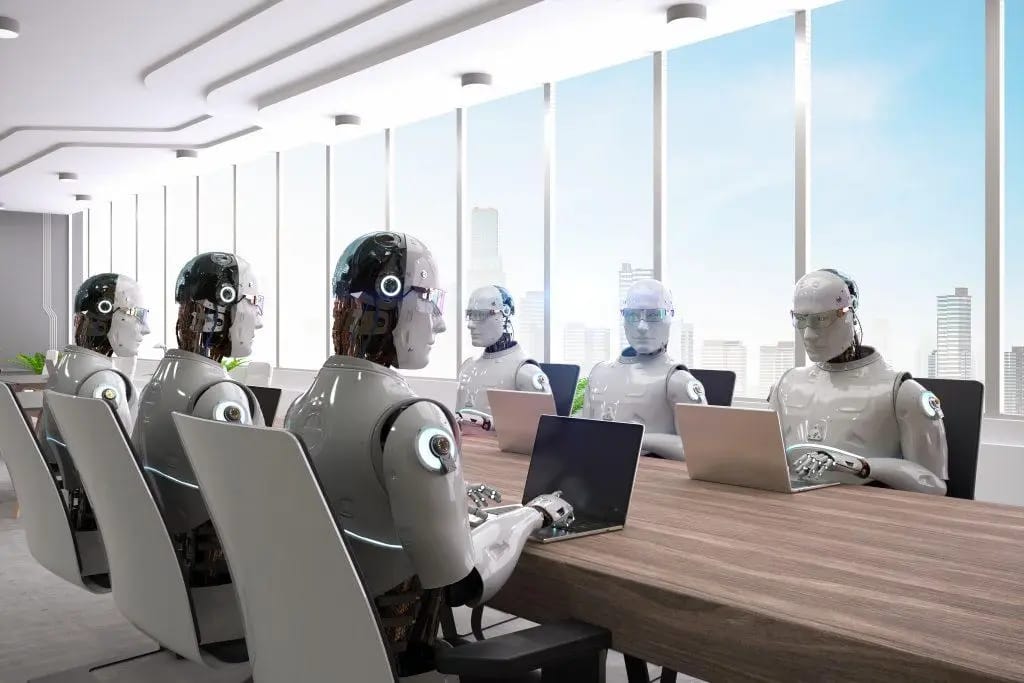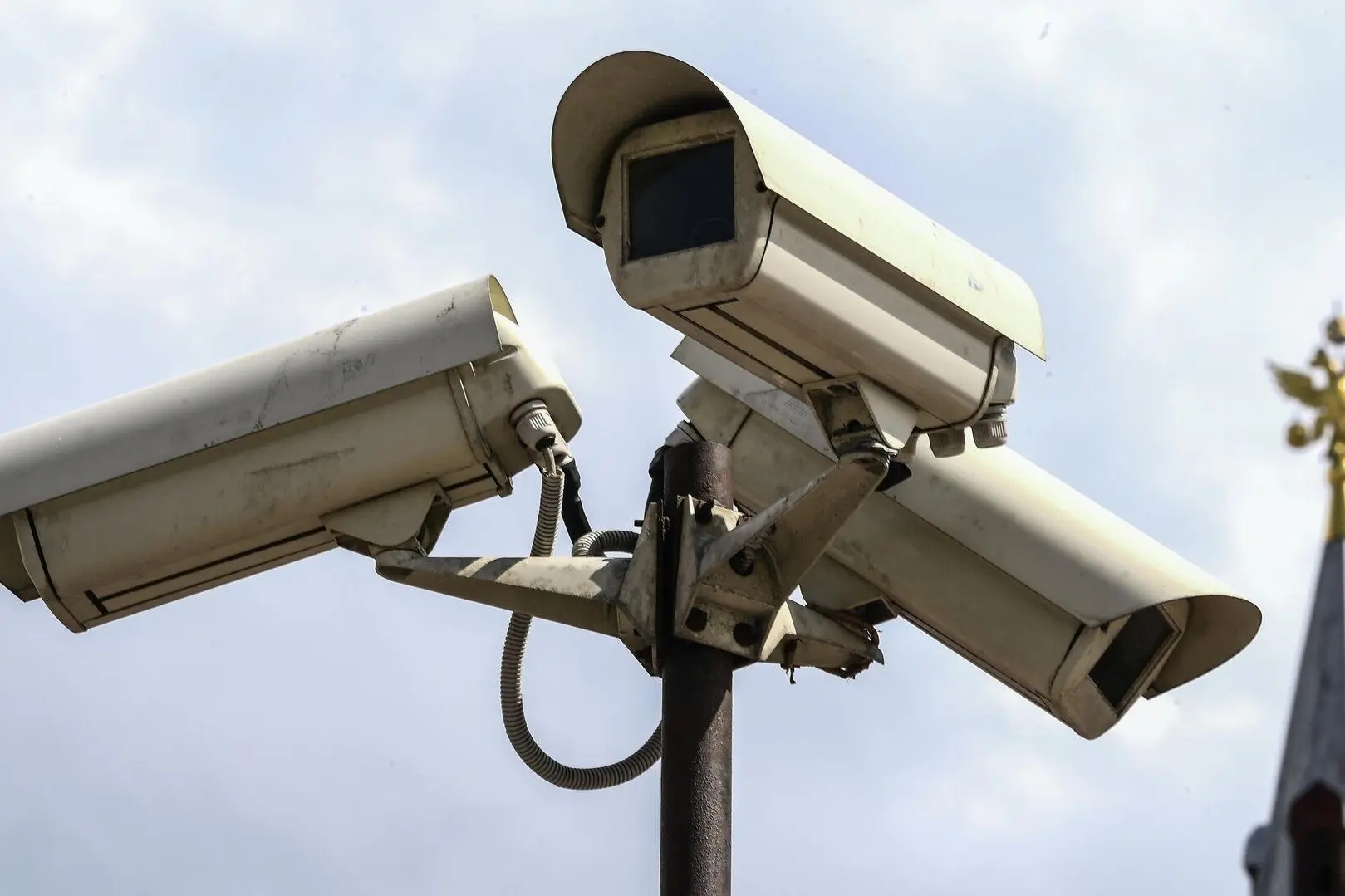
On July 27, Alexander Bastrykin, the head of Russia’s Investigative Committee, announced that the agency had successfully incorporated artificial intelligence into its work. According to Bastrykin, specialized software for biometric analysis now allows Russian investigators to process terabytes of video footage quickly, identifying hundreds of suspects. The Investigative Committee is using new AI-based tools to analyze large volumes of data, search for digital clues, and identify people suspected of involvement in “extremist” and “terrorist” activity. Russia is not alone: China, Iran, North Korea, Turkey, and Belarus are also actively integrating AI into the systems they use to control their citizens.
- 1.A society of total surveillance
- 2.China: How AI helps the world’s biggest Big Brother suppress dissent
- 3.The race for computing power: How independent is China from the U.S., and is it ready to help other autocracies?
- 4.AI in service of the Kremlin: An upgraded “digital Gulag,” attacks on global chatbots, and “troll farms 2.0”
- 5.Iran’s hijab controls, North Korean crypto theft, and crackdowns on protests in Belarus and Turkey
- 6.The free world against AI tyranny
A society of total surveillance
In recent decades, debate over the political consequences of the world’s digital transformation has only intensified.
The camp of technological optimists has included thinkers from a wide range of fields. Cyberlibertarian John Perry Barlow declared the internet a sovereign space without borders or governments. Silicon Valley pioneer Jaron Lanier saw open coordination among people online as a tool for developing global democracy. Sociologist Nicholas Negroponte believed censorship in the digital space was technically impossible. Sociologist Manuel Castells argued that networked structures would undermine the hierarchies of authoritarian states.
They were opposed by an equally eclectic collection of pessimists. Gilles Deleuze warned of the emergence of a flexible “society of control” through digital networks. Roger Clarke introduced the concept of “dataveillance” — surveillance through digital traces. And David Lyon argued that a total “surveillance society” was nothing short of inevitable.
It is still too early to draw any final conclusions, but so far authoritarian regimes have been largely successful in suppressing freedom of speech online by combining technical censorship with physical measures. In addition to tracking of online activity and user location, citywide video surveillance systems leave nowhere for real-world dissidents to hide. And with the emergence of generative AI, the world’s largest autocracies — China, Russia, Iran, North Korea, Turkey, and Belarus — have made a qualitative leap, integrating cutting-edge technologies into their existing systems of control while testing new methods of suppressing citizens’ rights.
Traditional authoritarian methods — censorship, espionage, propaganda, and force — required significant human and financial resources. AI has changed that, allowing the world’s most powerful tyranny, China, to scale up control while minimizing costs. Beijing has accumulated an enormous body of information that, with the help of modern language models, will allow the authorities to identify patterns in large datasets quickly, detecting new markers of social discontent faster and suppressing protests before Chinese citizens can take to the streets. Soon, a person detained on the basis of a neural network’s decision will face the continuous monitoring of their emotional state while in custody — carried out by AI-powered cameras that are already being tested in Chinese prisons.
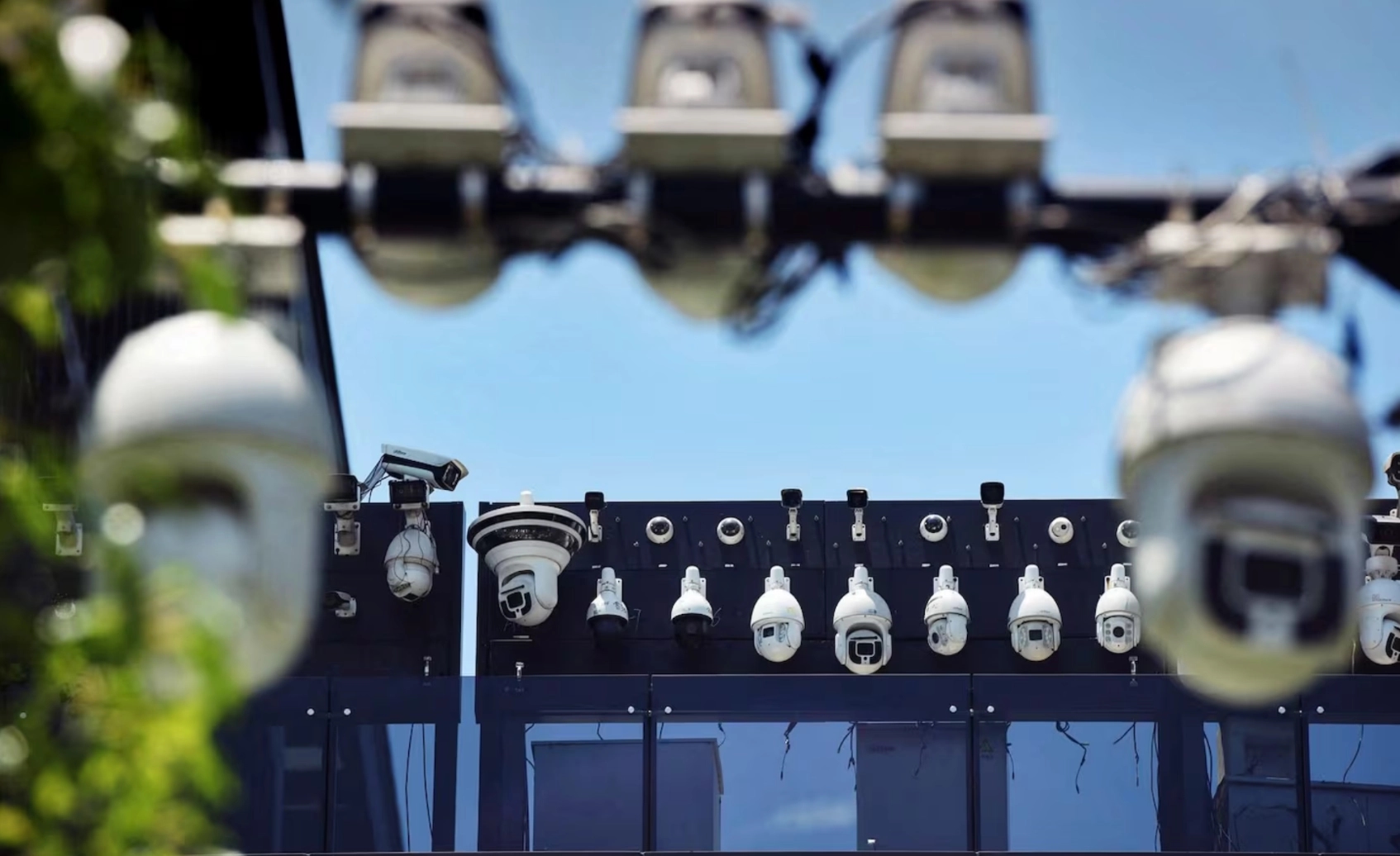
“Catching-up” autocracies such as North Korea or Russia are not yet using AI to its full potential. Due to sanctions, they are forced to import the necessary chips through semi-legal schemes — and paying a premium for the privilege. Even so, they continue to actively develop their own surveillance programs using AI.
Importantly, authoritarian regimes are willing to sell and exchange technologies, accelerating their adoption and increasing their impact. Russia, for example, shared technology with the Iranian mobile operator Ariantel in order to help Tehran build its own equivalent of Russia’s SORM, the FSB surveillance system. SORM, which appeared in the mid-1990s, tracks a user’s browsing history and session times, records every call and text message, and stores intercepted data for years.
SORM has advanced significantly thanks to machine learning. Phone conversations are now transcribed by programs similar to the audiogram feature of Russian telecoms giant MTS, turning speech into text in real time, making it available for instant contextual analysis by the regime.
Data from SORM, such as a phone’s location (as determined through cell towers), is compared with footage from city surveillance cameras connected to facial recognition systems. Those systems are built on AI training and can identify people by analyzing their facial features, silhouettes, and movements. One such facial recognition technology, FindFace, developed by Russia’s NtechLab, has also appeared in Iran.
The free world faces an existential challenge: technologies created to unite humanity have become effective weapons for dividing and controlling it. To continue suppressing civil liberties with AI technologies, authoritarian regimes critically need access to powerful microchips — occasionally obtained through legal import exceptions, but more often delivered via gray supply chains for Western equipment or made at home thanks to investments in production capacity.
Authoritarian regimes critically need access to powerful microchips
In addition to computing power, successful surveillance depends on the use of well-trained AI models capable of effectively processing large datasets for targeted monitoring.
China: How AI helps the world’s biggest Big Brother suppress dissent
Among today’s nondemocratic states, only China possesses the full set of necessary resources to build a surveillance system on its own. It has accumulated sufficient computing capacity — in part thanks to the successful domestic development of Huawei computing chips — and gathered vast datasets. allowing Beijing to truly compete with the free world when it comes to building a sovereign artificial intelligence system.
The main change brought by AI is the shift from simply accumulating information to processing it automatically in real time. Previously, Chinese state bodies collected terabytes of video footage and text logs that they physically could not analyze in full. Now, however, modern neural networks have made it possible to merge fragmented databases — biometric data, geolocation data, and financial transaction data — into a single system that can instantly identify patterns in citizens’ behavior.
Previously, censorship and online surveillance in China consisted of a system in which a user’s activity was compared with a list of stop words and phrases, a database of banned images, and an identification system based on financial transactions. Mobile operators also continuously tracked geolocation, internet browsing behavior, and other indirect indicators.
For example, if a WeChat user sent a nefarious sentence — “The Dalai Lama is right about everything,” for example, or “What happened in Tiananmen Square on June 4, 1989?” — the message either would not be delivered or would be sent in an “invisible” mode, meaning its sender could see it but the recipient could not.
A message saying “What happened in Tiananmen Square on June 4, 1989?” either would not be delivered or would be sent as an “invisible” message
Under Chinese law, responsibility for content lies with IT companies themselves — Tencent, Sina, and ByteDance, to name a few major players — which can be punished for improper content that, for whatever reason, makes it through the automatic censorship barrier. As a result, companies employed so-called online public opinion analysts — in effect, censors — thousands of specialists who manually moderated content that automatic filters deemed suspicious.
Such measures were necessary, for example, when people used sarcasm, memes, hints, and homophones. In Chinese, some characters sound the same but are written differently, and to get around an automatic ban on the word “censorship,” or hexie, meaning “harmonization,” users wrote “river crab,” he xie, which sounds exactly the same. The automatic stop-word filter let the “crab” through, and only a human moderator could understand the context well enough to catch the subversive content and delete it.
Users could also turn text criticizing the authorities into an image, then flip it upside down or add noise. Before the development of modern computer vision, older optical character recognition (OCR) algorithms could not cope with such tricks. As a result, companies had to employ people who literally reviewed terabytes worth of graphic information.
The introduction of modern AI has removed the need to maintain large numbers of manual moderators. Instead, China has trained neural networks to instantly read context, understand sarcasm, recognize upside-down text in noisy images, and transcribe voice messages. Humans are now needed only as “supervisors” to train these systems and to make decisions on the most complex political cases.
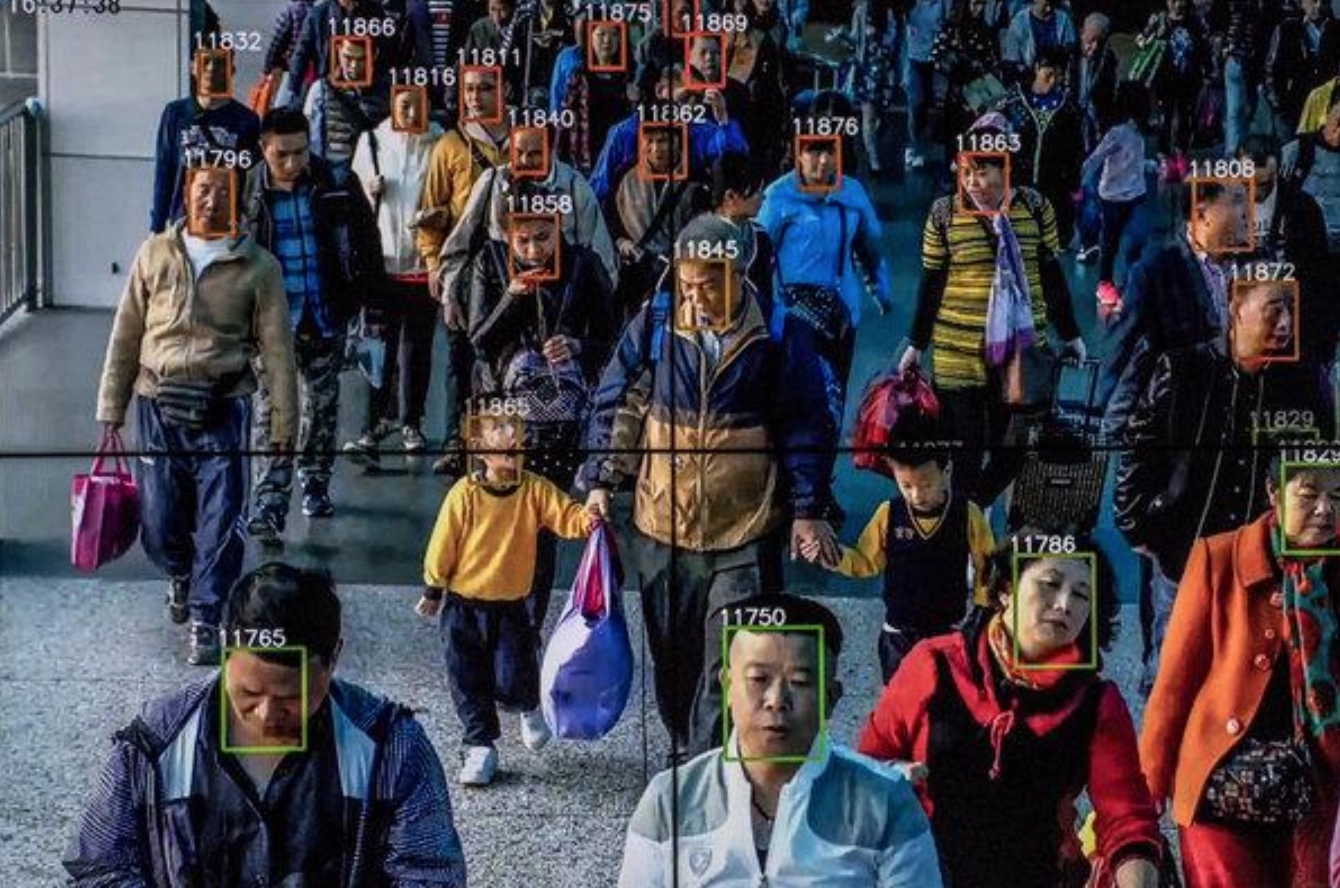
Online censorship is supplemented by a dense street surveillance network of more than 600 million cameras. With AI integration, cameras have learned to identify individuals by their gait — useful when a person tries to hide their face with a hood, sunglasses, or medical mask, which reduce the accuracy of facial identification.
China’s Watrix has introduced gait-recognition algorithms that cut a person’s silhouette from a video stream and analyze their movements: stride length, body angle, arm movement dynamics, and the way joints work while walking. Based on these parameters, it creates a unique 3D model of movement. The system only needs to see a person from behind at a distance of up to 50 meters to identify them with more than 90% accuracy.
Neural networks have also been trained to recognize specific markers suggesting the start of a protest or unrest, detecting deviations from the normal rhythm of city life, such as a sudden acceleration by a group of people, chaotic movement, or an unusual gathering in a place where people usually do not linger.
Cameras also send an alert to a censor if they recognize a person unfolding a poster or banner, even before the writing on it has been read. The surveillance system is supplemented by the tracking of phone movement patterns through cell towers. For example, if several previously flagged citizens are observed to be following matching routes, the program alerts law enforcement to behavior it considers suspicious.
China is introducing AI into every part of the law enforcement and judicial systems, up to and including court decisions. Some provinces are testing prison cameras used for the continuous analysis of the emotions, facial expressions, stress levels, and mood of inmates.
The government actively subsidizes Chinese IT companies that develop new censorship algorithms and surveillance systems. This approach allows the state to develop innovative repression technologies almost for free thanks to the commercial competition among developers, allowing the companies to scale their AI products for export to other authoritarian countries.
As a result, citizens develop the feeling that they are constantly being watched. The knowledge that an algorithm monitors every step, transaction, and message pushes people to voluntarily adjust their behavior. In short, AI-enhanced systems successfully perform the task of normalizing obedience. Society enters a state of permanent self-censorship, trying to meet the criteria of “trustworthiness” dictated by the state system.
Society enters a state of permanent self-censorship, trying to meet the criteria of “trustworthiness”
In foreign policy, China uses AI to automate propaganda campaigns aimed against political rivals. In February 2026, OpenAI blocked a Chinese hacker who had tried to use ChatGPT to launch a campaign discrediting China’s international critics, including Japanese Prime Minister Sanae Takaichi.
OpenAI investigated users’ prompts and found that both Chinese models such as DeepSeek and Qwen and international models including OpenAI itself were being used in the disinformation campaigns against the Japanese prime minister. OpenAI noted that its models had not generated offensive images of Takaichi; instead, users had asked the system to create templates for negative comments and send fake complaints to Japanese politicians.
The incident exposed a large secret Chinese network involving hundreds of employees and thousands of bots. Using the smear campaign hashtag included in the chatbot prompt, investigators were able to find other materials already published online, including AI-generated memes mocking Takaichi that had been posted on Pixiv, a Japanese online community for artists.

The spread of Chinese models among U.S. business users may also serve as a kind of “soft propaganda.” Chatbots built on these architectures can quietly give end users a distorted worldview favorable to Beijing by engaging in the soft filtering of topics relevant to China’s domestic and foreign policy — avoiding questions about human rights in Xinjiang or Taiwan’s official status while presenting exclusively positive economic narratives that subtly shape pro-China attitudes among Western audiences.
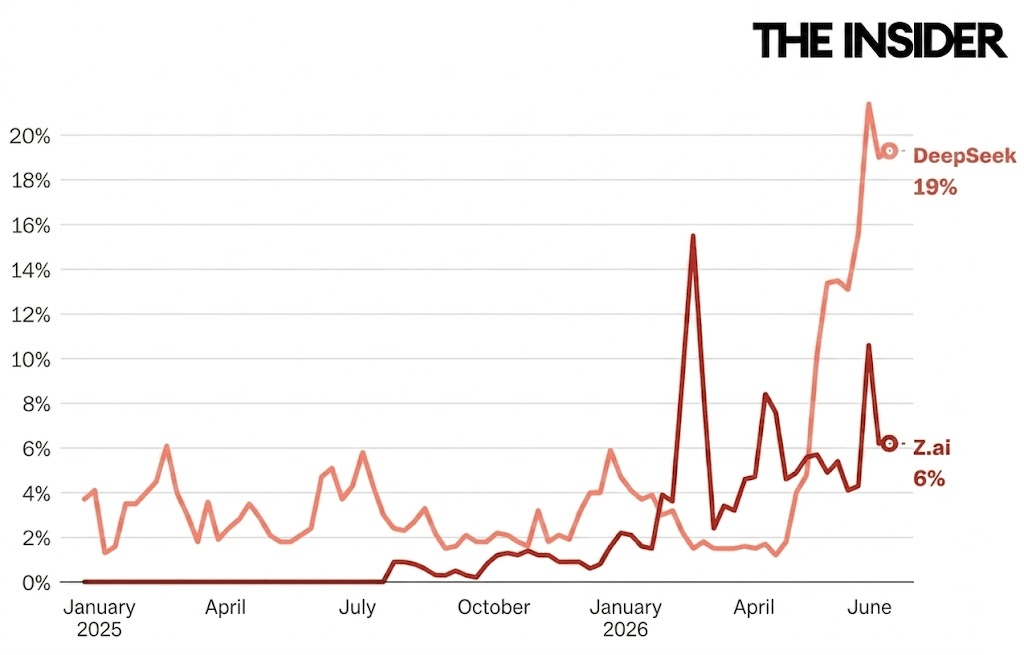
Products by Chinese developers such as DeepSeek and Moonshot AI have become an important part of the everyday operations of many U.S. startups and large Silicon Valley corporations. They serve as a far cheaper but comparable alternative to Western options and a supplement to expensive models from U.S. market leaders such as OpenAI and Anthropic.
For some businesses, the difference in token costs between Chinese and U.S. models is as much as fivefold: $4.40 versus $25. That helps explain the fivefold increase in sales of tokens for Chinese-origin models as a share of all tokens on the popular U.S. marketplace OpenRouter, from 4% in January 2025 to 21% in June 2026 for DeepSeek and Z.ai combined.
The race for computing power: How independent is China from the U.S., and is it ready to help other autocracies?
To scale up its repressive machinery, China needs to buy powerful U.S. chips capable of efficiently training AI models while also developing its own chips so it no longer depends on the United States. In its quest to win the AI race, the White House has restricted chip exports to China since 2022, forcing Chinese companies to look for gray supply schemes.
Those sanctions, however, have been eased from time to time in order to accommodate tech powerhouse Nvidia’s access to the Chinese market. Nvidia, in turn, has repeatedly adapted its products to the sanctions, releasing reduced versions of its chips that do not possess sanctioned capabilities, meaning they can legally be exported to China. As a result, the flow of computing power has continued in one form or another.
In response to U.S. pressure, China has made a major push toward its own chip sovereignty. The result is Huawei’s Ascend 950PR architecture, unveiled in early 2026, which shows impressive performance. Although it lags behind flagship U.S. analogues such as Nvidia’s B200 when it comes to energy efficiency, memory bandwidth, and overall power, it has already become a full-fledged foundation for building sovereign AI ecosystems.
A striking example of synergy between Chinese hardware and software was the launch of the DeepSeek V4 large language model. Contrary to Western analysts’ forecasts, the highly powerful model was successfully trained exclusively on clusters of Huawei Ascend 950 processors. Its emergence proved that Beijing can create advanced AI without U.S. semiconductors.
Beijing can create advanced AI without U.S. semiconductors
Chinese IT giants such as ByteDance, Alibaba, and Tencent have begun investing heavily in Huawei Ascend 950 chips, seeking to fully protect themselves from sanctions risks. Nvidia CEO Jensen Huang has said that harsh U.S. sanctions only accelerate China’s forced shift away from American technologies and stimulate the development of strong local competitors. Over time, they will be able to push U.S. companies out of the Asian market, depriving them of a significant share of profits.
But until China achieves AI sovereignty, it will still have to rely on gray supply schemes through Asian intermediaries and shell companies. Singapore, Malaysia, and Japan have become the main hubs for these operations. The scale of the smuggling can be judged from charges brought by the U.S. Justice Department against the co-founder and top executives of Supermicro, a major U.S. maker of server equipment that was accused of helping smuggle advanced AI servers with Nvidia H200 and B200 chips worth more than 2.5 billion euros to Chinese customers through front companies in Southeast Asia.
In addition to the physical import of equipment, Chinese entities actively use “cloud” access schemes to bypass physical borders. Renting computing power in foreign data centers allows Chinese developers to train their repressive models remotely, effectively nullifying customs controls. To contain this flow, U.S. Big Tech companies, including Nvidia, are introducing strict whitelists and compliance checks for end users. In this way, they track suspicious spikes in activity by cloud providers in jurisdictions friendly to Beijing.
In early 2026, the U.S. administration approved limited shipments of H200 chips to China’s largest IT companies under the pretext of strict national security oversight. But Chinese authorities blocked the chips’ import. China’s customs authorities and regulators instructed local companies not to buy U.S. processors and suspended shipment clearance. With that move, Beijing sought to reduce its dependence on U.S. technology and to stimulate development of its own semiconductor production, such as Huawei Ascend.
But because local production capacity remains insufficient, the move only deepened the shortage, increasing demand for illegal supplies and prompting Beijing to ease chip import restrictions six months later. In May, the U.S. Commerce Department again allowed limited sales of Nvidia H200 chips to approved Chinese companies, including Alibaba, ByteDance, and ZTE, under strict conditions and monitoring. Then, after a short pause, China began allowing some technology giants to buy chips from the United States again.
At the same time, U.S. chips that are connected to the global network remain potentially vulnerable to digital oversight and remote tracking by the United States. Although there is no physical “kill switch” in processor architecture, manufacturers can record telemetry and geolocation markers. If data on a chip’s real location leaks onto the network and contradicts official procurement documents — for example, if a server is supposed to be in Malaysia but is actually pinging from a closed data center in Shenzhen — Washington immediately blacklists the intermediary company, permanently banning it from making new purchases from U.S. vendors.
In practice, however, this measure often resembles tilting at windmills. To fully avoid surveillance, authoritarian regimes use purchased chips only in closed, isolated circuits without access to the external internet. These fully autonomous “air-gapped” systems — which in practice train and run neural networks responsible for citywide video surveillance, biometric control, and other forms of internal AI repression — render any attempt at remote control by the United States useless.
Unable to legally buy advanced Western technologies, autocracies have built a parallel market for exchanging expertise and hardware-software solutions. China is the clear leader of this technological alliance, supplying Russia, North Korea, and Iran not only with hardware in the form of servers and processors, but also with ready-made machine learning algorithms.
Autocracies have built a parallel market for exchanging expertise and hardware-software solutions
Moscow, in turn, shares its expertise in cyberespionage, censorship circumvention, and human identification with Tehran and Tbilisi. This technological barter allows authoritarian countries to sharply reduce the time needed to introduce punitive tools, creating a common digital shield resistant to Western sanctions pressure.
Today, Beijing is the key supplier of technology to countries that have come under harsh Western sanctions, helping them acquire scarce physical semiconductors through well-established semi-legal channels while providing ready-made Chinese AI frameworks and models. As serial production of Huawei Ascend lines expands, China could become a full-fledged global exporter of turnkey digital dictatorship systems of the sort that would allow other autocracies to buy surveillance hardware and software packages that are entirely independent of Western licenses.
AI in service of the Kremlin: An upgraded “digital Gulag,” attacks on global chatbots, and “troll farms 2.0”
AI surveillance in Russia is being introduced with mixed success. Moscow’s Ministry of Digital Development, Communications and Mass Media has launched a large-scale project to create a single national video surveillance platform with a cost estimated at 2 billion rubles ($24.2 million). The initiative would integrate millions of outdoor surveillance cameras across the country into a single centralized system run by neural networks, allowing security agencies to automate the process of tracking citizens’ movements. As of May 2026, however, only about 7% of the country’s 15 million video cameras were connected to artificial intelligence.
Another example of major ambition and failed implementation involves an attempt by the FSB’s Second Service to use AI to automate its media-monitoring work. The department, officially responsible for “protecting the constitutional order and fighting terrorism,” commissioned the Kazan IT company Mikord to develop a system called Pauk (lit. “spider”), which in Russian was short for the “Portal for Analytics and Content Management.”
The idea called for an AI agent to collect materials from Russian and foreign media in an external circuit, after which the data would be integrated with FSB materials in a closed circuit. By analyzing publicly available news, the system was intended to automatically identify “objects of interest” — namely political activists and opposition figures — and forecast protest sentiments in society at an early stage.
However, the security service’s attempt to put generative neural networks to work for political policing ended in failure after the Kazan-based company, which had received large state contracts thanks to its ties with former senior officials, failed to complete the project. Its developers simply proved unable to create a stable service meeting the requirements of a two-circuit architecture and integration with complex language models. As a result, the “Spider” project was suspended, and the FSB never got its AI assistant — leaving duty officers to continue monitoring media and drafting daily analytical summaries for leadership with the help of the automatic collection tools they already possessed.
Claims that AI models are being used for traffic filtering and internet blocking in Russia are not confirmed by technical experts, who say the hardware and software used by state regulator Roskomnadzor in particular EcoFilter systems — physically lack the computing resources needed to run terabit-level traffic through complex AI models in real time. But this does not prevent authorities from analyzing traffic with AI systems offline — a process that takes more time but still produces a list of “suspicious” domains to block.
Russia’s top leadership sees AI as a key element in countering so-called “color revolutions” and Western information-psychological influence. Moscow seeks to create chatbot responses fully controlled by ideology in order to preserve regime stability and neutralize internal threats. The Kremlin is deliberately isolating the domestic technology market, creating a phenomenon of “Russian sovereign AI” in which models such as YandexGPT and GigaChat are tightly censored after being trained exclusively on state-approved datasets. That allows the authorities to maintain the political narrative they need inside the country by denying citizens easy access to alternative sources of information.
Russia’s top leadership sees AI as a key element in countering “color revolutions” and Western influence
One of the most dangerous and technologically complex trends is the deliberate “poisoning” of search results — in effect, the manipulation of the databases on which popular Western chatbots are trained and from which they draw their information. Language models like France’s Mistral, OpenAI’s ChatGPT, Anthropic’s Claude, and Google’s Gemini have all been targeted by deliberate pro-Russian disinformation, leading to heavy pollution in answers on a range of social and political topics — the war in Ukraine in particular.
Traditional “troll farms” that once saw employees manually writing comments on social media are moving to a new level, as AI helps them automate, customize, and scale disinformation campaigns. Previously, creating a convincing fake news story in a foreign language required professional translators and editors. Now, however, large language models can generate grammatically flawless texts in dozens of languages in a matter of minutes, making it possible to move beyond mere trolling by creating content that is almost indistinguishable from posts by real users.
Russian structures are actively testing AI in order to influence electoral processes in Europe. One vivid example was the recent election campaign in Germany, where far-right forces and hidden Russian actors gained a major online advantage by using virtual “AI influencers” — entirely neural-network-generated characters that ran blogs, promoted antigovernment narratives, and coordinated public opinion.
Kremlin-backed hacking groups are also actively using large language models to automatically search for zero-day vulnerabilities in Western software, to optimize malicious code, and to generate highly effective phishing campaigns, significantly increasing the speed and destructive power of cyberoperations. Neural networks also help hackers find software vulnerabilities more quickly and write more sophisticated phishing emails. Dutch intelligence services have warned that Russia is using AI to carry out hacking operations against European Union institutions, seeking to spy on employees of various EU bodies with autonomous AI agents.
Iran’s hijab controls, North Korean crypto theft, and crackdowns on protests in Belarus and Turkey
Iran is adapting AI facial-recognition technologies to monitor women’s compliance with headscarf laws and to suppress protests by deploying a large network of intelligent video surveillance integrated with the national biometric passport database. AI algorithms automatically identify women with uncovered heads in cars, shopping centers, and city streets, after which the system remotely issues fines, blocks bank accounts, and sends court summonses — all without direct police involvement.
North Korea, despite conditions of total economic blockade and strict international sanctions, has turned AI into a tool for financial espionage, cryptocurrency theft, and the covert sale of services. One of the most sophisticated methods for bypassing sanctions has been a large-scale scheme to place North Korean IT specialists in foreign companies under the guise of freelancers or remote employees, enabling them to earn hard-currency wages that go directly to the state while gathering key data on Western companies. In short, North Korea has built an extensive network of front people operating around the world.

Artificial intelligence has become a key factor in the success of this operation. Using generative AI tools, North Korean agents create fake resumes, generate high-quality profile photos, and use real-time deepfake technologies that allow candidates to change their appearance and voice directly in the video stream during interviews, adjusting their accent to match their chosen cover story — such as posing as freelancers from Canada or South Korea.
To counter the threat, Western corporations and their security teams have been forced to introduce strict verification protocols. Candidates are asked to turn sideways live on camera (which often breaks the deepfake algorithm), to show a physical passport at a specific angle, or complete unexpected logic tasks.
Nevertheless, North Korean-generated workers have managed to infiltrate dozens of leading European companies and gain access to their internal infrastructure and trade secrets. The campaign is continuous: every day, North Korean hackers use AI to generate hundreds of new fake identities, wearing down the security teams of Western corporations.
Hackers use AI every day to generate hundreds of new fake identities for North Korean IT professionals
Another important area of North Korean activity is cryptocurrency theft. Previously, writing complex malware required North Korean programmers to have extremely high levels of skill, but now large language models automate code writing, generate phishing emails without grammatical errors, and search for vulnerabilities in cryptocurrency exchanges. As a result, Pyongyang’s attacks have become more effective, providing Kim Jong Un’s regime with a steady flow of illegal funding. In 2025 alone, his hackers stole a record $2.1 billion in cryptocurrency, about 60% of the sector’s global losses for the year.
The main challenge for North Korea’s use of AI lies in hardware. Modern AI models require powerful advanced chips that cannot legally be exported to the country. Pyongyang, however, has learned to bypass restrictions by using older or gray-market Nvidia and Qualcomm chips while its engineers adapt heavy algorithms to function on less powerful hardware.
In Turkey, the authorities use AI to systematically suppress the domestic political opposition and to expand the punitive powers of the security services. The government has launched the development of a specialized AI service for automated profiling that identifies people who may be linked to terrorist organizations. Lawyers and human rights defenders warn that introducing this algorithm alongside vague anti-terrorism legislation allows citizens to be accused en masse of serious crimes without real evidence or judicial oversight.
This kind of algorithmic surveillance proved effective during a wave of antigovernment protests sparked by the arrest of Istanbul mayor Ekrem Imamoglu. Turkish security services used biometric neural networks to compare street camera footage with citizens’ social media profiles, making it possible to identify and detain about 2,000 protesters and independent journalists.
Like Turkey, the Belarusian regime is adapting AI technologies to expand state surveillance and systematically identify dissenters. The main tool of state control is the Republican Public Security Monitoring System, which operates on the Kipod AI platform. The system connects more than 13,000 cameras to the KGB’s centralized biometric databases.
The platform’s developer, the Belarusian company Synesis, was sanctioned by the European Union due to the fact that the platform’s algorithms were specifically adapted in order to identify and persecute peaceful protesters. The technology allows security services not only to track citizens’ movements in real time, but also to automatically alert the authorities when “unreliable” people are detected in public places.
A unique and especially dangerous feature of the Belarusian model is its capacity for so-called “retrospective investigation.” Security structures have used neural networks to scan and analyze vast video and photo archives from protest marches in 2020 and 2021. Artificial intelligence can reconstruct 3D models of faces and identify participants even from blurred footage or in instances when protesters’ faces were partially covered. As a result of this “delayed repression,” people have been searched, detained, and sent to prison years after taking part in protests.
At the same time, Belarusian security services have automated persecution in the digital space. Special AI scripts continuously parse Telegram channels and chats, collecting and processing large volumes of messages and metadata. The programs automatically analyze message histories, reactions, and comments, comparing digital traces with databases and allowing the authorities to identify opposition-minded citizens.
The free world against AI tyranny
The idea that artificial intelligence would be used mainly as a tool of commercial progress is gradually giving way to a broader understanding that its repressive effects may be just as impactful as dictatorships exploit the new technological tools at their disposal to scale up control at home while expanding their influence abroad. The danger of this new reality is that authoritarian regimes act synergistically, helping one another develop the tools that help all of them stay in power.
The main trend in the coming years will be the emergence of fully autonomous systems of “predictive repression” as the AI algorithms used by autocracies begin identifying and isolating potential centers of discontent before citizens themselves realize they are ready to protest. It will also mean creating generators of flawless AI fakes targeting Western populations ahead of elections — and at any other times the authoritarians see fit to take disruptive measures.
Algorithms will begin isolating potential centers of discontent before citizens realize they are ready to protest
For the free world’s democratic institutions — built on openness and unrestricted access to information — this presents a challenge that needs to be countered. First, export controls must be radically tightened over the trade not only of cutting-edge semiconductors, but also of used ones, so as to fully cut off autocracies’ shadow supply channels. Additionally, it is important to create end-to-end content verification systems capable of recognizing AI disinformation and deepfakes in real time before they can poison search results and social media. Finally, the internal algorithms used by Big Tech companies to detect unwanted and malicious use of their products must be improved. Developers such as OpenAI, Microsoft, and Google should introduce proactive smart systems for monitoring API requests that are capable of recognizing behavior patterns by state hackers in real time and instantly blocking their accounts before commercial language models are used for cyberattacks or disinformation generation.
Democratic countries could aid in this effort by creating a legal framework for ensuring that AI is used for peaceable, productive means. State regulators could expand Know Your Customer rules to cloud-based AI services, making mandatory behavioral analysis of sessions part of cybersecurity standards.
Artificial intelligence has sharpened the historic confrontation between freedom and tyranny. In this technological race for survival, the democratic world no longer has the luxury of relying on laissez-faire market mechanisms to solve the problem. As the algorithms used by authoritarian regimes learn how to suppress freedoms faster than democratic institutions can respond, those democratic institutions will have to respond lest they suffer the same fate that the populations of autocratic countries are already suffering.