A researcher at the Foreign Policy Research Institute analyzed satellite and declassified intelligence imagery of a base on the Kola Peninsula belonging to the Russian Defense Ministry’s Main Directorate for Deep Sea Research (GUGI). He identified a deep-sea vehicle that appeared to be a Losharik submersible vehicle being towed toward specialized covered docks. According to the researcher, the structures are used to shield secret Russian submarines from satellite surveillance.
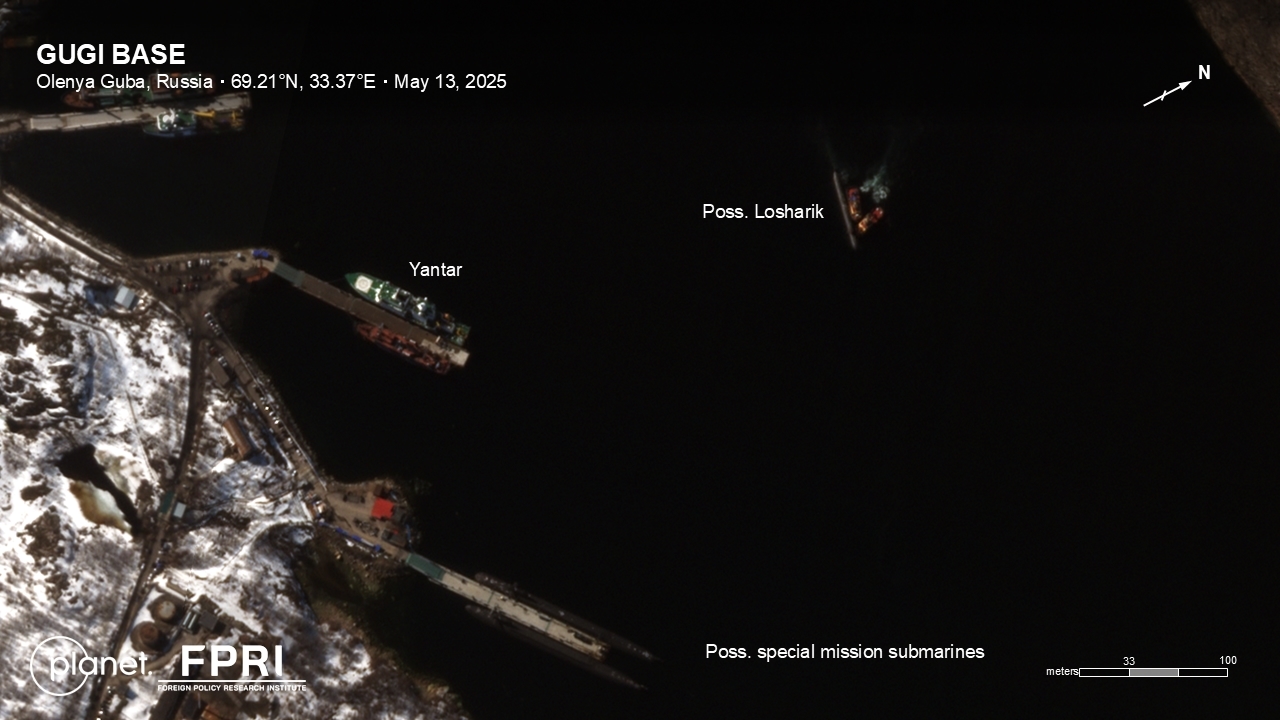
A Planet Labs image taken last year shows two tugboats moving an underwater vehicle roughly 70 meters long — about the same length as the AS-31 Losharik nuclear-powered deep-sea station. The researcher notes that the vehicle rarely appears in satellite imagery from the Olenya Guba area, where the base is located, suggesting it typically stays under the docks’ canopies.
GUGI and Losharik
GUGI handles deep-sea operations that include seabed mapping, underwater rescue work, and activities related to underwater infrastructure. It has deep-sea vehicles at its disposal, as well as larger carrier submarines to deliver them to operation sites. The reconnaissance ship Yantar also makes regular visits to Olenya Guba.
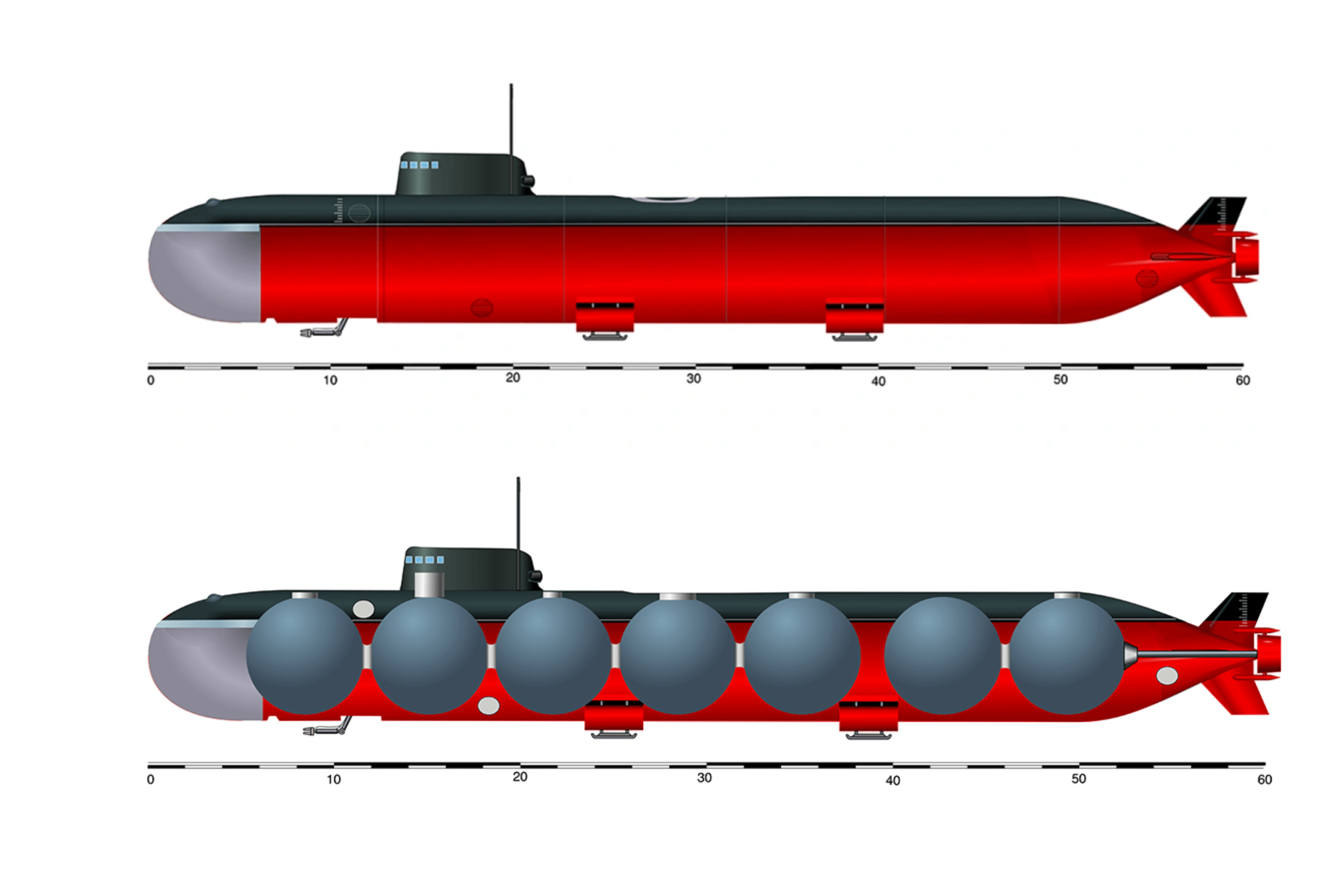
Losharik is one of Russia’s most secretive nuclear-powered deep-sea vessels and one of GUGI’s key vehicles for seabed operations. Available estimates suggest it can operate at depths of over 1,000 meters, allowing it to be used for exploring and potentially tampering with underwater infrastructure, including communication cables. To reach an operation area, Losharik can employ specialized carrier submarines, including the Podmoskovye. The study’s authors call it Russia’s most advanced vehicle for seabed operations and believe that in the event of a conflict between Russia and NATO, the Losharik could play an important role in actions against critical underwater infrastructure.
What the images show
Having examined Cold War-era American intelligence imagery, images from the French SPOT satellite system, and recent commercial satellite imagery, the study’s author concluded that specialized shelters for deep-sea vehicles appeared in Olenya Guba as early as September 1991. A ground-level photograph near one of these floating docks also shows a Project 1910 Kashalot deep-sea submarine belonging to GUGI. The researcher calls the appearance of these structures the earliest reliable visual evidence of GUGI’s presence at this base.
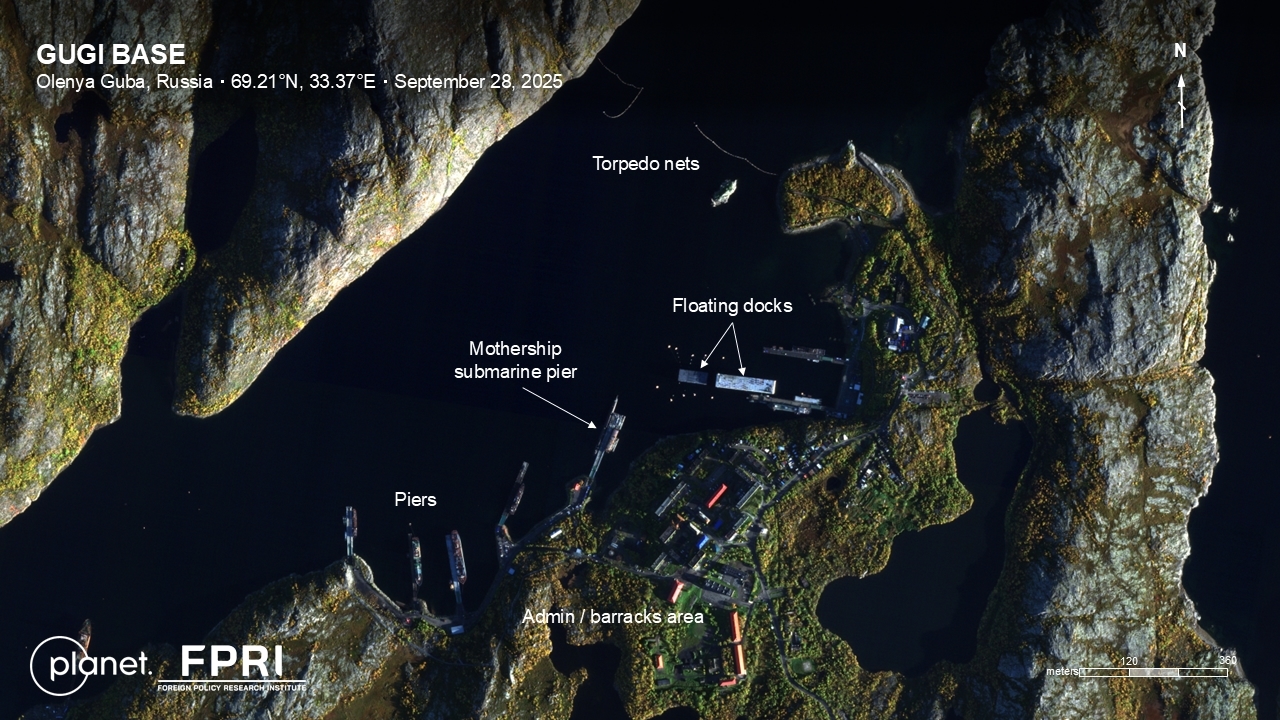
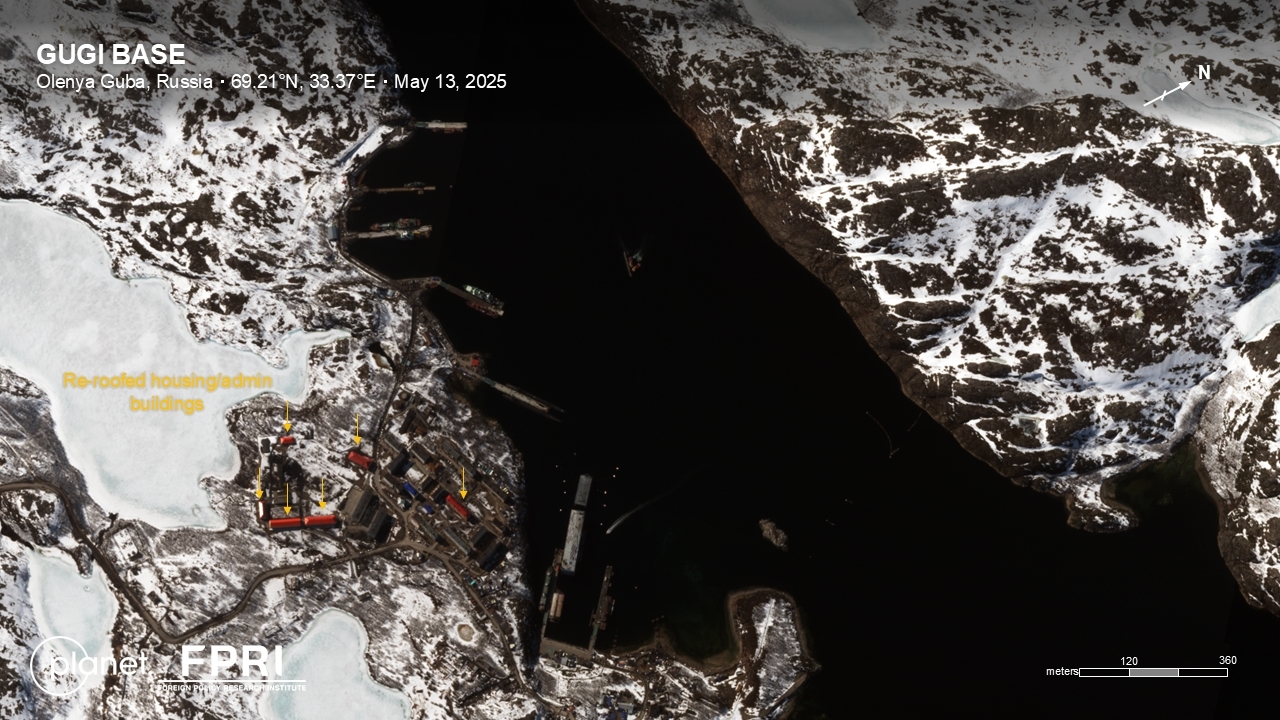
Since then, the base’s infrastructure has not expanded significantly, though the capabilities of the forces stationed there have grown. Besides the Yantar, GUGI carrier submarines can be seen at Olenya Guba, including the Podmoskovye, designed to transport deep-sea vehicles.
The study comes amid reports of GUGI activity near critical underwater infrastructure belonging to NATO countries. In April, UK Defence Secretary John Healey stated that British forces, together with Norway and other allies, tracked a Russian attack submarine, two special-purpose submarines, and the Yantar near undersea cables and pipelines.
Reuters later reported that the U.S. helped drive off Russian special-purpose submarines that were allegedly conducting a covert operation using technology designed to disable undersea cables. No visible signs of tampering were found after the incident.